Luxury Watch Insurance: Complete Guide for High-Value Timepieces
Collecting high-end mechanical timepieces is a pursuit of passion, engineering appreciation, and increasingly, serious financial strategy. Whether you have just acquired your first stainless steel sports watch to celebrate a career milestone or you maintain a multi-million-dollar portfolio of grand complications, you are participating in the age-old tradition of wearing your wealth. However, strapping a highly liquid, easily transportable asset worth tens of thousands of dollars to your wrist introduces a unique set of profound physical and financial vulnerabilities.
A mechanical watch is exposed to the elements every single day. It can be scratched against a doorframe, lost in the ocean during a vacation, left behind in a hotel safe, or tragically stolen. Despite these glaring risks, an alarming number of collectors operate under a dangerous financial illusion: they believe their standard residential insurance policies adequately protect their horological assets.
This comprehensive guide will dismantle the myths surrounding luxury watch coverage. We will explore the fatal flaws of standard homeowner’s policies, detail the exact mechanics of specialized jewelry insurance, analyze the critical concept of “Agreed Value,” and provide you with the blueprint to safeguard your collection against every conceivable peril.
1. The Dangerous Illusion of Standard Homeowner’s Insurance
The most common, and often the most expensive, mistake a new watch collector makes is assuming that their existing property insurance will cover their newly acquired timepiece in the event of a total loss. While standard policies do cover personal property, they are fundamentally designed to replace basic household items like televisions, furniture, and standard clothing—not elite Swiss horology.
The Sub-Limit Trap
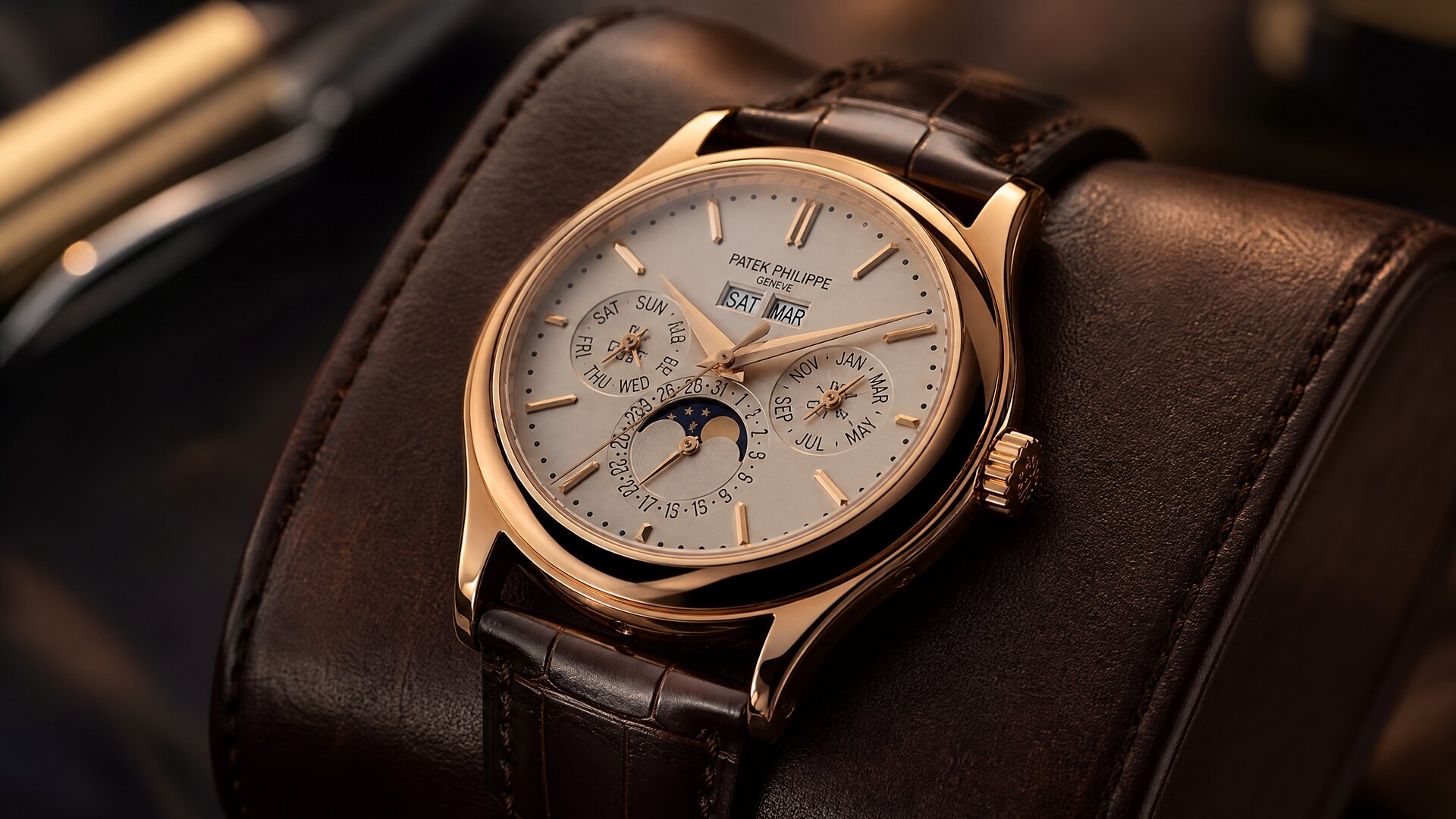
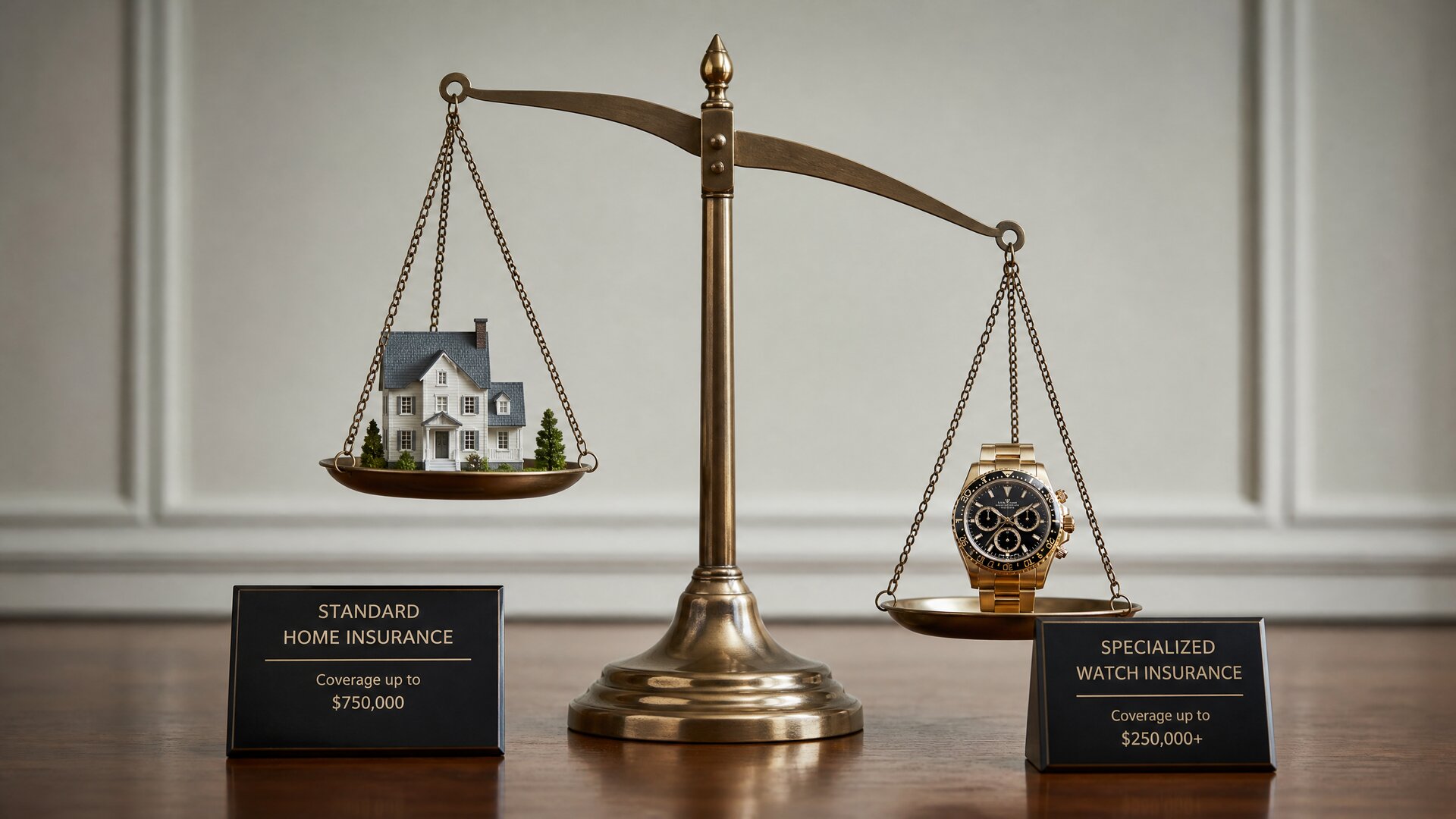
Standard residential insurance policies contain specific clauses known as “sub-limits” for categories of high-value items, such as jewelry, firearms, and fine art. If a burglar steals a $30,000 Patek Philippe from your bedroom, you might assume your $500,000 personal property coverage will write you a check.
However, if you read the fine print of a standard policy, you will likely discover a jewelry sub-limit capped at a mere $1,500 to $2,500. This means that regardless of your watch’s true value, the absolute maximum payout you will receive from your standard provider is the sub-limit cap.
Actual Cash Value (ACV) vs. The Depreciation Danger
Even if you manage to secure a minor payout, standard policies typically operate on an “Actual Cash Value” (ACV) basis. This is disastrous for luxury assets. ACV takes the original retail price of an item and aggressively subtracts depreciation for everyday wear and tear.
In the luxury watch market—where brands like Rolex and Audemars Piguet often appreciate over time—applying standard depreciation math is entirely illogical. Standard insurance adjusters are not horological experts; they view a five-year-old watch as a depreciated used item, completely ignoring the fact that its secondary market value may have doubled since it was originally purchased.
2. Specialized Watch Insurance: The Institutional Solution
To properly protect a tangible asset, you must completely separate it from your standard residential insurance. You need a specialized, standalone “valuable articles” policy (often referred to as a “floater” or a “rider”). These policies are underwritten by specialized divisions of major insurance firms that actually understand the mechanics of the collector market.
Scheduled vs. Blanket Coverage
When building a specialized policy, you have two primary structural options:
- Blanket Coverage: This provides an overall coverage limit for a category without listing specific items. For example, you might buy $50,000 in blanket jewelry coverage. This is useful for large collections of lower-value items, but it usually features a “per-item” payout limit (e.g., maximum $10,000 per watch), making it unsuitable for heavy-hitting centerpieces.
- Scheduled Coverage (The Gold Standard): This requires you to specifically list each individual watch on the policy, along with its serial number, brand, model reference, and an appraised value. Each watch is independently protected for its full specific value. This is the mandatory route for serious horological investors.
The Power of “Agreed Value”
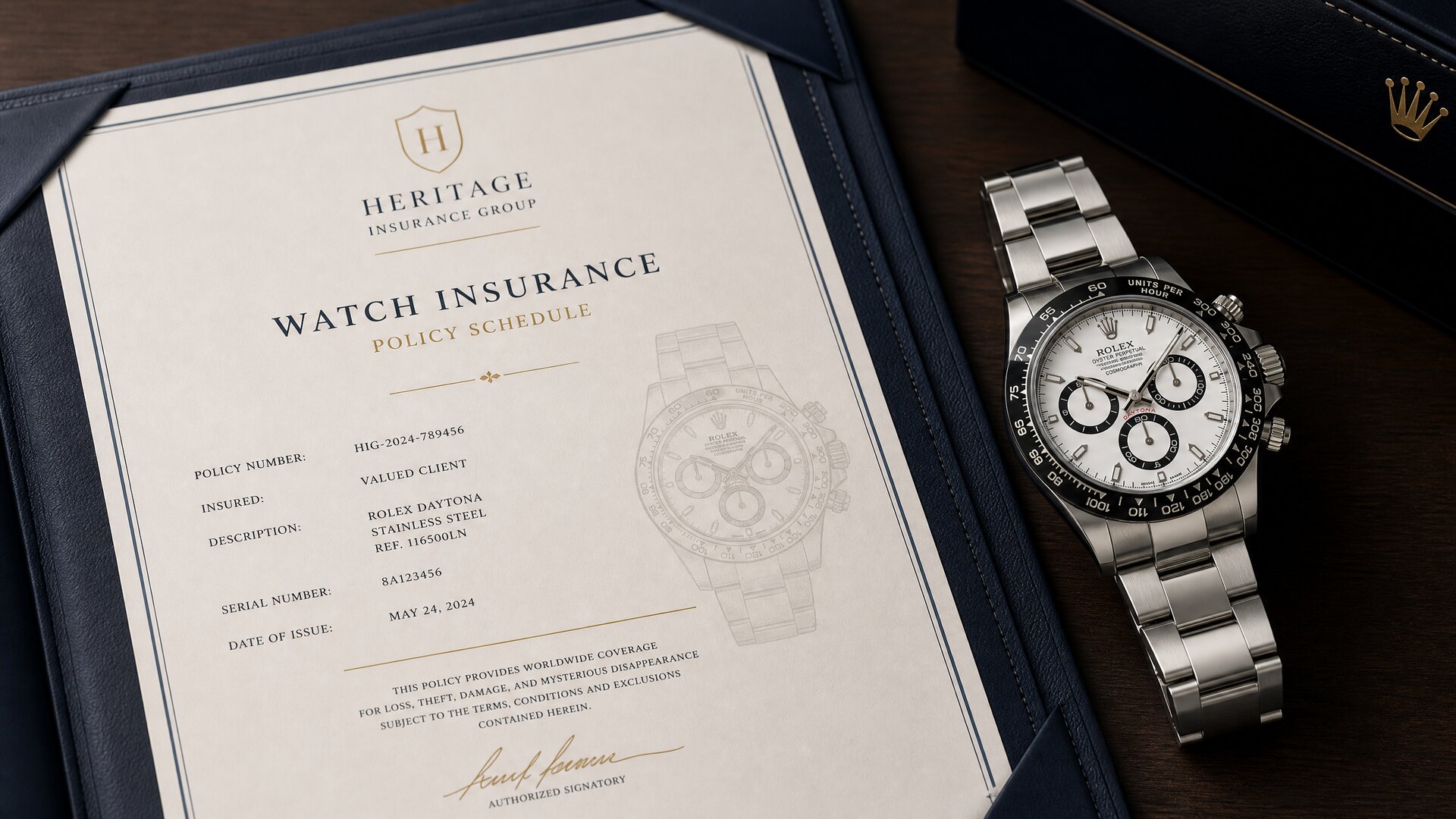
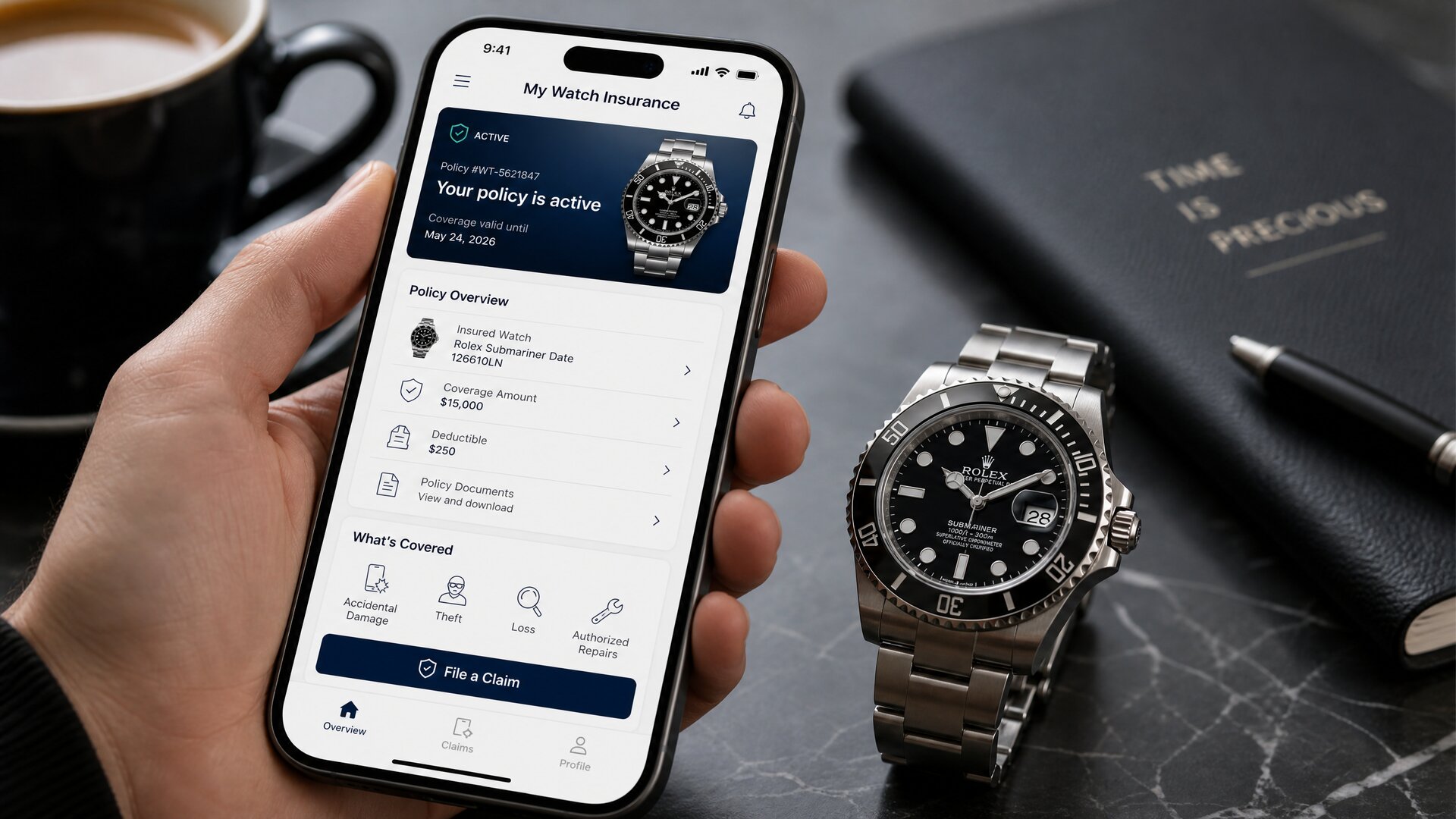
The most critical term in luxury asset insurance is Agreed Value. When you schedule a watch on a specialized policy, you and the insurance company agree upfront on the exact monetary value of the timepiece.
If you own a Rolex Cosmograph Daytona that cost $15,000 at the retail boutique but trades for $30,000 on the secondary market, you insure it for the $30,000 market replacement cost. If the watch is stolen, there is no negotiation, no depreciation applied, and no arguing with an adjuster. The insurance company simply writes you a check for the exact $30,000 Agreed Value listed on your schedule.
3. Coverage Triggers: What Are You Actually Protected Against?
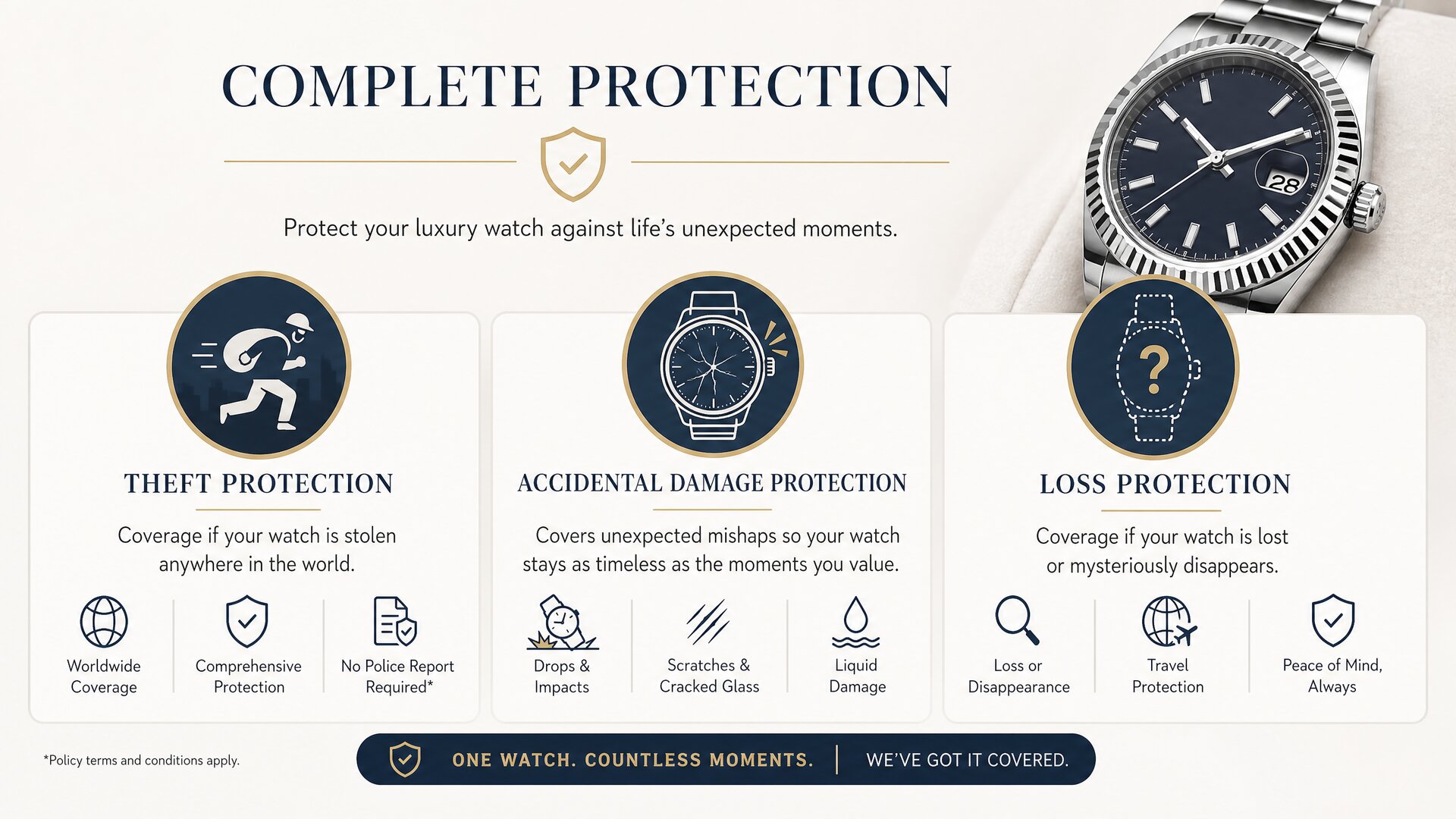
A high-end policy is not just about theft. True specialized watch insurance provides “All-Risk” coverage, meaning the asset is protected against virtually everything, except for a few specific exclusions (like intentional damage or acts of war).
Mysterious Disappearance
This is the most common reason watches are lost, and it is almost never covered by standard residential policies. “Mysterious disappearance” means the watch is simply gone, and you cannot explain how or where it happened. You didn’t see anyone steal it, and there was no break-in. Perhaps it fell off your wrist into the snow while skiing, or you left it on a table at a restaurant and returned to find it missing. A specialized policy will cover this total loss without requiring proof of a violent theft.
Accidental Damage and Mechanical Breakdown
Life happens, and gravity is the enemy of mechanical movements. If you drop your watch on a tile floor and shatter the sapphire crystal, severely dent the 18-karat gold case, or damage the delicate internal escapement, specialized insurance will cover the exorbitant cost of sending the watch back to Switzerland for an authentic factory repair.
Global Travel and Transit
For the international jet-setter, geographic restrictions are a major concern. High-tier policies offer automatic, borderless global coverage. Whether your watch is stolen from a hotel safe in Monaco, damaged during a yacht trip in the Caribbean, or lost in transit while being shipped to an auction house, the coverage remains seamlessly in effect.
4. The Appraisal and Documentation Protocol
Insurance companies require strict proof that the asset exists, that it belongs to you, and that it is worth what you claim it is worth. The documentation phase is where many collectors fail.
Why Your Retail Receipt Is Not Enough
If you buy a highly coveted watch at a retail boutique, your receipt shows the Manufacturer’s Suggested Retail Price (MSRP). As discussed, for highly constrained brands, the MSRP is drastically lower than the actual cost to replace the watch immediately on the open market. If you insure the watch based solely on the retail receipt, you are instantly underinsured.
The Independent Appraisal
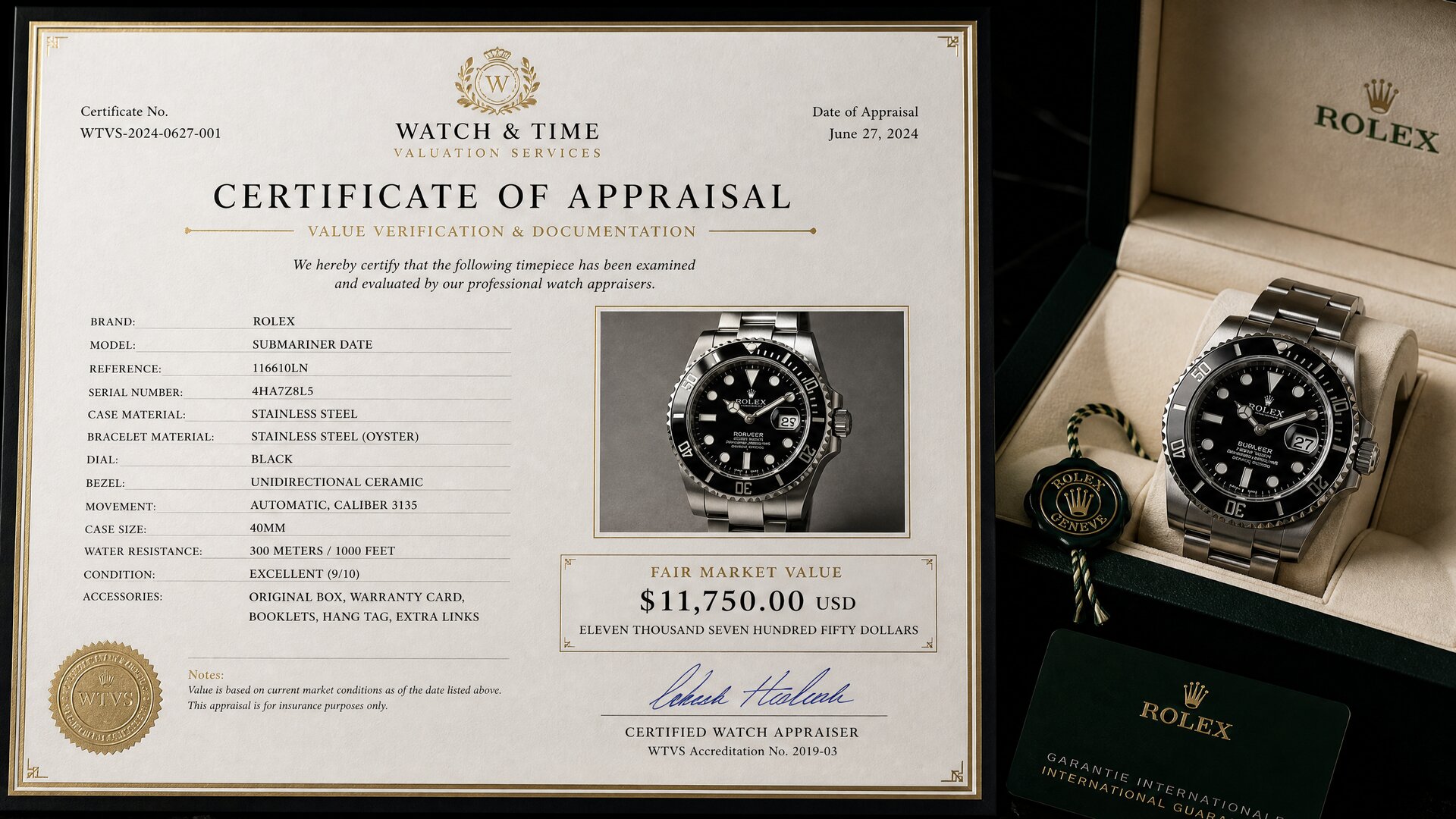
You must obtain a formal, written appraisal from a certified, independent horological appraiser (not just a standard mall jeweler). The appraisal must explicitly state the Current Secondary Market Replacement Value. This document should include high-resolution macro photographs of the watch, the exact serial numbers, a description of the condition, and verification of its authenticity.
The “Full Set” Documentation Vault
Your insurance file should mirror the “Full Set” requirements of the collector market. You must securely digitally store:
- The original warranty card (the watch’s birth certificate).
- The original purchase receipt (proving provenance).
- The independent market appraisal (updated every 2 to 3 years to account for market appreciation).
- High-definition photos of the watch on your wrist.
5. Comparative Cost Analysis: Premium Metrics
How much does it actually cost to insure a luxury watch collection? Unlike classic cars, which require climate-controlled garages, or fine art, which requires specialized hanging environments, watches are highly portable and extremely vulnerable to theft, which makes their insurance premiums proportionately higher.
As a general benchmark, specialized watch insurance will cost between 1% and 2% of the total scheduled value annually.
Factors Influencing Your Premium
- Geographic Location: If you live in a major metropolitan city with a high crime rate (like London, New York, or Los Angeles), your premium will be significantly higher than someone living in a remote, gated rural community.
- Storage Security: If you require the ability to wear all your watches daily, the premium is higher. If you sign a clause stating that certain high-value pieces are permanently kept in a bank vault and only removed with prior notification to the insurer, your premium will drop dramatically.
- Deductibles: Opting for a $0 deductible means a higher annual premium. Accepting a $1,000 or $5,000 deductible will lower your yearly carrying costs, but requires you to absorb the initial financial shock of a claim.
Estimated Annual Insurance Costs
| Scheduled Watch Value | Estimated Premium (Low Risk Area) | Estimated Premium (High Risk Metro Area) | In-Vault Restricted Policy |
|---|---|---|---|
| $10,000 | $100 – $120 / year | $150 – $200 / year | $50 – $75 / year |
| $25,000 | $250 – $300 / year | $375 – $500 / year | $125 – $185 / year |
| $50,000 | $500 – $600 / year | $750 – $1,000 / year | $250 – $375 / year |
| $150,000+ | $1,500+ / year | $2,250+ / year | Requires Custom Underwriting |
6. Storing Your Collection: The Vaulting Strategy
Insurance companies do not just blindy write policies; they audit your risk management strategy. How you physically store your timepieces heavily dictates whether an insurer will accept your portfolio.
The Home Safe Mandate
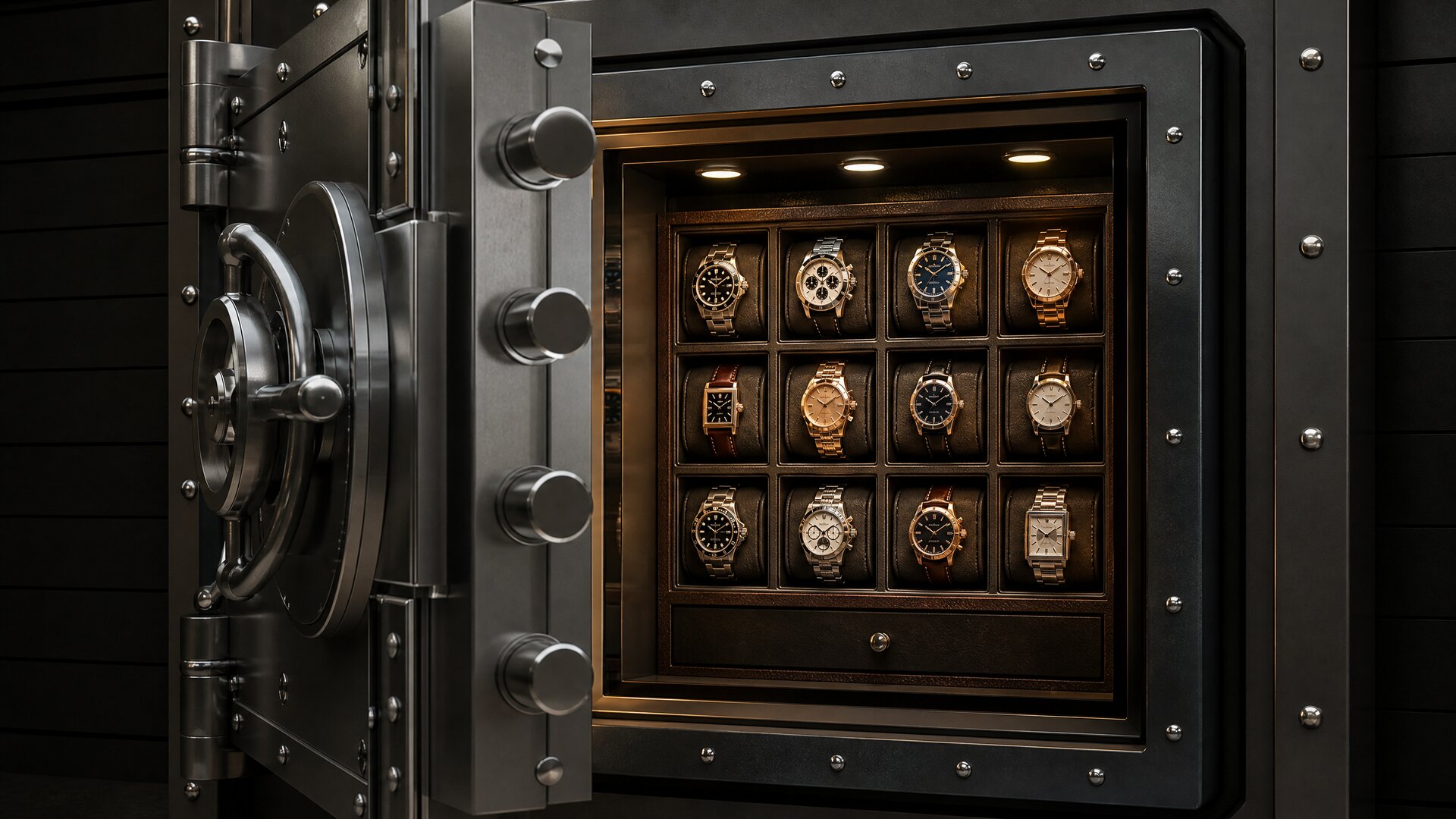
If you are storing a collection worth over $100,000 in your private residence, hiding them in a sock drawer is unacceptable. Insurers will require proof that you own a high-security, heavy-duty safe.
However, you cannot use a cheap, fire-proof document box purchased from a hardware store. You must utilize a safe with a specific UL (Underwriters Laboratories) Rating or a European EN 1143-1 Certification. Ratings such as TL-15 or TL-30 indicate that the safe can withstand a sustained, professional tool attack (using drills and grinders) for 15 or 30 minutes, giving law enforcement time to respond to your home security alarms.
Furthermore, the safe must be bolted directly into the concrete foundation of your home. A 200-pound safe is completely useless if a team of burglars can simply load the entire safe onto a hand truck and drive away with it.
7. Evaluating the Top Specialized Insurance Providers
Not all insurance companies possess the expertise required to underwrite elite horology. When securing a policy, collectors typically turn to a handful of globally recognized institutional providers.
| Insurance Provider | Best Suited For | Key Advantages | Potential Drawbacks |
|---|---|---|---|
| Chubb (Valuable Articles) | Ultra-High-Net-Worth Portfolios | The absolute gold standard. Pays out 150% of the scheduled value if market prices spike abruptly. Global reach. | Extremely strict underwriting; usually requires bundling home and auto policies. |
| Hodinkee Insurance | Modern Collectors & Enthusiasts | Backed by Chubb. Digital-first platform, no appraisals required for watches under $100,000. Instant quotes via app. | Heavily focused on single items; may lack complex estate planning infrastructure. |
| Jewelers Mutual | Dedicated Jewelry Portfolios | Over 100 years of pure jewelry expertise. Highly flexible with repairs, allowing you to use your preferred watchmaker. | Premiums can sometimes be slightly higher than bundled home riders. |
| Wax Insurance | Digital Native Collectors | App-based, uses blockchain technology to track provenance. Easy UI for younger collectors. | Newer to the market compared to legacy institutional giants. |
8. The Nightmare Scenario: Navigating the Claims Process
The true test of an insurance policy is how the company behaves on the worst day of your life as a collector. If you experience a loss, a strict protocol must be followed to ensure a smooth payout.
- Immediate Police Reporting: If the watch is stolen or mysteriously disappears, you must file a formal police report immediately. Insurance companies require the official report number to initiate an investigation and rule out insurance fraud.
- Notify the Underwriter: Contact your specialized broker within 24 hours of the incident. Provide them with the police report, the date, time, and location of the loss.
- The Proof of Loss Form: You will be required to sign a legally binding affidavit detailing the exact circumstances of the disappearance.
- The Stolen Watch Registries: Your insurance company will instantly flag the watch’s specific serial number on global stolen watch registries (such as The Art Loss Register and manufacturer databases). If a thief tries to send the watch to an authorized service center five years from now, it will be confiscated.
- The Payout: With an Agreed Value policy, once the investigation concludes (usually within 30 to 60 days), a check is issued for the full scheduled amount.
9. Frequently Asked Questions (FAQ)
Do I need to insure my watch if it spends most of its time in a bank safe deposit box?
Yes, but you should not pay full price. Bank safe deposit boxes are generally secure, but they are not insured by the bank itself against fires, floods, or sophisticated bank heists. You should secure an “In-Vault” policy, which provides coverage at a drastically reduced premium (often 60% to 70% cheaper than a standard wearing policy).
Will my premium go up if I actually wear my watch every day?
No. Specialized watch insurance policies assume you are going to wear the item. The premium is calculated based on standard daily wear risk. However, you must inform them if you are traveling to a highly dangerous conflict zone, as standard global coverage may have specific country exclusions.
If my watch appreciates in value, does my insurance automatically update?
In most cases, no. This is a crucial responsibility of the collector. If you bought a watch for $20,000 and it is now worth $40,000 on the secondary market, you must get a new appraisal and submit it to your broker to increase the Agreed Value schedule. If you fail to update it, you will only receive the old $20,000 payout in a claim. (Note: Some premium providers like Chubb offer a 150% buffer to protect against sudden market spikes, but regular updates are still mandatory).
Can the insurance company force me to take a replacement watch instead of cash?
Standard ACV residential policies often try to source a cheaper replacement watch through their own wholesale networks. Specialized Agreed Value policies (like Chubb or Jewelers Mutual) generally give the ultimate power to the client. You can choose to accept a direct replacement sourced by the insurer, or you can demand the full cash payout to hunt for the replacement yourself.
Author’s Note: The True Value of Peace of Mind
Collecting luxury watches should be an experience of joy, not a source of constant anxiety. A beautiful mechanical timepiece is meant to be worn to weddings, business milestones, and family vacations. It is a companion that silently records the chapters of your life.
When you strap a $50,000 unprotected asset to your wrist, you are hyper-aware of every doorframe, every stranger in a crowd, and every hotel room safe. This paranoia completely destroys the emotional dividend of owning the object in the first place.
Purchasing a specialized, Agreed Value insurance policy is not an administrative burden; it is the ultimate luxury upgrade. It completely transfers the physical and financial risk of ownership away from your shoulders and onto the balance sheet of a multi-billion-dollar institution. By maintaining impeccable documentation, investing in high-security home storage, and partnering with the right specialized underwriter, you purchase the most valuable commodity in the horological world: total peace of mind.