The Ultimate Emergency Fund Guide: Your Blueprint for Financial Resilience
In today’s unpredictable economic landscape, financial stability is not measured solely by your income, the size of your stock portfolio, or the limit on your credit cards. True financial resilience is measured by your ability to withstand sudden, catastrophic shocks without derailing your long-term goals. Whether it is a sudden corporate downsizing, a severe medical emergency, a major automotive breakdown, or an unexpected home repair, life guarantees one thing: emergencies will happen.
Despite this certainty, statistical surveys routinely show that a vast majority of adults cannot cover a sudden $1,000 expense without resorting to high-interest credit cards, liquidating retirement accounts, or borrowing from family. This lack of a financial buffer leaves millions of people living in a perpetual state of financial anxiety, operating just one stroke of bad luck away from a devastating debt spiral.
The antidote to this anxiety is the Emergency Fund. An emergency fund is much more than a simple savings account; it is your financial shock absorber. It is the ultimate insurance policy that you write for yourself. This comprehensive guide will meticulously break down the architecture of a proper emergency fund. We will explore exactly how to calculate your target number, where to store your capital for maximum safety and yield, and the psychological frameworks required to build and maintain this essential financial fortress.
1. The Anatomy of an Emergency Fund: What It Is (and What It Isn’t)
Before you can build an emergency fund, you must strictly define its purpose. A common mistake many individuals make is treating their general savings account as an emergency fund, dipping into it for vacations, holiday gifts, or a new television.
Defining a True Emergency
An emergency fund is a pool of highly liquid cash reserved strictly for unexpected, urgent, and necessary expenses. To determine if an event qualifies for emergency fund usage, it must pass the Three-Question Test:
- Is it unexpected? (Christmas happens every December; it is not unexpected. A transmission failure on your only vehicle is).
- Is it necessary? (Fixing a leaking roof is necessary to prevent further home damage. Upgrading your functioning smartphone to the newest model is not).
- Is it urgent? (Paying for a sudden dental surgery is urgent. Replacing a slightly worn living room sofa can wait).
If an expense does not meet all three criteria, it is not an emergency. It is a planned expense that should be covered by a separate “sinking fund” or your standard monthly cash flow.

The True Cost of Operating Without a Buffer
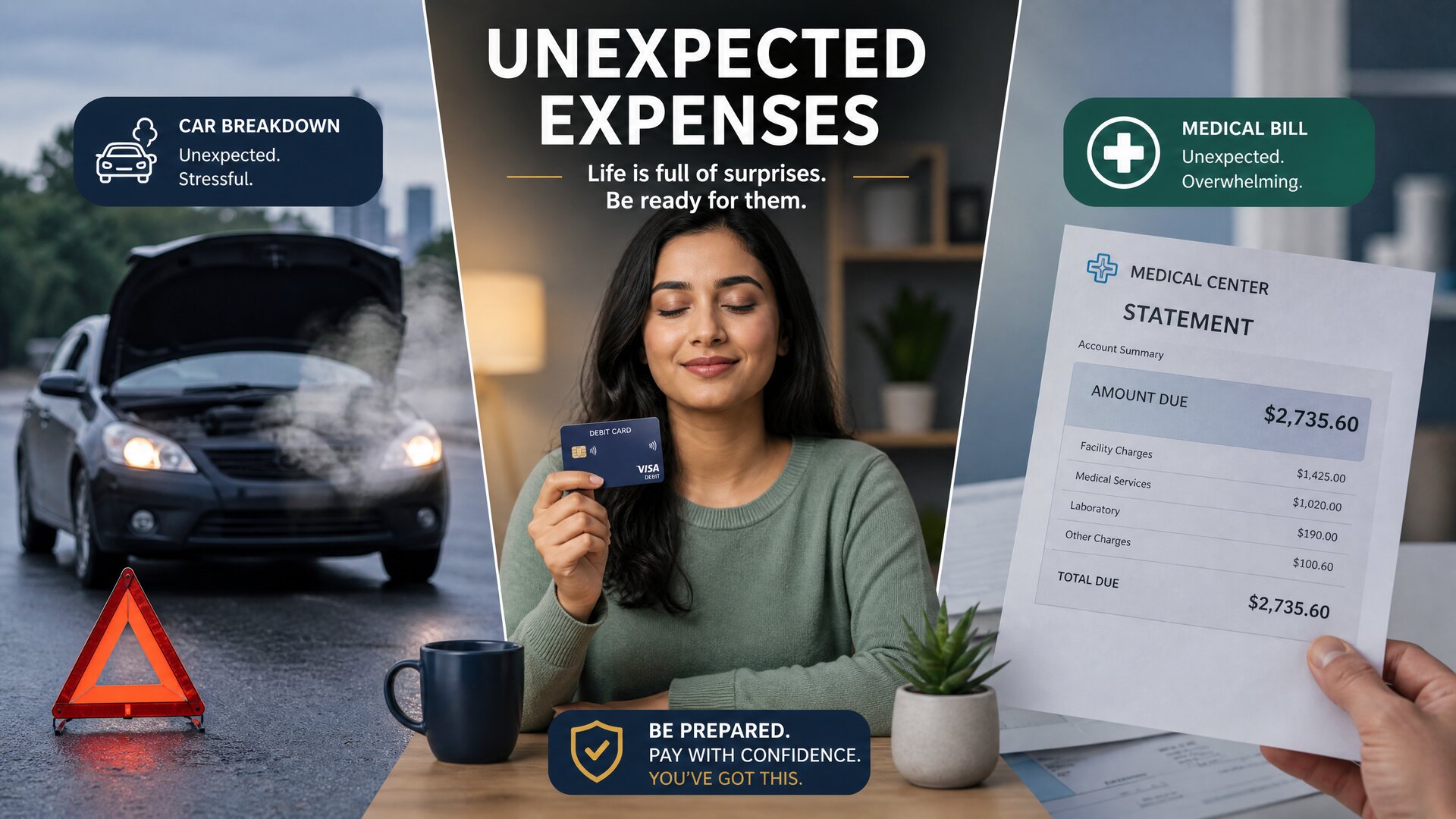
When you do not have cash set aside, an emergency forces you to use high-interest debt. If you charge a $3,000 medical bill to a credit card with a 24% Annual Percentage Rate (APR) and only make the minimum payments, that “emergency” will end up costing you thousands of dollars in interest and could take years to pay off. An emergency fund stops the bleeding immediately, turning a potential financial crisis into a mere temporary inconvenience.
2. Calculating the Magic Number: How Much Do You Actually Need?
The most common question in personal finance is: “How much money should I have in my emergency fund?” The answer is not a flat number like $5,000 or $10,000. It is a highly personalized figure based entirely on your specific monthly living expenses and your individual risk profile.
Step 1: Calculate Your “Bare Bones” Budget
Your emergency fund is not meant to replace your current luxury lifestyle; it is meant to keep you alive and safe during a crisis. To calculate your target, you must first identify your “bare bones” monthly expenses. This includes:
- Housing: Rent or mortgage payments, property taxes, and home insurance.
- Utilities: Electricity, water, gas, and basic internet (required for job hunting).
- Food: Basic groceries (excluding restaurants, takeout, or luxury food items).
- Transportation: Auto loan payments, basic car insurance, and gas for essential travel.
- Health: Health insurance premiums and necessary prescription medications.
- Debt Obligations: Minimum payments on credit cards or student loans to prevent default.
Do not include: Streaming subscriptions, gym memberships, dining out, clothing budgets, or travel savings.
If your take-home pay is $5,000 a month, but your bare-bones survival budget is only $3,000, your emergency fund calculations are based entirely on that $3,000 figure.
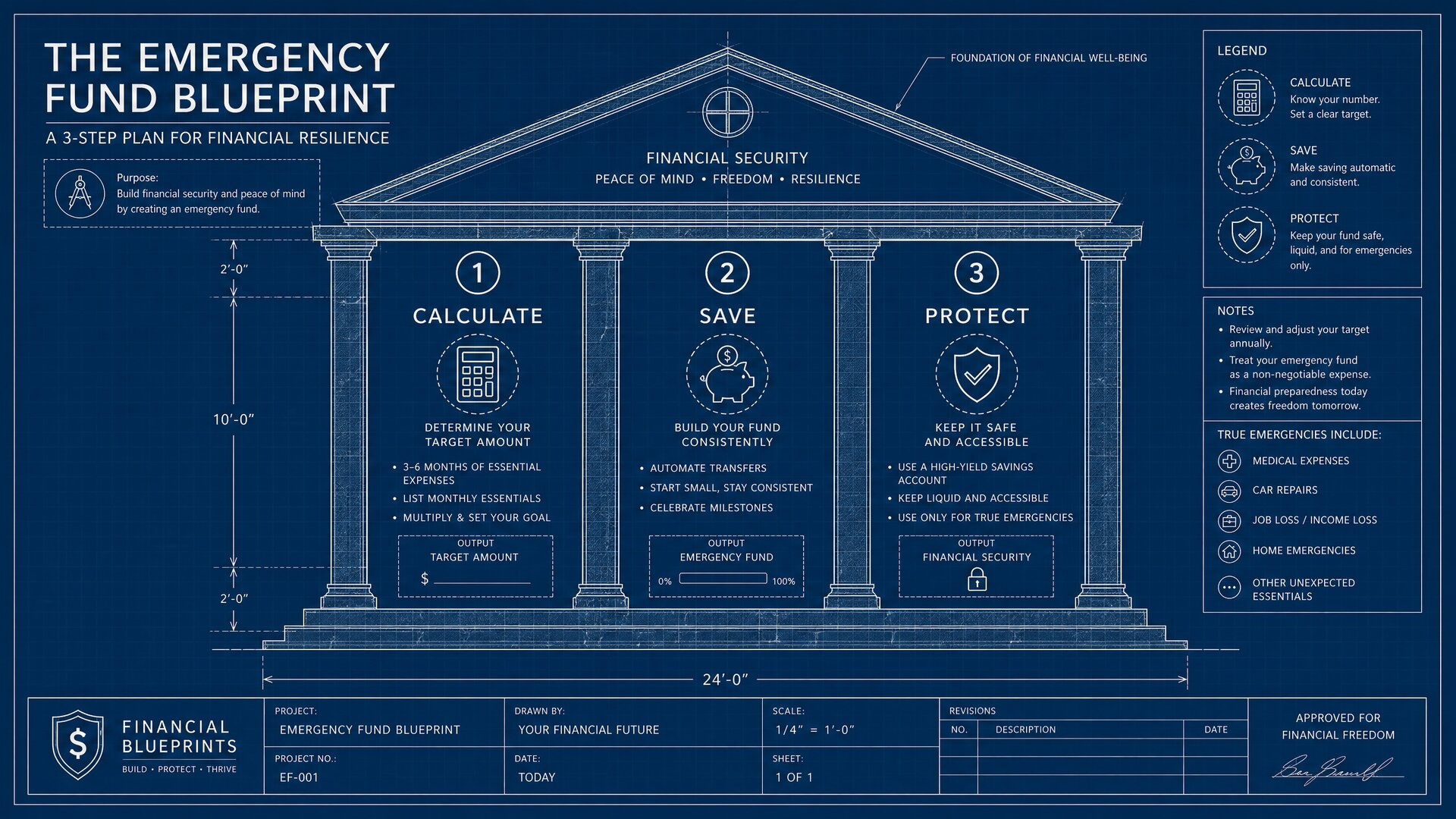
Step 2: Choose Your Target Tier
Once you know your monthly survival number, you must decide how many months of coverage you need based on your job security and lifestyle.
Tier 1: The Starter Emergency Fund ($1,000 to $2,000)
If you are currently struggling with high-interest consumer debt, your immediate goal is to establish a starter fund. This small buffer is designed to cover minor hiccups—like a blown tire or a broken refrigerator—so you do not have to put those expenses on the credit cards you are actively trying to pay off.
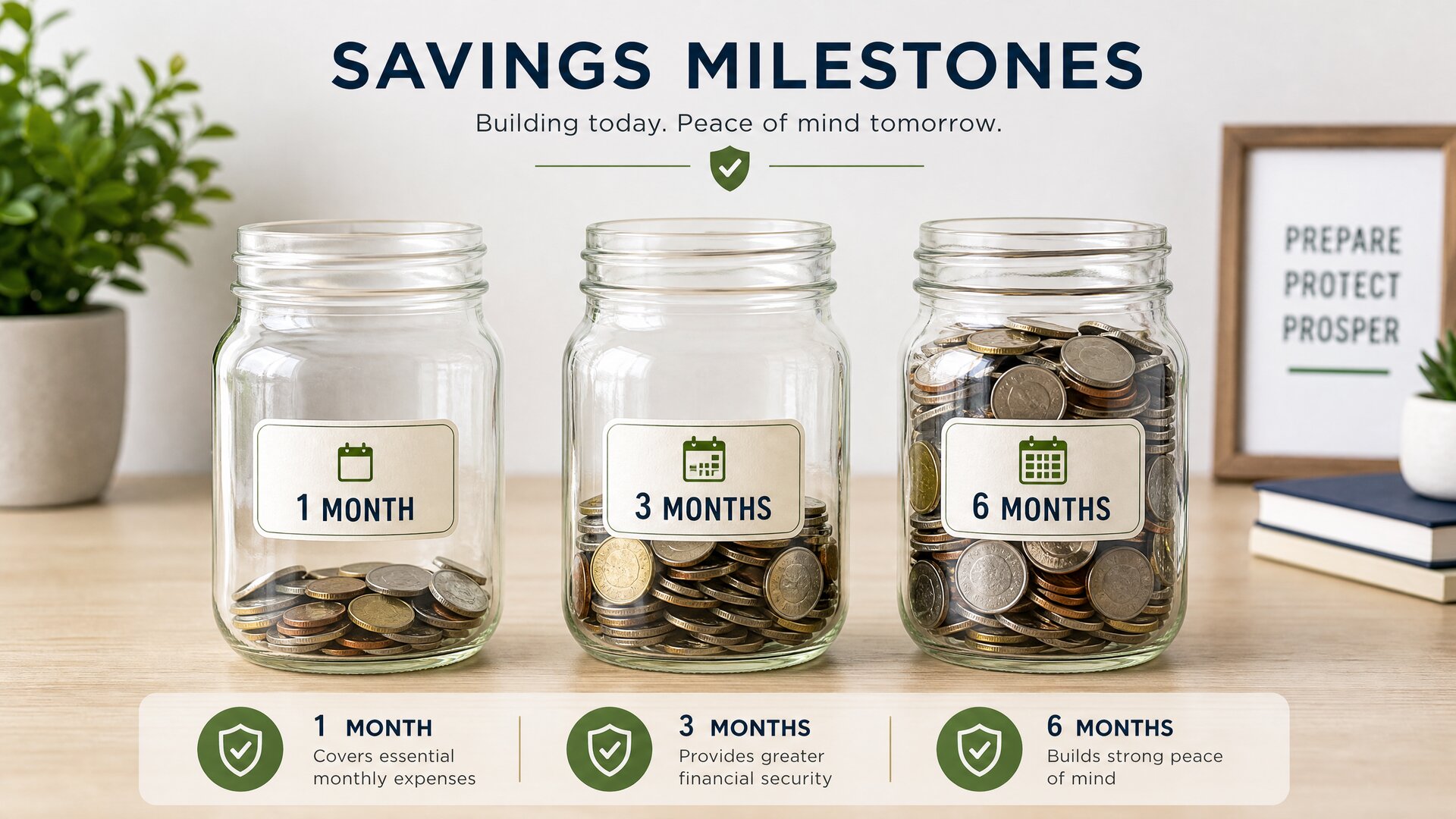
Tier 2: The Standard Fund (3 to 6 Months)
This is the universally recommended benchmark for most adults.
- Aim for 3 Months if: You are single, rent an apartment, have no dependents, possess highly sought-after job skills, and work in a very stable industry.
- Aim for 6 Months if: You own a home (which introduces the risk of major repairs), have children, or work in an industry prone to layoffs and corporate restructuring.
Tier 3: The Fortress Fund (9 to 12 Months)
Certain economic profiles carry significantly more risk and require an extended safety net. You should aim for a massive 9 to 12-month buffer if:
- You are a freelancer, independent contractor, or small business owner with highly variable, unpredictable income.
- You operate in a single-income household where a single job loss would reduce the family revenue to zero.
- You suffer from a chronic medical condition that could suddenly prevent you from working for extended periods.
Emergency Fund Sizing Matrix
| Profile Type | Bare-Bones Monthly Cost | Recommended Duration | Target Emergency Fund Size |
|---|---|---|---|
| Young Professional (Renting, No Kids) | $2,500 | 3 Months | $7,500 |
| Dual-Income Family (Mortgage, Kids) | $4,500 | 6 Months | $27,000 |
| Freelancer / Gig Worker | $3,000 | 9 Months | $27,000 |
| Single-Income Household (High Risk) | $4,000 | 12 Months | $48,000 |
3. Where to Park Your Emergency Fund: Safety Over Yield
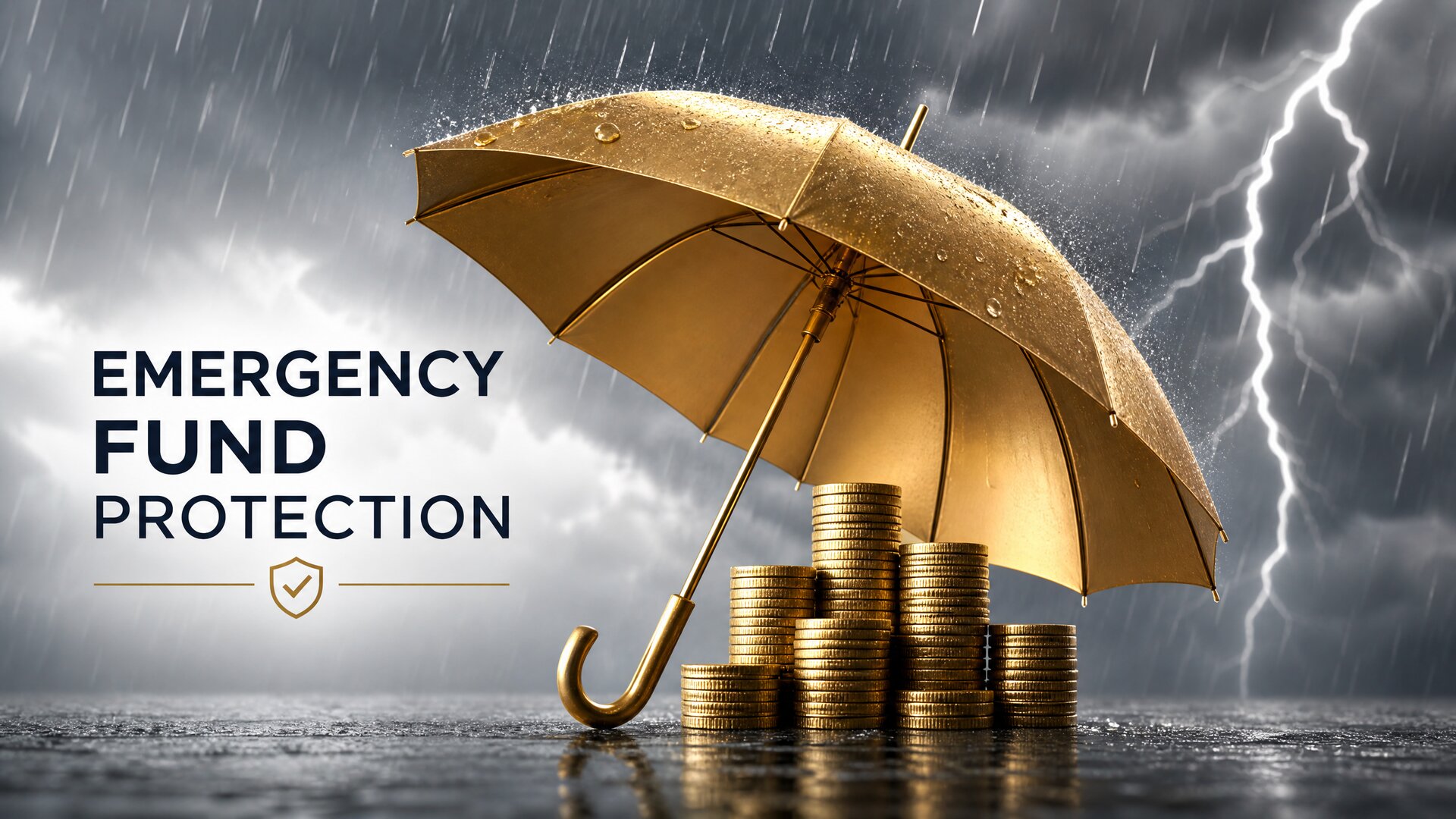
A fundamental error investors make is putting their emergency fund into the stock market. Your emergency fund is not an investment; it is insurance. If the economy crashes, causing you to lose your job, the stock market will likely crash at the exact same time. If your emergency fund is tied up in stocks, you will be forced to sell your investments at a massive loss just to buy groceries.
Your emergency fund must adhere to two absolute rules: Absolute Liquidity (you can access the cash within 24 to 48 hours) and Absolute Capital Preservation (the principal balance will never decrease).
High-Yield Savings Accounts (HYSAs)
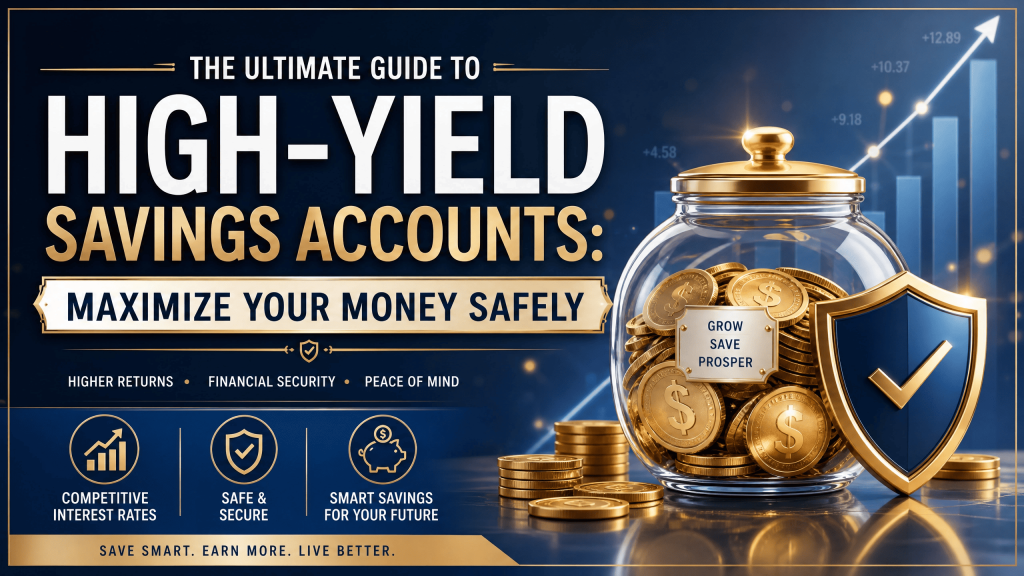
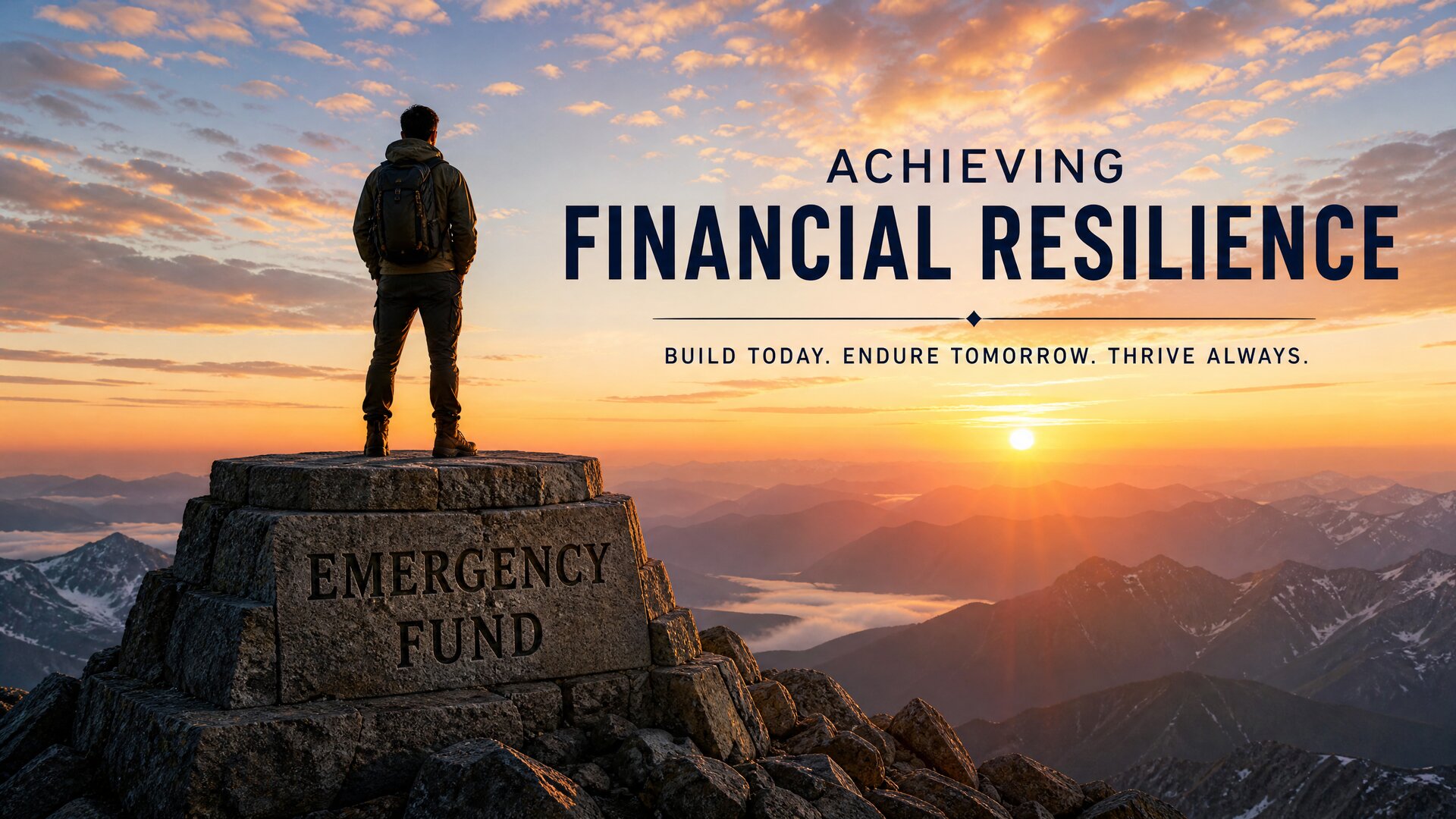
This is the undisputed best location for an emergency fund. Traditional brick-and-mortar banks offer abysmal interest rates, often around 0.01% Annual Percentage Yield (APY). Online-only banks, which do not have the massive overhead costs of physical branches, offer High-Yield Savings Accounts that routinely yield between 4.00% and 5.00% APY.
While this interest will not make you wealthy, it helps protect the purchasing power of your cash against the erosive effects of inflation. Most importantly, HYSAs are FDIC-insured (in the US) or protected by equivalent government guarantees globally, meaning even if the bank fails, your money is 100% safe up to $250,000.
Money Market Accounts (MMAs)
Similar to HYSAs, Money Market Accounts are safe, insured deposits offered by banks and credit unions. They often provide debit cards or check-writing privileges directly tied to the account, which offers slightly faster access to funds during an immediate crisis compared to transferring money from an online HYSA to your checking account.
Instruments to Strictly Avoid
- The Stock Market / Index Funds: Too volatile. You risk losing principal when you need it most.
- Cryptocurrency: Extreme volatility makes it entirely unsuitable for emergency storage.
- Certificates of Deposit (CDs) with Harsh Penalties: While CDs offer guaranteed rates, locking your money away for 12 or 24 months defeats the purpose of “emergency” access. If you break the CD early to pay a medical bill, the bank will charge you penalty fees.
- Physical Cash Hidden at Home: Physical cash is highly vulnerable to theft, fire, and flood, and it earns zero interest, guaranteeing that it loses value every day due to inflation.

4. The Action Plan: Strategies to Build Your Fund Rapidly
Looking at a target goal of $15,000 or $20,000 can feel incredibly intimidating, especially if you are starting from zero. Building this fund requires a deliberate, systematic approach.
1. The Power of Automation
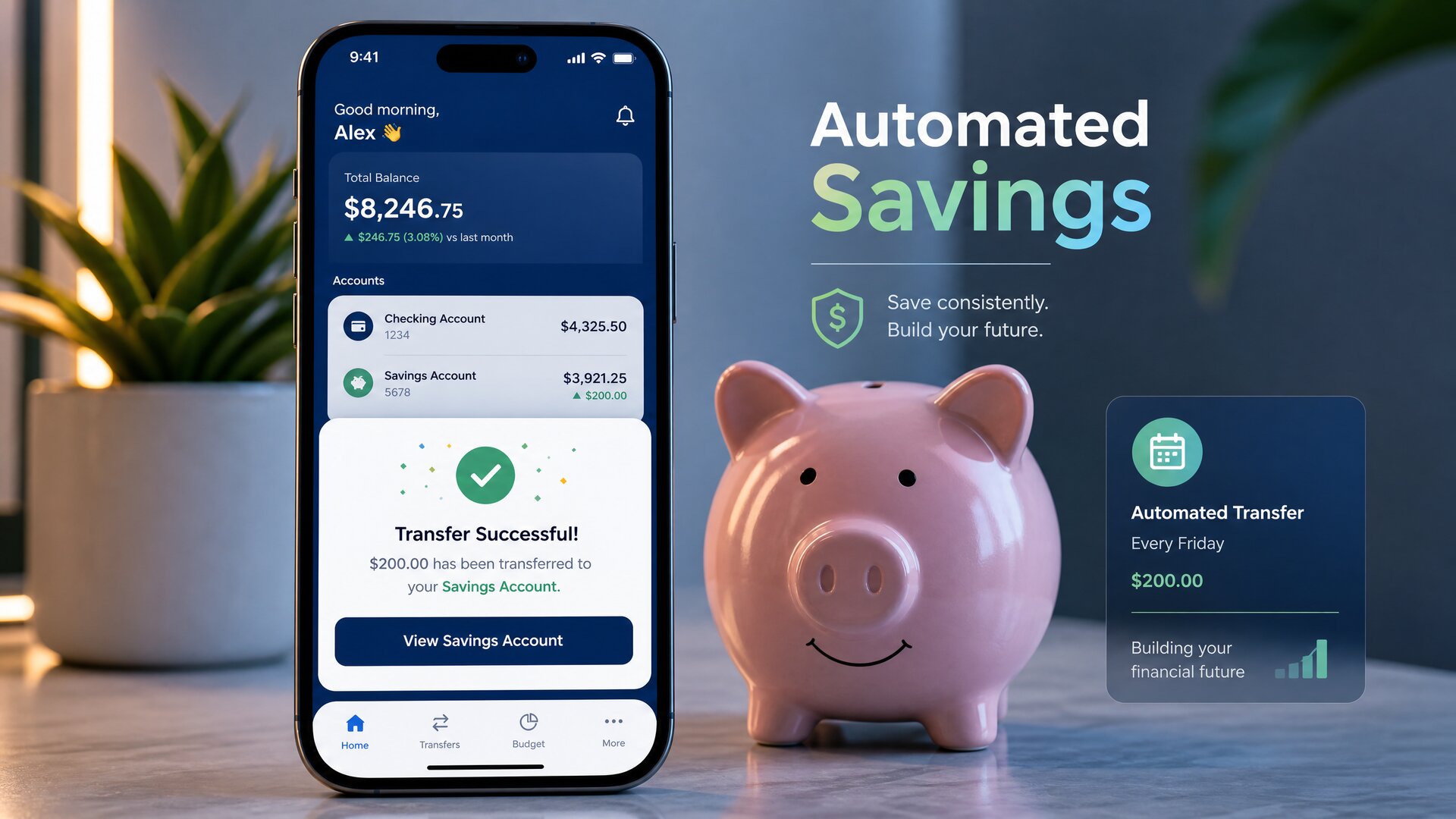
Willpower is a finite resource. If you wait until the end of the month to save “whatever is left over,” you will consistently save nothing. You must treat your emergency fund like a mandatory utility bill. Set up an automatic transfer with your bank. The day your paycheck hits your checking account, authorize the bank to automatically move 10% or 15% directly into your online HYSA. If you never see the money in your checking account, you cannot spend it on impulse purchases.
2. The Windfall Allocation Rule
Throughout the year, you may receive unexpected influxes of cash—tax refunds, annual corporate bonuses, cash gifts for birthdays, or the sale of a large asset. The psychological urge is to treat this money as “free money” and spend it on a luxury item. Instead, implement a strict rule: 100% of all windfalls go directly into the emergency fund until it is fully funded. This strategy can shave years off your timeline.
3. Conduct a Ruthless Expense Audit
To accelerate your savings, you must widen the gap between your income and your expenses. Print out your last three months of bank and credit card statements. Highlight every single transaction that was not essential for survival.
- Cancel unused streaming services and app subscriptions.
- Negotiate your car insurance and mobile phone bills (loyalty rarely pays; shopping around can save hundreds).
- Implement a “No-Spend Month,” where you buy absolutely nothing beyond groceries and basic utilities for 30 days, funneling all the excess cash directly into your safety net.
4. Liquidate Household Clutter
Most people have hundreds, if not thousands, of dollars tied up in items sitting in closets or garages. Dedicate two weekends to listing old electronics, designer clothing, unused sports equipment, and furniture on digital marketplaces like eBay, Facebook Marketplace, or local selling apps. This provides an immediate, fast injection of capital to jumpstart your Tier 1 Starter Fund.
5. Navigating the Psychology of the Emergency Fund
Building the fund is only half the battle; managing your psychological relationship with the money is often much harder.
The Guilt of Spending It
A strange phenomenon occurs when people finally achieve a fully funded safety net: they become terrified to use it. When an actual emergency strikes (like a broken furnace in the middle of winter), they hesitate, considering taking out a loan because they do not want to see their beautiful savings balance drop.
You must remember the purpose of the money. The money is doing its exact job. It is absorbing the stress so you do not have to. Spend the money with gratitude, knowing you prepared perfectly for this exact moment.
The Replenishment Protocol
Once the emergency has passed and you have withdrawn funds, your immediate financial priority shifts back to rebuilding. Pause any aggressive investments or debt payoffs beyond the minimums, and redirect all available cash flow back into the HYSA until the fortress is fully rebuilt. Treat the replenishment phase with the same urgency as the initial building phase.
6. Common Financial Myths Debunked
The internet is saturated with dangerous financial advice regarding emergency savings. Let’s dismantle the most common myths.
Myth 1: “My credit cards are my emergency fund.” The Reality: A credit card is not an asset; it is high-interest debt. If you lose your job and charge your living expenses to a credit card for four months, you will emerge from your unemployment with a massive debt burden that could take a decade to pay off. Furthermore, during economic crises, banks routinely slash credit limits without warning. Relying on a bank’s money as your safety net is incredibly dangerous.
Myth 2: “I am losing money to inflation by leaving cash in a savings account.” The Reality: Yes, even in a High-Yield Savings Account, the interest rate may occasionally lag behind peak inflation. However, you must accept this minor loss as the “insurance premium” you pay for absolute liquidity. The goal of this specific money is not to make you wealthy; its goal is to prevent you from going bankrupt. Your wealth will be generated by your separate retirement and investment accounts.
Myth 3: “I should aggressively invest all my extra cash instead of hoarding it.” The Reality: Without an emergency fund, your investments are highly vulnerable. If you experience an emergency and have no cash, you will be forced to liquidate your investments. If the market is down, you will be selling at a loss, permanently destroying your wealth-building trajectory. An emergency fund is the protective moat that allows your investments to grow uninterrupted.

7. Summary: Your Emergency Fund Action Plan
Use this strategic checklist to transition from living paycheck-to-paycheck to absolute financial security.
| Phase | Action Step | Goal / Milestone |
|---|---|---|
| Phase 1 | Stop all non-essential spending and liquidate household clutter. | Save $1,000 – $2,000 immediately to stop using credit cards for minor emergencies. |
| Phase 2 | Calculate your “Bare-Bones” monthly survival budget. | Determine your target multiplier (3, 6, or 9+ months based on your risk profile). |
| Phase 3 | Open a High-Yield Savings Account (HYSA) separate from your main bank. | Establish automation. Set up direct deposits to bypass your checking account entirely. |
| Phase 4 | Redirect windfalls, bonuses, and tax refunds to the HYSA. | Hit the 3-Month Mark. You can now survive a standard corporate layoff. |
| Phase 5 | Maintain the system until the final target is reached. | Hit the 6 to 12-Month Mark. Achieve total financial peace of mind. |
8. Frequently Asked Questions (FAQ)
Should I pay off debt before building an emergency fund?
This requires a balanced approach. You should definitely establish a “Starter Fund” ($1,000 to $2,000) before aggressively attacking high-interest credit card debt. If you don’t, the first time your car breaks down, you will just put the expense right back on the credit card, trapping you in a cycle. Once the starter fund is built, redirect all extra cash to killing the high-interest debt. After the bad debt is gone, return to building the emergency fund up to the full 3 to 6 months.
Can I use my emergency fund for a down payment on a house?
Absolutely not. A down payment is a known, planned expense. An emergency fund is for the unknown. If you use your emergency fund to buy a house, you will move into that new house with zero safety net. If the roof leaks or the water heater explodes a month after moving in, you will be in a financial crisis. House down payments must be saved in a completely separate “sinking fund.”
Should married couples have joint or separate emergency funds?
This depends on your specific marriage dynamics, but mathematically, a joint emergency fund is highly efficient. It covers the household expenses as a single unit. However, if maintaining separate finances provides psychological comfort, both partners must ensure their individual funds are robust enough to cover their specific half of the household obligations in the event of an emergency.
Author’s Note: The True Value of Peace of Mind
Personal finance is ultimately less about mathematics and more about psychology. Operating without a financial safety net forces your brain into a perpetual state of “fight or flight.” Every strange noise your car makes, every unexpected email from your boss, and every minor physical ailment triggers intense anxiety because you know you cannot afford the financial consequences of an emergency.
Building an emergency fund is not an exercise in deprivation; it is the active purchase of freedom. When you have six months of living expenses sitting safely in a high-yield account, your entire perspective on life shifts.
You no longer have to tolerate a toxic work environment because you possess “walk-away money.” You sleep better at night. You make clearer, more rational decisions regarding your career and your family. By following the meticulous steps outlined in this guide, you are not just stockpiling currency; you are building an impenetrable fortress around your life, ensuring that when the storms of life inevitably arrive, you will remain entirely unshaken.