Diamond Insurance for Engagement Rings A Complete 2026 Guide
An engagement ring is more than a piece of jewelry. It may represent a major financial investment, a family heirloom, or an item with deep emotional significance. Unfortunately, standard home or renters insurance may not provide enough protection if the ring is stolen, damaged, or accidentally lost.
“Diamond insurance” is not usually a separate legal category of insurance. The term generally refers to jewelry insurance designed to protect an engagement ring, wedding ring, loose diamond, or other valuable item.
Coverage may be arranged through a homeowners or renters policy, a scheduled personal property endorsement, a UK contents insurance policy, or a specialist standalone jewelry insurer. Each option has different limits, exclusions, deductibles, and claims procedures.
Why Engagement Rings Need Special Protection
Many homeowners and renters policies include some jewelry coverage, but that coverage can be limited.
A policy might cover jewelry against theft while limiting the maximum payment for an individual item or the entire jewelry category. Accidental loss, unexplained disappearance, damaged stones, or incidents outside the home may also be excluded unless additional protection has been purchased.
In the United Kingdom, contents policies commonly apply a “single-item limit.” If the ring’s value exceeds that limit, it may need to be declared separately as a specified high-value item. UK consumer guidance also recommends checking whether personal possessions coverage is needed for items taken outside the home.
In the United States, scheduling the ring on a homeowners or renters policy can expand protection beyond the lower jewelry limits contained in the basic policy.
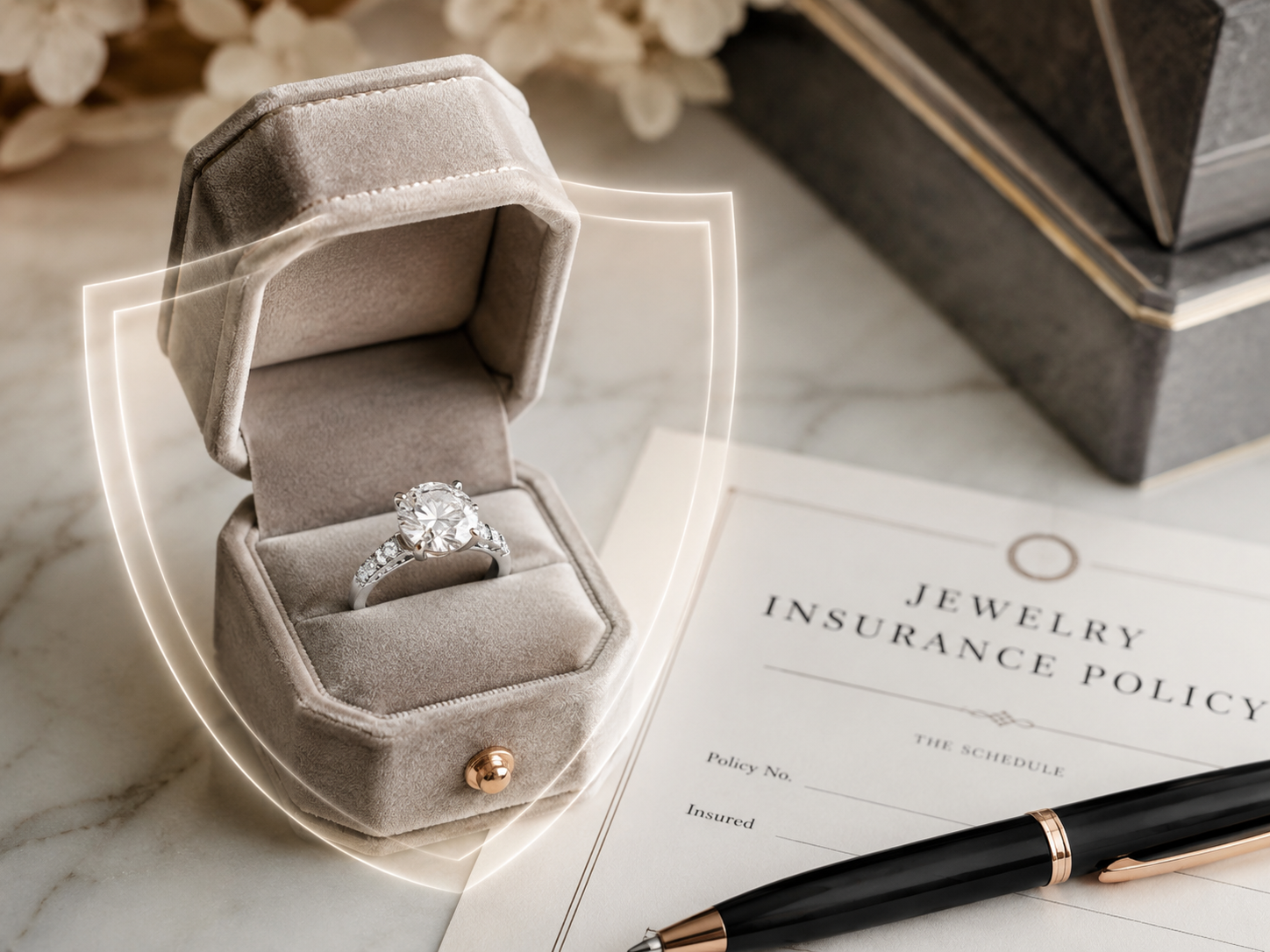
What Does Engagement Ring Insurance Cover?
The exact protection depends on the insurer. A strong policy may cover:
Theft
The policy may pay to repair or replace the ring if it is stolen from your home, vehicle, hotel room, luggage, or another covered location.
Theft claims usually require evidence such as a police report, proof of ownership, and valuation documents.
Accidental Damage
A diamond may be extremely hard, but the ring itself is not indestructible. Prongs can bend, settings can loosen, and stones can become chipped or detached.
Specialist insurance may cover accidental damage that ordinary contents insurance excludes or treats as an optional add-on.
Accidental Loss
A ring may slip off during exercise, fall down a drain, be lost while swimming, or disappear during travel.
Not every policy covers accidental loss. Consumers should search the wording for terms such as “accidental loss,” “mysterious disappearance,” or “unexplained disappearance.”
Worldwide Coverage
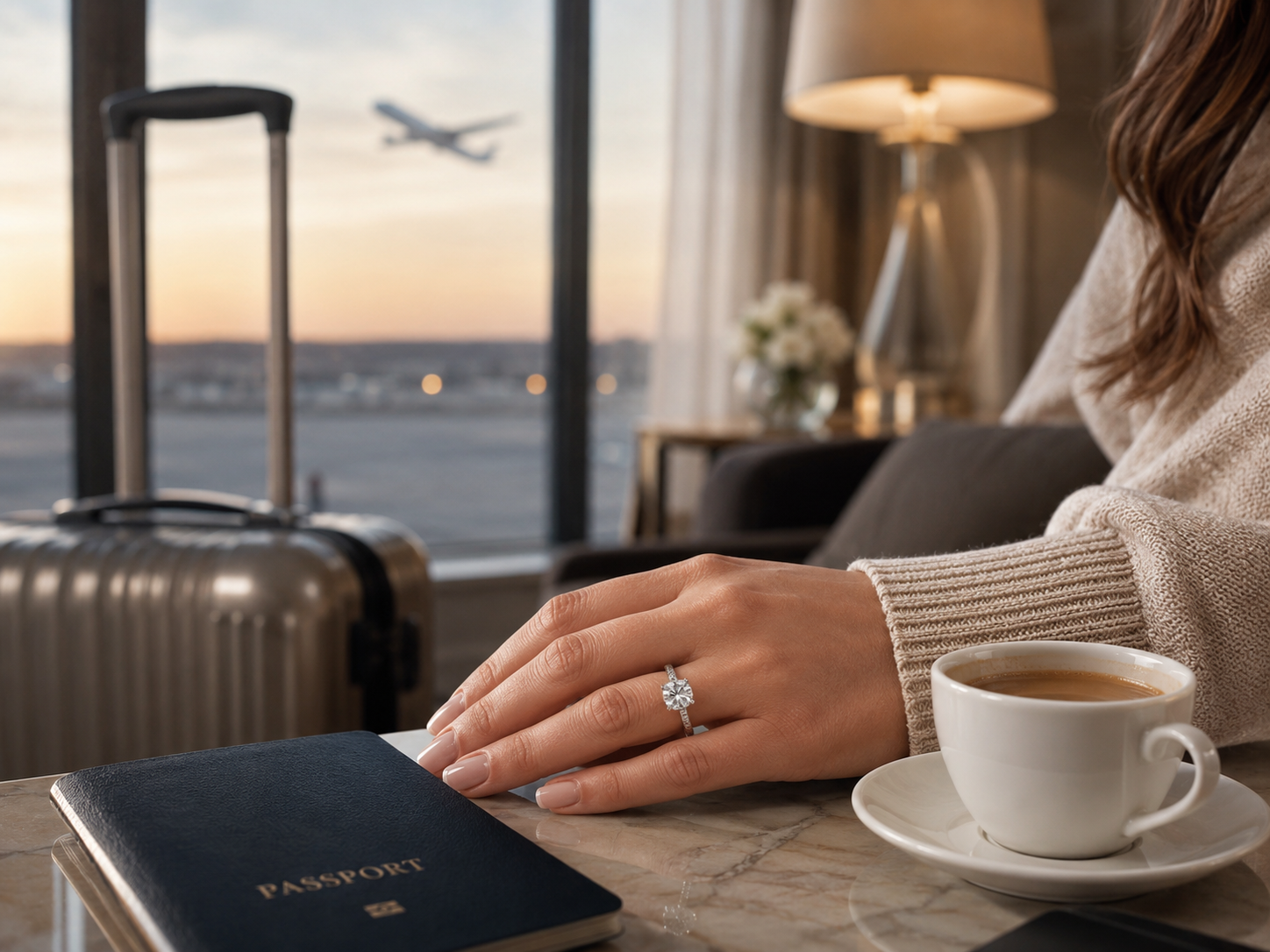
Some policies cover the ring while traveling internationally. Others protect the item only inside the home or within the policyholder’s country unless an additional worldwide extension has been purchased.
In the UK, overseas protection will commonly require personal possessions or worldwide cover rather than basic at-home contents insurance.
Fire and Natural Disasters
Coverage may apply if the ring is damaged or lost in a house fire, storm, or other insured disaster. However, disaster-related exclusions should be reviewed carefully.
Preventive Repairs
Some specialist policies may include preventive maintenance, such as tightening a loose stone or repairing worn prongs before the ring is lost. This is not a universal feature.
Jewelers Mutual, for example, advertises protection for loss, theft, damage, disappearance, certain disasters, worldwide travel, inflation adjustments, and qualifying preventive maintenance. These are company-specific features and should not be assumed to apply to every jewelry policy.
Three Ways to Insure an Engagement Ring
1. Standard Homeowners, Renters, or Contents Insurance
Your existing policy may automatically provide limited jewelry protection.
This can be sufficient for a lower-value ring if:
- The ring is below the single-item limit
- Theft is your main concern
- The overall jewelry limit is adequate
- You do not require broad accidental-loss coverage
- You rarely take the ring outside the home
The disadvantage is that the deductible may be high relative to the ring’s value. A homeowners claim can also become part of your property claims history.
2. Scheduled Personal Property or Specified-Item Cover
In the United States, you may add the ring as scheduled personal property, sometimes called a jewelry floater or rider.
In the United Kingdom, you may declare it as a specified high-value item under contents insurance and add personal possessions cover for protection away from home.
Scheduling or specifying the ring usually requires a receipt, professional valuation, appraisal, or grading report. The insurer records the ring separately with its own insured value.
This option may provide broader protection and lower deductibles than standard coverage.
3. Standalone Jewelry Insurance
A specialist policy insures the ring separately from your home or renters insurance.
Advantages may include:
- Broader accidental-loss protection
- Worldwide coverage
- Specialized claims handling
- Repair by an approved jeweler
- A deductible or excess selected by the customer
- No impact on the homeowners policy’s claims record
Possible disadvantages include another separate premium, different renewal dates, approved-jeweler restrictions, and limitations on cash settlements.
How Much Does Engagement Ring Insurance Cost?
The cost depends on:
- The ring’s replacement value
- Your location
- Local theft rates
- The deductible or excess
- Security arrangements
- Coverage territory
- Claims history
- Whether the policy includes loss and accidental damage
Jewelers Mutual states that its own coverage generally costs around 1% to 2% of the item’s retail replacement value annually. This is a provider-specific estimate rather than an industry-wide guaranteed rate.
Using that range as an illustration, a $6,000 ring could cost approximately $60 to $120 per year to insure. The actual quotation may be higher or lower.
UK premiums are also highly individual. Adding a ring to a contents policy may be inexpensive, but specifying a valuable ring and purchasing worldwide accidental-loss cover can increase the cost.
The Importance of a Professional Appraisal
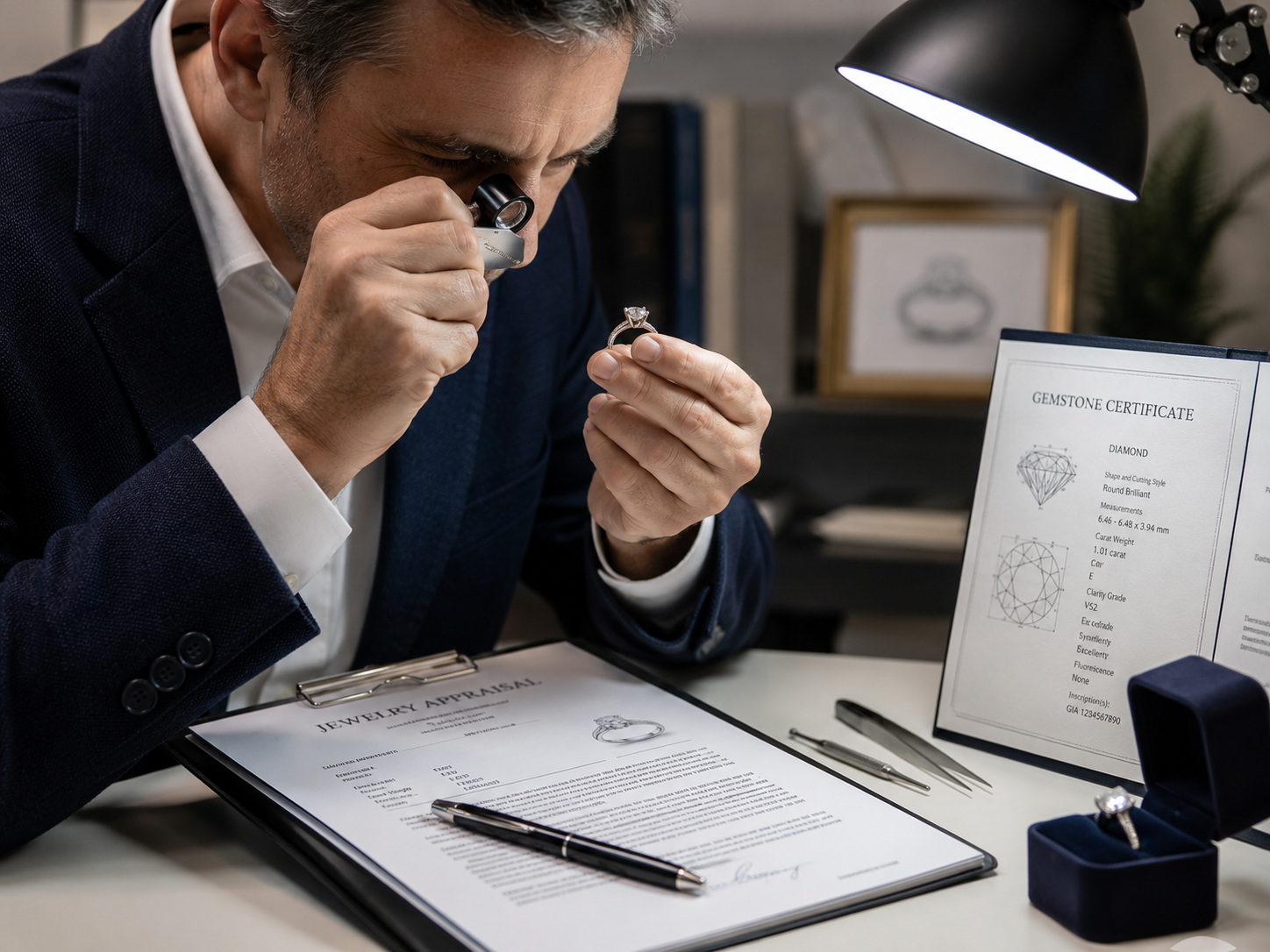
An appraisal provides a detailed description and estimated replacement value.
It should identify:
- Metal type
- Metal weight
- Diamond carat weight
- Cut, color, and clarity
- Stone measurements
- Setting style
- Additional gemstones
- Hallmarks, serial numbers, or identifying features
- Current replacement value
A grading report and an appraisal serve different purposes. A grading report evaluates the diamond’s characteristics, while an appraisal estimates the value of the complete ring for insurance purposes.
Do not automatically insure a ring for an inflated appraisal figure. Over-insurance may increase your premium without guaranteeing a larger cash payment. Many insurers arrange replacement with a ring of comparable type and quality rather than paying the entire listed amount in cash.
Update the valuation periodically, particularly if precious-metal or gemstone prices change substantially.
Replacement Value Versus Cash Value
This is one of the most important policy distinctions.
A replacement-value policy may pay the cost of repairing or replacing the ring with an equivalent item. The insurer may work with an approved jeweler and may not issue a cash payment equal to the declared insurance limit.
An actual-cash-value policy may deduct depreciation or settle according to the ring’s current market value.
Ask the insurer:
- Can I choose my own jeweler?
- Will you repair, replace, or pay cash?
- Is the replacement based on retail value or negotiated jeweler cost?
- Is there an agreed-value option?
- What happens if an identical antique ring cannot be found?
- Are taxes and appraisal fees included?
Important Exclusions to Check
Even broad jewelry policies can contain exclusions. Common examples include:
- Gradual wear and tear
- Intentional damage
- Fraud
- Damage during unauthorized repair
- War or nuclear risks
- Confiscation by authorities
- Commercial use
- Unexplained losses without reasonable evidence
- Failure to maintain the ring
- Loss from unattended luggage
- Damage that existed before the policy began
Read the full wording rather than relying on the summary page.
How to Document Your Ring
Keep digital and physical copies of:
- Purchase receipt
- Appraisal
- Diamond grading report
- Photographs from several angles
- Jeweler’s description
- Serial or inscription information
- Maintenance and repair records
- Insurance policy and endorsements
Store digital copies securely in cloud storage or another location outside your home.
Good records can make it easier to prove ownership, identify the ring, and establish the correct replacement standard.
How to Make a Claim
Report theft to the police as soon as possible and obtain a crime reference or report number.
Then contact the insurer and explain:
- What happened
- When it happened
- Where it happened
- When the ring was last seen
- What steps were taken to recover it
- Whether there are witnesses, photographs, receipts, or travel records
Do not exaggerate or guess. Provide accurate information and cooperate with reasonable requests.
In the UK, policyholders who are unhappy with an insurance decision should first use the insurer’s formal complaints process. The Financial Ombudsman Service may consider eligible disputes after the insurer has had an opportunity to respond.
US policyholders can contact their state insurance department if they believe an insurer has handled a claim improperly.
How to Choose the Best Ring Insurance
Compare at least three options and ask each insurer the same questions:
- Does the policy cover theft, damage, loss, and unexplained disappearance?
- Is worldwide protection included?
- What deductible or excess applies?
- Can I choose the repairing jeweler?
- Is the settlement based on replacement cost, agreed value, or cash value?
- Is preventive maintenance covered?
- How often is a new appraisal required?
- Are matching wedding-ring sets covered?
- What documentation is needed for a claim?
- Will a claim affect my home insurance record?
Final Verdict
Engagement ring insurance is most valuable when replacing the ring would cause serious financial difficulty.
A lower-value ring may be adequately protected through standard contents, renters, or homeowners insurance. A more valuable ring will often require scheduled personal property, specified-item coverage, or a specialist jewelry policy.
The best policy is not automatically the one with the lowest premium. Look for broad accidental-loss coverage, worldwide protection, clear replacement terms, a manageable deductible, and a claims process that allows the ring to be restored to comparable quality.
Insure the ring based on accurate documentation, update its valuation periodically, and review the policy before major travel, relocation, or jewelry upgrades.