AI in Personal Finance: Can Artificial Intelligence Manage Your Money Better Than You?
For generations, the management of personal wealth was a distinctly human endeavor. It required sitting across a mahogany desk from a financial advisor in a tailored suit, reviewing physical spreadsheets, and relying on human intuition, economic experience, and a certain degree of emotional trust. You paid this individual a hefty percentage of your net worth, hoping their human brain could outsmart the chaotic fluctuations of the global economy.
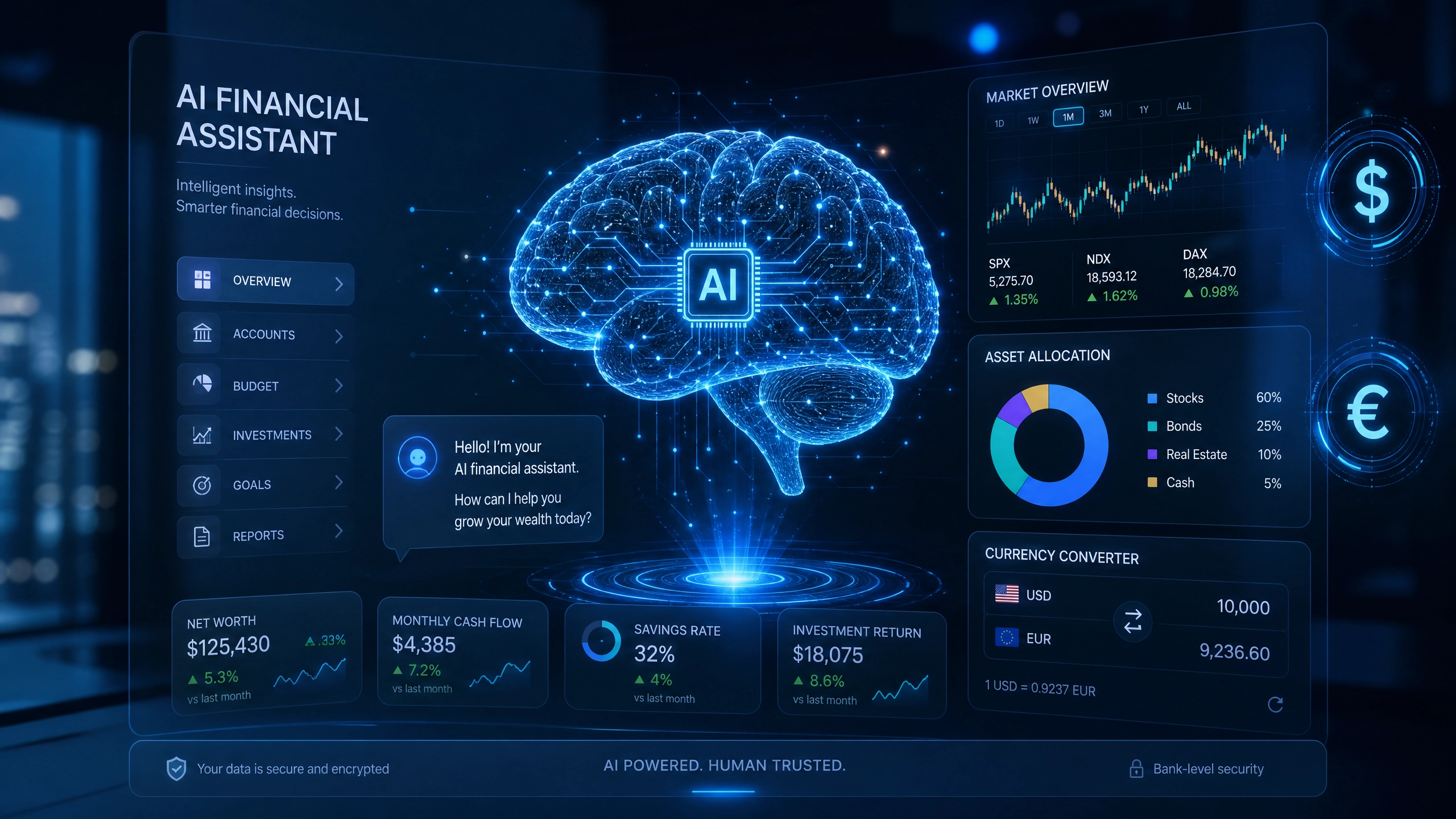
Today, that mahogany desk is being rapidly replaced by lines of code, neural networks, and massive server farms. Artificial Intelligence (AI) has breached the fortress of Wall Street and is now aggressively democratizing elite wealth management, placing it directly into the smartphones of everyday consumers.
From predictive budgeting apps that know you are going to overspend before you even leave your house, to algorithmic robo-advisors executing complex tax strategies at the speed of light, AI is completely rewriting the rules of personal finance.
But this technological revolution brings forth a highly uncomfortable, yet deeply necessary question: Can a machine actually manage your money better than you can?
To answer this, we must strip away the science-fiction hype and examine the raw mechanics of financial AI. This comprehensive guide will deeply analyze how algorithms are currently beating human advisors, expose the fatal psychological flaws of the human brain in investing, explore the hidden blind spots where AI still fails miserably, and provide you with a blueprint for integrating machine intelligence into your financial architecture.
1. The Evolution of Financial AI: From Spreadsheets to Neural Networks
To understand the current state of financial AI, we must trace its rapid evolution. We are no longer dealing with basic calculators; we are dealing with systems that learn, adapt, and execute autonomously.
Finance 1.0: The Era of Reactive Software
A decade ago, “financial technology” simply meant logging into Mint.com or downloading a spreadsheet. These tools were purely reactive. You spent money, the software recorded it, and at the end of the month, it showed you a pie chart of your financial failures. The software did not think; it merely aggregated data. The burden of behavior change still rested entirely on the human.
Finance 2.0: The Rise of the Robo-Advisor
The true disruption began with the popularization of Robo-Advisors (such as Betterment, Wealthfront, and Acorns). These platforms introduced algorithmic execution. You answered a simple five-question survey about your risk tolerance and age, and the computer automatically built a perfectly diversified portfolio of Exchange-Traded Funds (ETFs) for you. It was cheap, efficient, and removed the need to manually buy and sell stocks, but it still required a human to set the initial parameters.
Finance 3.0: The Dawn of Agentic AI
We have now entered the era of Agentic AI—Large Language Models (LLMs) and neural networks that do not just execute pre-programmed rules, but actively reason, predict, and take autonomous action. Modern financial AI analyzes your historical spending, reads the macroeconomic environment, predicts your upcoming utility bills based on weather patterns, and autonomously routes your idle cash into a high-yield money market fund overnight to earn 5% interest, pulling it back just in time to pay your mortgage. It is proactive, autonomous, and relentless.
2. The Core Mechanics: How AI is Currently Managing Wealth
How exactly is AI outperforming traditional human methods? The machine’s superiority lies in its ability to execute incredibly complex, tedious mathematical strategies perfectly, millions of times a second, without ever getting tired.
The Hidden Profit Generator: Algorithmic Tax-Loss Harvesting
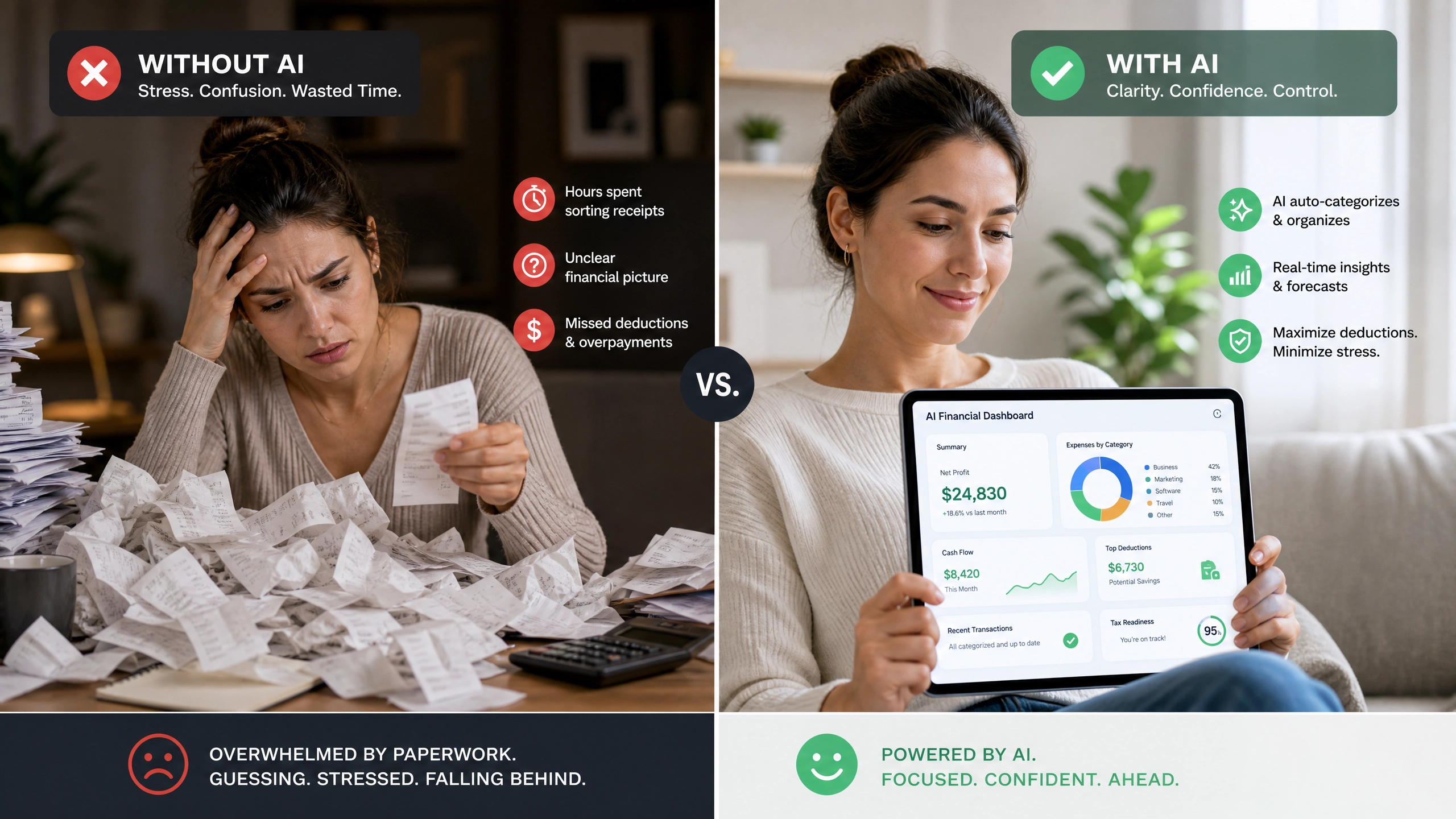
This is the ultimate superpower of the AI Robo-Advisor. In a taxable investment account, when you sell a stock for a profit, you owe capital gains taxes. However, if you sell a stock for a loss, you can use that loss to offset your taxes.
For a human advisor to manually track thousands of individual stocks across hundreds of clients, identify which ones are down on a Tuesday afternoon, sell them to harvest the tax loss, and immediately buy a similar asset to maintain the portfolio’s balance, it is a logistical nightmare.
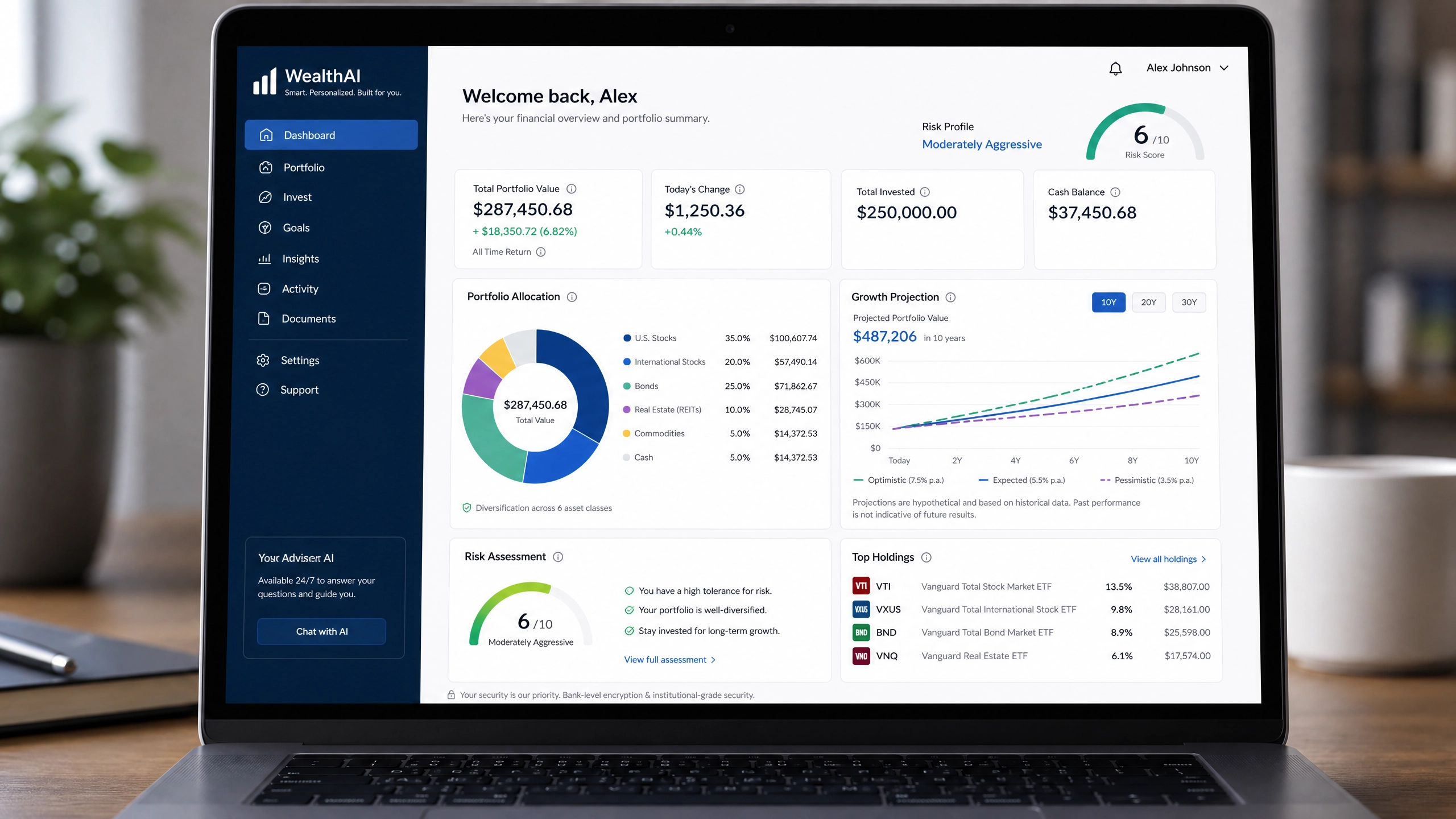
AI does this automatically, every single day. The algorithm constantly scans your portfolio. The millisecond an asset drops in value, the AI harvests the tax loss and reinvests the capital. This microscopic, daily tax optimization can add an estimated 1.00% to 1.50% to your overall annual returns, effectively paying the platform’s fee entirely through tax efficiency.
Continuous, Emotionless Rebalancing
If your target portfolio is 80% stocks and 20% bonds, a massive stock market rally might push your portfolio to 90% stocks, making you overly exposed to risk. A human advisor might rebalance your portfolio once a year. An AI algorithm monitors your asset allocation 24/7. The exact moment your portfolio drifts outside its target parameters, the AI automatically buys and sells fractional shares to bring it back to perfect balance, completely neutralizing risk drift.
Predictive Cash Flow and Micro-Budgeting
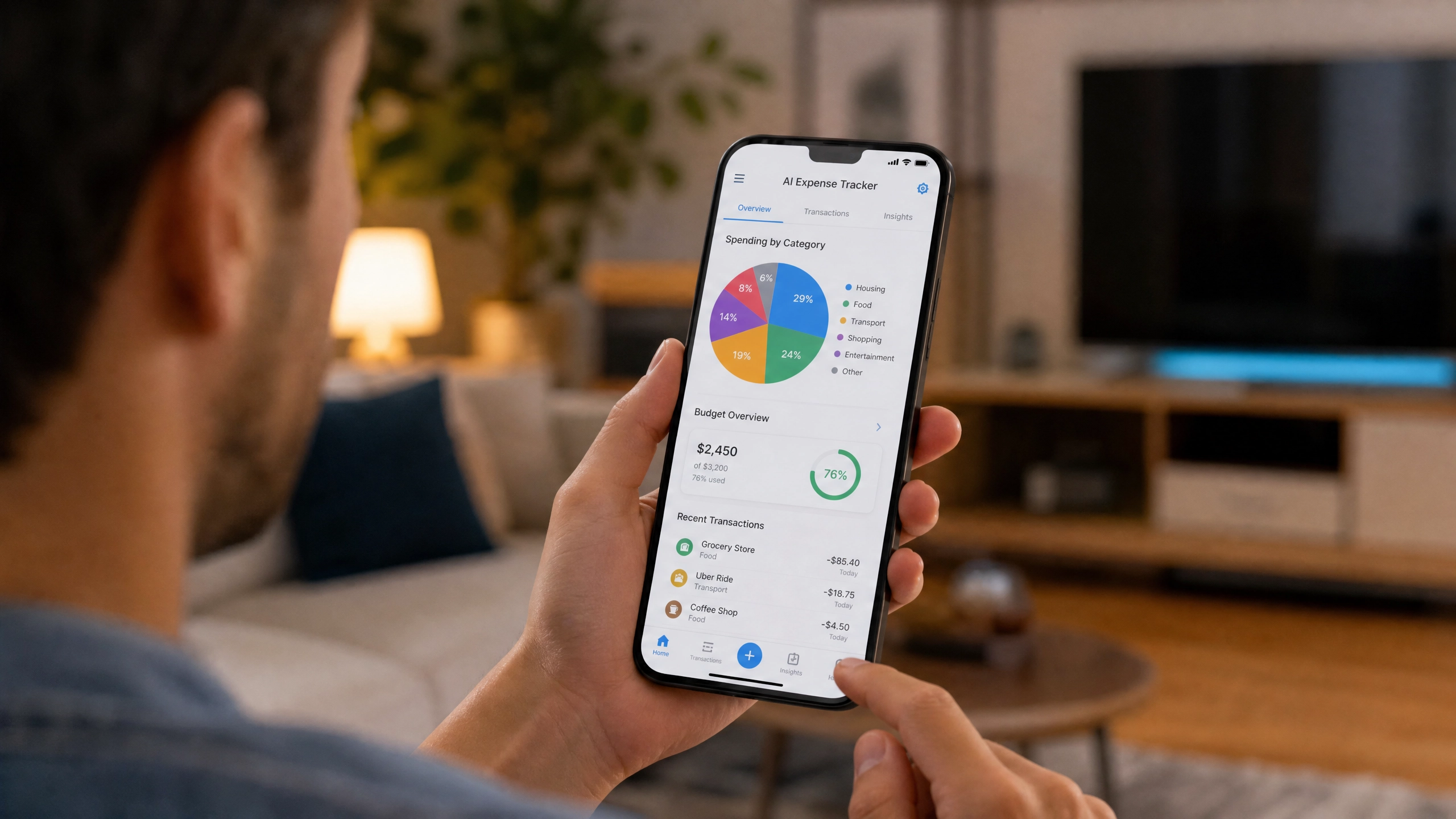
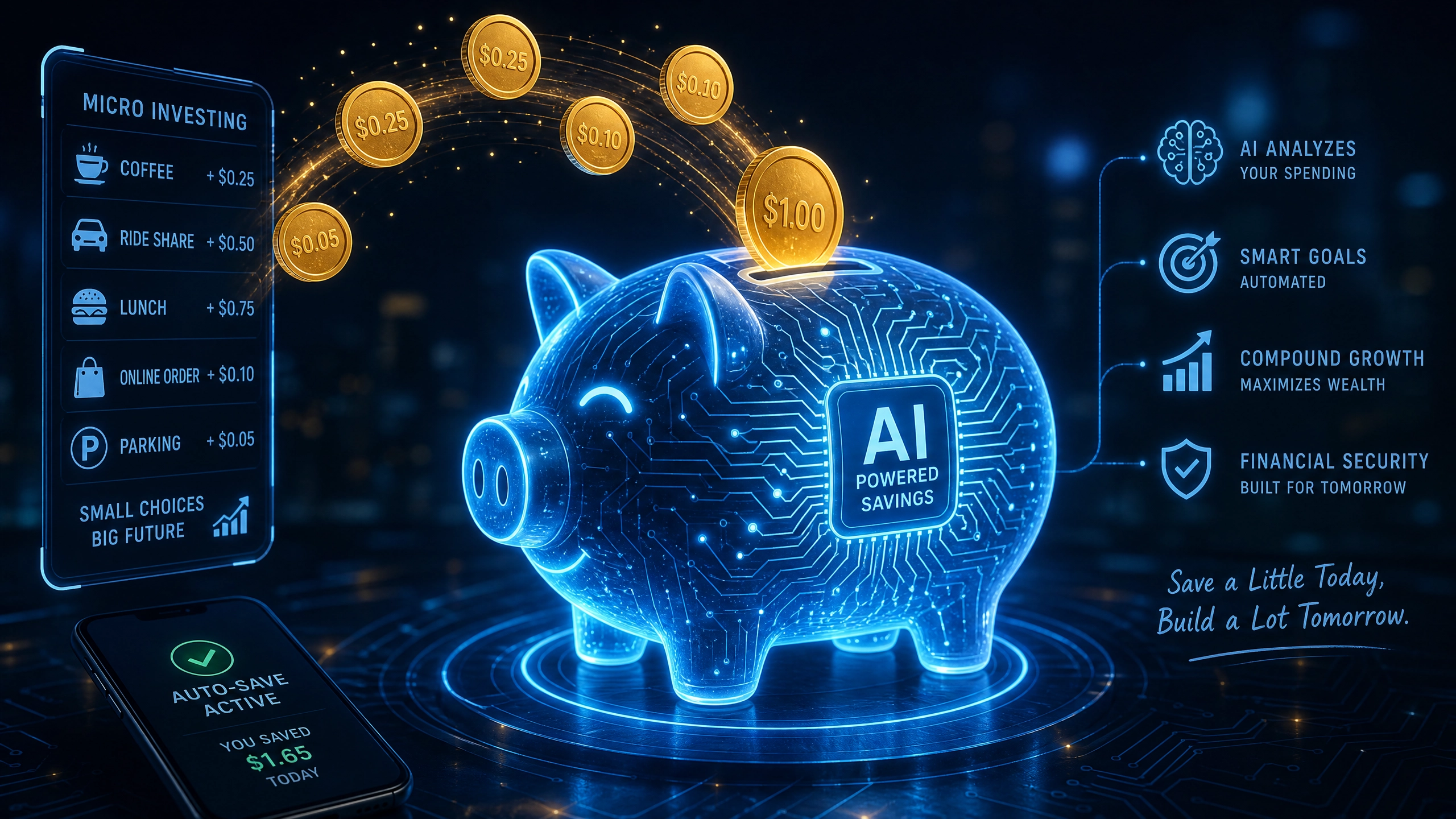
Modern AI budgeting apps (like Cleo or Copilot) integrate directly with your bank. They use machine learning to identify your recurring subscriptions (even the ones you forgot about). But more impressively, they analyze your spending velocity. If it is the 15th of the month and the AI notices you have been ordering takeout food at a 30% faster rate than your historical average, it will send you a push notification warning you that, mathematically, you will overdraft your account in exactly 12 days if you do not change your behavior immediately.
3. The Human Brain vs. The Machine: A Psychological Breakdown
If we are honest, the primary reason AI manages money better than most humans is not because the AI is a genius; it is because the human brain is fundamentally, evolutionarily flawed when it comes to investing.
The Eradication of Emotion (Fear and Greed)
Human beings are wired for survival. When a sabertooth tiger attacks, we run. In the modern world, when the stock market crashes by 30% (as it did during the 2008 financial crisis or the 2020 pandemic), the amygdala in our brain triggers the exact same “flight” response. Terrified human investors sell their stocks at the absolute bottom of the market, locking in massive, catastrophic losses.
Conversely, when a speculative asset (like a random cryptocurrency) skyrockets, human greed and FOMO (Fear Of Missing Out) cause people to buy at the absolute peak.
An AI has no amygdala. It does not feel fear when the market bleeds red. It does not feel greed when a tech stock goes parabolic. The AI looks at a 30% market crash and mathematically registers it as a “buying opportunity,” automatically deploying cash to buy assets at a discount while humans are panicking. AI forces you to buy low and sell high, completely removing your destructive emotions from the equation.
The Advantage of Infinite Data Processing
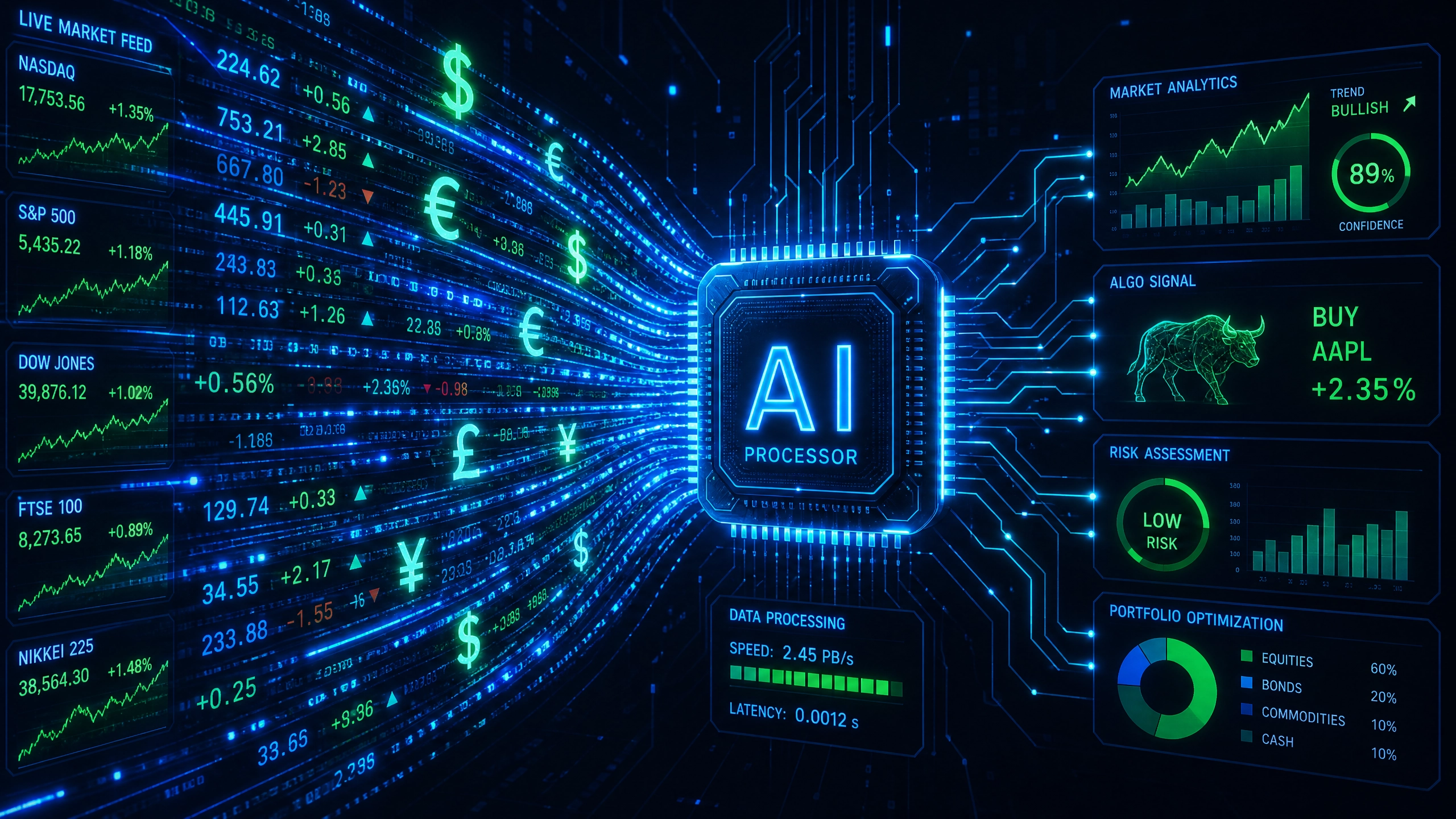
A human financial advisor reads the Wall Street Journal, reviews a few corporate earnings reports, and makes an educated guess. An AI model can ingest the earnings reports of every single publicly traded company on Earth, analyze satellite imagery of retail parking lots to predict quarterly sales, read the sentiment of ten million financial tweets, and execute a trade based on that aggregated data in three seconds. In the war of data processing, the human mind is profoundly outmatched.
4. The Blind Spots: Where Artificial Intelligence Fails Miserably
Despite its overwhelming mathematical superiority, you should not blindly hand over the keys to your entire financial life to an algorithm. AI has severe, inherent blind spots that require human intervention.
The Nuance of Human Goals
An AI is brilliant at maximizing a mathematical return on investment (ROI). However, personal finance is personal. It is rarely purely mathematical.
Perhaps you want to liquidate a portion of your stock portfolio to help your daughter pay for her medical school tuition, even though the AI tells you it is a “sub-optimal tax strategy.” Perhaps you want to invest heavily in a local, risky real estate project because it benefits your community, even though the algorithm advises against the risk matrix. AI cannot understand love, legacy, community duty, or the psychological peace of mind that comes from paying off a low-interest mortgage early.
The “Black Swan” Vulnerability
AI models are trained on historical data. They know how the market reacted to the 2008 housing crash or the dot-com bubble because they have the data.
However, AI struggles immensely with Black Swan events—unprecedented, highly improbable historical events that have never happened before (e.g., a sudden, unpredicted global pandemic causing a total shutdown of the global supply chain, or a geopolitical nuclear event). Because the AI has no historical training data for a truly novel crisis, its algorithms can break, leading to unpredictable, automated sell-offs. Human intuition and geopolitical reasoning are still required to navigate truly unprecedented chaos.
The Empathy Deficit in Financial Planning
When a client’s spouse unexpectedly passes away, they do not need an algorithm to optimize their tax-loss harvesting. They need a human being to sit across the table, offer empathy, slow them down from making rash decisions in a state of grief, and help them navigate the complex emotional landscape of estate planning. An AI chatbot, no matter how advanced the Large Language Model becomes, cannot provide genuine human empathy.

5. Security and Privacy: Trusting a Machine with Your Life Savings
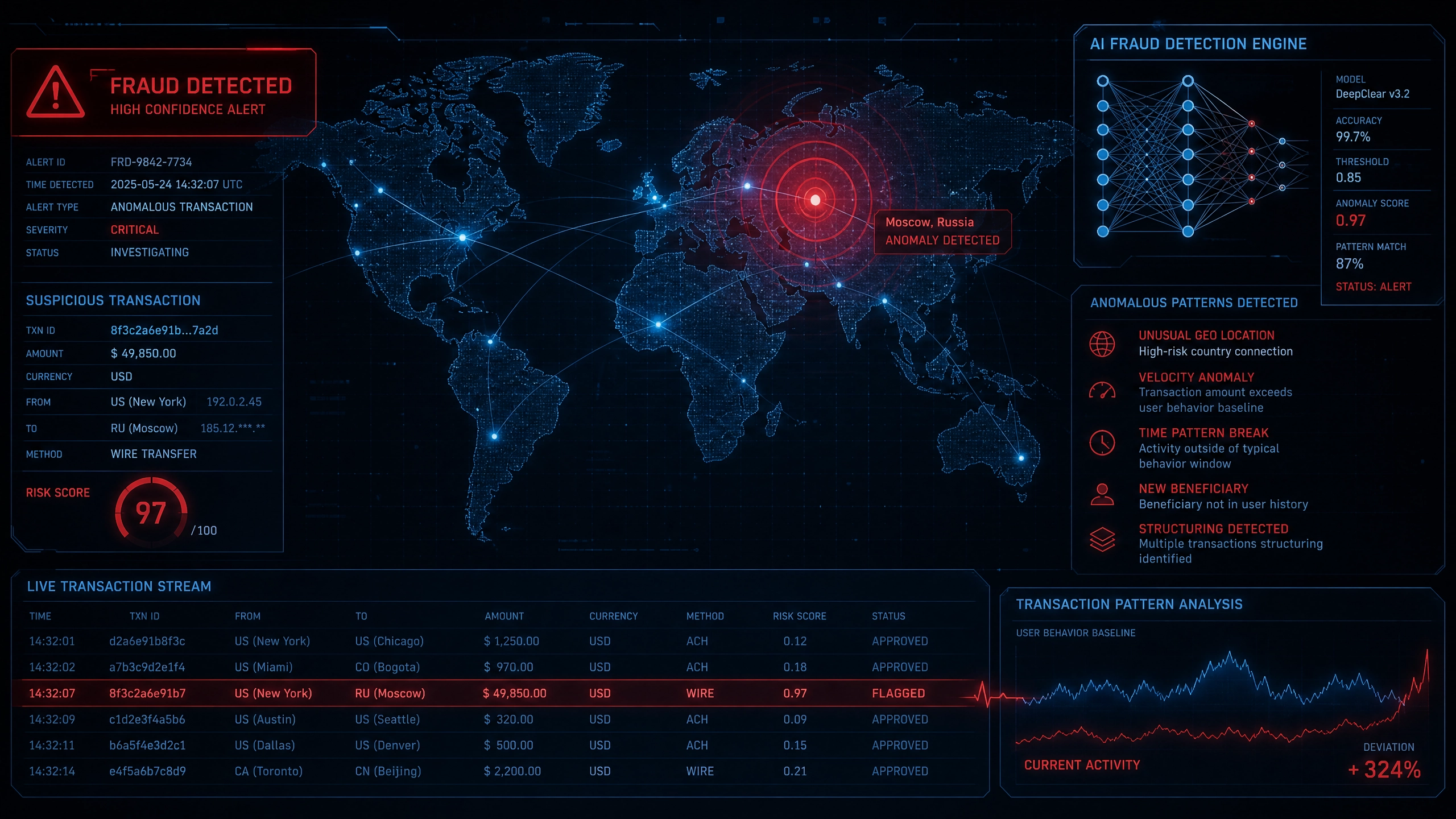
Allowing an AI agent to autonomously move your money requires granting it deep, continuous access to your bank accounts, brokerages, and personal identity data. This introduces severe cybersecurity concerns.
Data Harvesting and Algorithmic Bias
When you use a “free” AI financial app, you are usually the product. The AI is ingesting your highly granular spending data—where you shop, what medications you buy, what political organizations you donate to. If this data is not fiercely encrypted and protected by strict privacy policies, it can be sold to data brokers or used to target you with predatory lending advertisements. Furthermore, if the AI’s training data is flawed, it can exhibit algorithmic bias, potentially denying you credit or loans based on hidden demographic correlations.
The “Hallucination” Risk
Large Language Models (like the technology powering ChatGPT) are known to occasionally “hallucinate”—meaning they confidently state fabricated information as absolute fact. If an AI financial chatbot hallucinates a fake tax law or misinterprets a complex IRS regulation, and you act on that advice, you (the human) are legally responsible for the ensuing tax penalties, not the software company.
6. Comparative Matrix: Human Advisor vs. AI Robo-Advisor
Use this reference table to determine which financial management system aligns with your current net worth and complexity.
| Feature / Capability | Human Financial Advisor | AI / Robo-Advisor |
|---|---|---|
| Management Fees | High (Usually 1.00% to 1.50% of Assets Under Management). | Microscopic (Usually 0.25% to 0.40% annually). |
| Availability | Monday to Friday, 9 AM to 5 PM. Requires appointments. | 24/7/365. Instant execution on your smartphone. |
| Emotional Intelligence | Excellent. Can navigate grief, divorce, and family legacy planning. | Zero. Entirely unequipped to handle human emotional nuance. |
| Tax-Loss Harvesting | Manual, infrequent, and prone to human oversight. | Automated, daily, and mathematically flawless. |
| Best For (Target Demographic) | High-net-worth individuals with complex estates, multiple businesses, and complex tax structuring. | 95% of retail investors, young professionals, and those focused purely on wealth accumulation. |
7. The Hybrid Future: Bionic Wealth Management
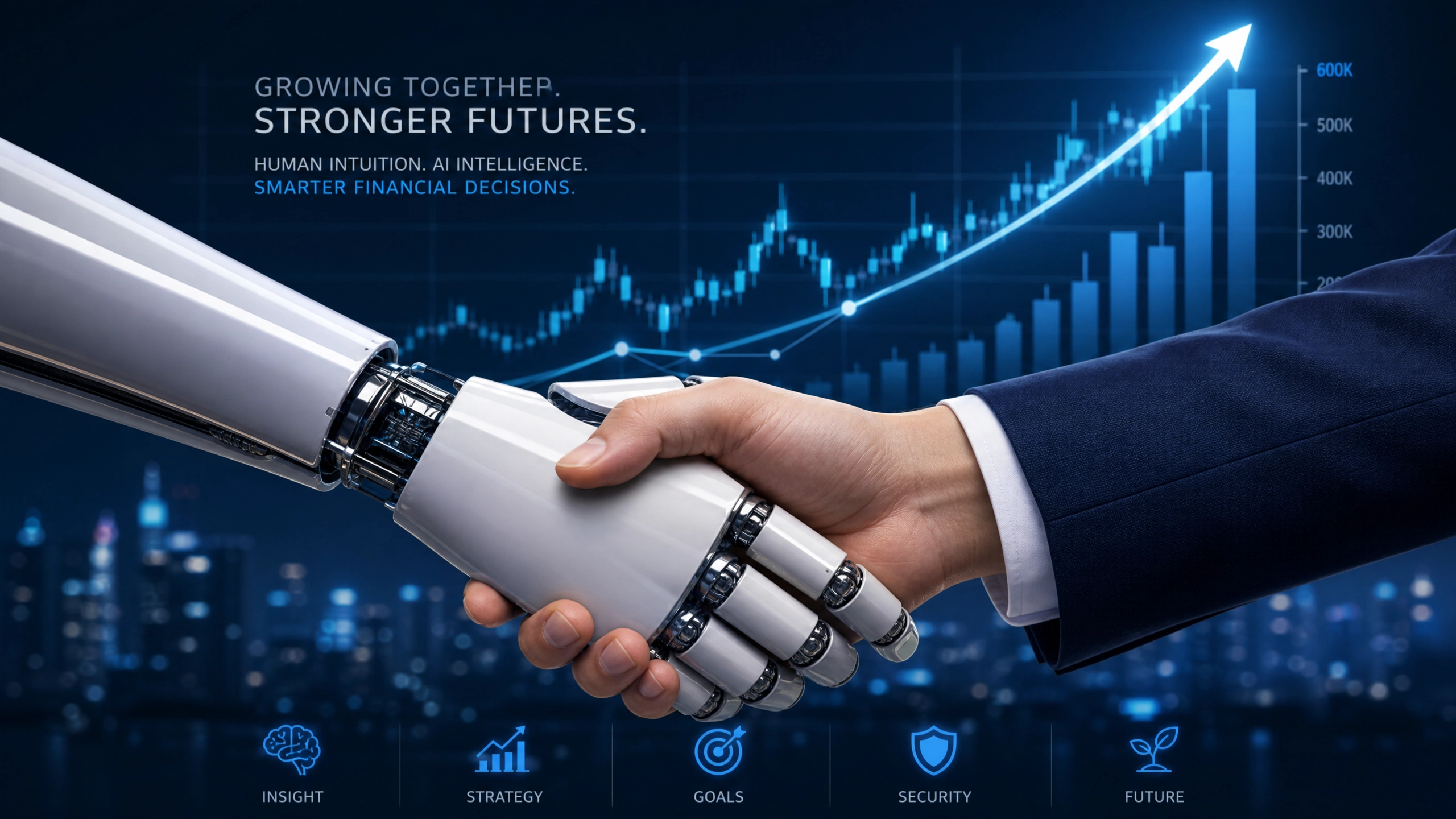
The debate of “Human vs. Machine” is ultimately a false dichotomy. The future of personal finance—and the current reality for elite wealth management firms—is the Hybrid Model (or Bionic Advisory).
In this model, you hire a human fiduciary financial advisor, but that advisor is armed with a suite of enterprise-grade AI tools.
- The AI does the heavy lifting: it rebalances the portfolio, harvests the tax losses, tracks the daily cash flow, and monitors the macroeconomic data.
- The Human does the relationship building: they interpret the AI’s data for the client, manage the client’s emotional panic during a recession, construct the estate plan, and align the portfolio with the client’s deeply personal life goals.

8. How to Integrate AI into Your Financial Life Today
If you are currently managing your finances manually on a spreadsheet, you are operating at a massive disadvantage. Here is how you can safely integrate AI into your wealth-building architecture today:
- Automate the Core Portfolio: Open an account with a top-tier Robo-Advisor (like Wealthfront, Betterment, or Vanguard Digital Advisor). Set up an automatic monthly transfer from your checking account. Let the algorithm build your diversified ETF portfolio, automatically rebalance it, and handle the tax-loss harvesting entirely in the background.
- Deploy an AI Cash Flow Monitor: Connect your primary checking account to an AI-driven budgeting app (like Copilot Money or Monarch). Allow the machine learning to analyze your spending velocity and notify you of upcoming subscription renewals or budget overages before they happen.
- Keep the Human Element for Strategy: Use the AI for execution, but use your own human brain (or a human, fee-only financial planner) to set the overarching strategy. The AI is the engine; you must remain the driver.
9. Frequently Asked Questions (FAQ)
Will AI completely replace human financial advisors?
No, but it will eradicate mediocre financial advisors. Advisors who simply act as gatekeepers—charging 1.5% a year just to put your money into mutual funds—will be entirely replaced by cheap algorithms. However, advisors who act as true behavioral coaches, tax strategists, and estate planners will thrive by using AI to scale their practices. The value of a human advisor has shifted from “picking stocks” to “managing client psychology.”
Is it safe to link my bank accounts to an AI app?
Yes, provided you use reputable, highly-rated applications. Modern financial AI apps do not directly log into your bank. They use established, highly secure data aggregators (like Plaid or Finicity) that create an encrypted, read-only token. The AI can view your transactions to analyze them, but it cannot move your money or steal your login credentials.
Can AI predict the stock market and pick winning stocks?
While institutional hedge funds spend billions on algorithmic trading to exploit microscopic market inefficiencies, consumer-level AI cannot consistently predict the stock market or pick winning individual stocks better than a broad market index fund over a 10-year horizon. The stock market is a chaotic system driven by unpredictable human behavior and geopolitical shocks. The best use of AI in personal finance is not stock picking; it is risk management, tax optimization, and automated asset allocation.
Author’s Note: The Ultimate Partnership
The integration of Artificial Intelligence into the global financial system is not a futuristic theory; it is a present reality. The algorithms are already deeply embedded in the architecture of modern wealth.
Resisting this technology out of fear or nostalgia for the “good old days” of paper ledgers is a guaranteed strategy for financial underperformance. You cannot out-calculate a neural network. You cannot out-rebalance an algorithm that monitors the market 24 hours a day.
However, you must never forget that money is merely a tool used to facilitate a human experience. An AI can calculate the exact mathematical trajectory required to help you retire at age 55 with $3 million. But the AI cannot tell you what you should do with that freedom. It cannot appreciate the joy of paying for your grandchild’s education, and it cannot feel the peace of mind of owning your home outright.
Do not compete with the machine. Delegate the tedious, mathematical, and analytical heavy lifting to the Artificial Intelligence. Let the algorithm harvest your taxes, rebalance your ETFs, and track your subscriptions. By outsourcing the mathematics of money to the machine, you free up your human bandwidth to focus on the philosophy of money: designing a life of purpose, security, and genuine wealth.