The Ultimate Guide to Investing in the S&P 500: Build Wealth with America’s Top Companies
When novice investors first decide to venture into the stock market, they are usually driven by the desire to pick the next explosive tech stock. They spend hours analyzing charts, reading complex financial reports, and watching sensationalized financial news networks, hoping to uncover a hidden gem that will make them wealthy overnight.
However, the harsh reality of Wall Street is that picking individual stocks is a notoriously difficult, high-risk endeavor. Even the most highly educated, excessively paid professional fund managers fail to consistently pick winning stocks that outpace the broader market over a ten-to-twenty-year horizon.
If the professionals cannot consistently beat the market, how can the average retail investor hope to build generational wealth? The answer lies in a legendary financial strategy championed by billionaires like Warren Buffett: Stop trying to beat the market, and simply buy the entire market.
The ultimate vehicle for executing this strategy is the S&P 500.
Investing in the S&P 500 is the bedrock of modern wealth accumulation. It is the single most recommended, historically proven, and mathematically sound investment strategy for the everyday consumer. This comprehensive guide will demystify exactly what the S&P 500 is, explain the stringent criteria companies must meet to join it, detail the unbeatable mathematics of its historical returns, provide a step-by-step roadmap for how to actually buy it, and equip you with the psychological armor needed to hold it through market crashes.
1. What Exactly is the S&P 500? (The Core Mechanics)
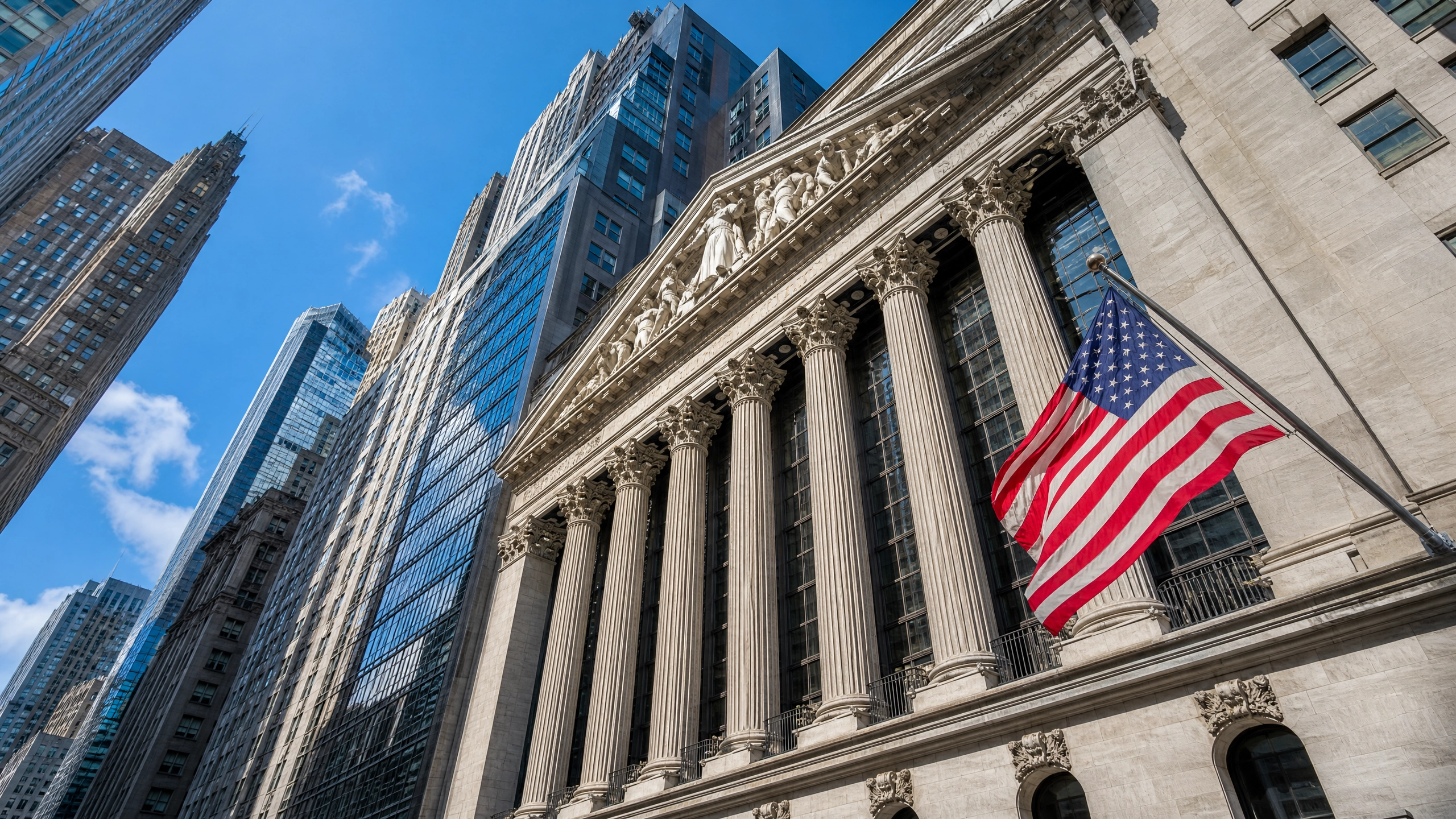
To understand how to invest in it, you must first understand what “it” is. The S&P 500 is not a single company, nor is it a physical product. The Standard & Poor’s 500 (S&P 500) is a stock market index—a standardized mathematical list created by a financial analytics company to track the performance of the 500 largest, most profitable publicly traded corporations in the United States.
When you hear financial news anchors say, “The market is up today,” they are almost always referring to the S&P 500. It is widely considered the ultimate barometer for the health of the overall American economy.
The Strict Criteria for Inclusion
A company cannot simply buy its way into the S&P 500. To be admitted to this elite club, a corporation must pass rigorous criteria evaluated by a specialized committee. To even be considered, a company must:
- Be a U.S.-based company: It must have its headquarters in the United States.
- Have Massive Market Capitalization: It must be a “large-cap” company, meaning its total market value must exceed a highly specific, constantly updating threshold (usually well over $15 billion).
- Be Highly Liquid: Its shares must trade frequently and in massive volumes, ensuring investors can easily buy and sell.
- Crucially: Be Consistently Profitable: The company must report positive earnings (net profit) over the most recent quarter, as well as over the sum of its last four consecutive quarters. (This profitability rule is what kept massive companies like Uber or Tesla out of the index for years until they finally proved they could turn a consistent profit).
A Market-Cap Weighted Index
The S&P 500 is “market-capitalization weighted.” This means the 500 companies do not have an equal 1/500th slice of the pie. The larger a company becomes, the more weight it holds in the index. Currently, massive technology behemoths like Apple, Microsoft, Amazon, and Nvidia make up a heavily disproportionate percentage of the index. When you invest in the S&P 500, you are investing the most money into the most successful companies, and progressively less money into the smaller companies at the bottom of the list.

2. The Historical Performance: The Math of Wealth Creation
The primary reason financial advisors universally recommend the S&P 500 is its unyielding historical resilience and performance.
Since its expansion to 500 stocks in 1957, the index has navigated the assassination of a U.S. President, the Vietnam War, the stagflation of the 1970s, the Dot-Com bubble burst, the 2008 Great Financial Crisis, and a global pandemic. Through every single one of these catastrophic events, the index crashed, recovered, and eventually soared to new all-time highs.
The 10% Historical Average
Historically, over the last century, the S&P 500 has returned an average annualized return of approximately 10% (roughly 7% to 8% when adjusted for inflation). Note: This is an average. The market rarely returns exactly 10% in a single year. One year it might be up 25%, and the next year it might drop by 15%. However, smoothed out over a 20-to-30-year investing horizon, the 10% average holds remarkably true.
The Magic of Compound Interest in Action
To understand why a 10% average return is so powerful, you must look at the mathematics of compound interest. Imagine you are 25 years old. You open a brokerage account and commit to investing $500 a month into an S&P 500 index fund, and you never increase that amount for 40 years.
- Total Money You Invested (Out of Pocket): $240,000.
- Total Account Balance at Age 65 (Assuming 10% average return): Over $3.1 Million.
The stock market generates nearly $2.9 million in completely passive wealth for you, simply because you bought the 500 largest companies in America and had the discipline to leave the money alone.

3. How to Actually Buy the S&P 500 (Step-by-Step)
A common point of confusion for beginners is trying to type “S&P 500” into a brokerage app and finding that there is no “buy” button. Because the S&P 500 is just a mathematical list (an index), you cannot buy it directly.
You must buy a Fund that tracks the list. Financial institutions (like Vanguard, Fidelity, or Charles Schwab) create massive pools of money, use that money to buy all 500 stocks in the exact proportions dictated by the index, and then sell you a “share” of that pool.
Here is the exact blueprint to execute your first investment:
Step 1: Open a Brokerage Account
You need a platform to execute the trade. Do not use expensive, high-fee traditional wealth managers. Open a free, self-directed brokerage account online.
- Top Recommendations: Vanguard, Fidelity Investments, Charles Schwab, or modern apps like M1 Finance or Robinhood.
- Account Type: If you are saving for retirement, open a Tax-Advantaged Roth IRA. If you want access to the money before retirement, open a standard Taxable Brokerage Account.
Step 2: Choose Your S&P 500 Tracker (ETF or Mutual Fund)
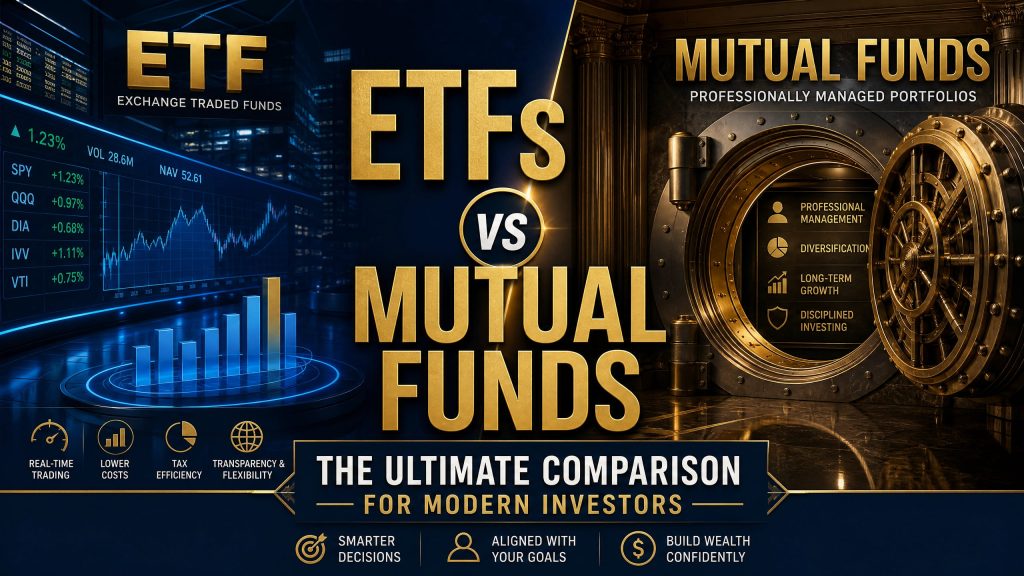
You must choose the specific “ticker symbol” that tracks the index. You have two primary structural choices: an Exchange-Traded Fund (ETF) or an Index Mutual Fund. They hold the exact same 500 companies; they just trade slightly differently.
Top S&P 500 ETFs (Trade like normal stocks during the day):
- VOO (Vanguard S&P 500 ETF)
- SPY (SPDR S&P 500 ETF Trust)
- IVV (iShares Core S&P 500 ETF)
Top S&P 500 Index Mutual Funds (Trade once a day at market close):
- FXAIX (Fidelity 500 Index Fund)
- VFIAX (Vanguard 500 Index Fund Admiral Shares)
- SWPPX (Schwab S&P 500 Index Fund)
(Any of the tickers listed above will achieve the exact same goal. VOO and FXAIX are widely considered the gold standards for their incredibly low fees).
Step 3: Execute the Trade and Automate
Transfer cash from your checking account to your new brokerage account. Search for your chosen ticker symbol (e.g., VOO), select “Buy,” and enter the dollar amount you wish to invest. The Ultimate Hack: Once you buy your first share, navigate to the brokerage settings and turn on “Automatic Investments.” Set the system to automatically pull a set amount of cash from your bank account every single month and buy more shares of the S&P 500.

4. The Unbeatable Mathematics of Low Fees (Expense Ratios)
The single greatest predictor of your success in the stock market is not which index you pick; it is how much you pay Wall Street to manage it. The fee a fund charges you to manage your money is called the Expense Ratio.
Actively managed mutual funds (where a human manager tries to pick winning stocks) typically charge expense ratios of 1.00% to 1.50% annually. That might sound small, but a 1.5% fee will devour hundreds of thousands of dollars of your compound growth over a 30-year period. Wall Street takes a third of your profit, while taking zero percent of your risk.
Because S&P 500 funds are “passively managed” by a computer algorithm that simply tracks a predetermined list, the administrative costs are virtually non-existent.
- The expense ratio for the Vanguard S&P 500 ETF (VOO) is a microscopic 0.03%.
- The expense ratio for the Fidelity 500 Index Fund (FXAIX) is 0.015%.
By choosing a low-cost S&P 500 tracker, you are guaranteeing that you keep nearly 100% of the wealth your money generates.
5. The Built-in Self-Cleansing Mechanism
One of the most brilliant, underappreciated features of the S&P 500 is that it is inherently self-cleansing.
When you buy individual stocks, you must constantly monitor their balance sheets. If a company begins to fail (think Blockbuster, Sears, or Kodak), its stock goes to zero, and you lose your investment.
With the S&P 500, you never have to read an earnings report. If a company inside the index becomes poorly managed and its market capitalization plummets, the S&P committee will literally kick that company out of the index. The failing company is immediately replaced by a new, rapidly growing, highly profitable company that has earned its spot.
When you hold an S&P 500 index fund, you automatically own the winners, and the losers are automatically flushed out of your portfolio without you ever having to click the “sell” button or pay capital gains taxes on the transition.

6. Dividends: The Hidden Income Engine of the S&P 500
Many investors mistakenly believe that the only way to make money with the S&P 500 is if the share price goes up (capital appreciation). They completely overlook the power of dividends.
Of the 500 companies in the index, approximately 400 of them pay quarterly cash dividends. Because you own a fractional share of all these companies, your S&P 500 fund collects all these massive corporate cash payouts, aggregates them, and deposits a consolidated dividend payment directly into your brokerage account four times a year.
The Golden Rule: DRIP. When setting up your account, you must ensure that Dividend Reinvestment (DRIP) is turned on. This instructs the brokerage to take that quarterly cash dividend and automatically use it to buy more shares of the S&P 500. This triggers an exponential snowball effect, accelerating your wealth creation far beyond what simple price appreciation can achieve.

7. Psychological Warfare: How to Survive Market Crashes
The mathematics of investing in the S&P 500 are flawless. The only way you can fail is if you sabotage your own portfolio through emotional panic.
Historically, the stock market experiences a “correction” (a drop of 10% or more) roughly once every two years, and a “bear market” (a drop of 20% or more) roughly every seven years. During these crashes, the financial media will scream that the economy is collapsing and urge you to sell.
Dollar-Cost Averaging (DCA) is Your Shield
To survive crashes, you must shift your psychology from a “stock trader” to an “accumulator of assets.” You achieve this through Dollar-Cost Averaging (DCA)—the process of investing the exact same dollar amount every single month, regardless of whether the market is at an all-time high or crashing violently.
- When the market is booming, your $500 buys fewer shares.
- When the market crashes, the S&P 500 goes “on sale.” Because the price is lower, your $500 automatically buys significantly more shares.
When the market inevitably recovers (as it always has for a century), the massive pile of cheap shares you accumulated during the crash will skyrocket in value. A market crash is not a tragedy for a long-term investor; it is the ultimate wealth-building opportunity.

8. Comparative Matrix: The S&P 500 vs. The Alternatives
How does the S&P 500 stack up against other popular investing strategies? Use this matrix to understand its unique position in the financial landscape.
| Feature | The S&P 500 Index Fund (e.g., VOO) | Individual Stock Picking (e.g., Buying Apple) | Total US Stock Market Fund (e.g., VTI) |
|---|---|---|---|
| Diversification | High. Own the 500 largest US companies. | Zero. Total exposure to a single company’s risk. | Very High. Own roughly 3,800 US companies (Large, Mid, and Small-cap). |
| Risk Profile | Moderate (Market Risk). | Extremely High (Single-Stock Risk). | Moderate (Market Risk). |
| Required Maintenance | Zero. Completely automated and self-cleansing. | Very High. Requires constant monitoring of earnings and news. | Zero. Completely automated. |
| Potential Returns | Averages ~10% annually (Historical). | Could jump 500% or drop to absolute zero. | Practically identical to the S&P 500 (Usually 9.9%). |
| Ideal Investor | 99% of long-term wealth builders. | Speculators, active traders. | Investors wanting absolute maximum diversification. |
9. Frequently Asked Questions (FAQ)
Is it a bad time to invest if the S&P 500 is at an “All-Time High”?
No. This is a common psychological barrier. The stock market spends the vast majority of its history at or near all-time highs; that is the mathematical nature of an asset class that goes up over time. If you wait for the market to crash before investing, you will often miss out on years of compounding growth. The old adage holds true: Time in the market beats timing the market.
Should I invest a Lump Sum or Dollar-Cost Average?
If you inherit $100,000 or sell a house, should you invest it all at once (Lump Sum) or trickle it in over a year (DCA)? Mathematically, Vanguard studies have proven that investing a lump sum beats DCA about 68% of the time, simply because you get the money working in the market faster. However, if putting $100,000 into the market on a Tuesday will cause you severe anxiety, utilizing DCA over six months is a perfectly valid psychological defense strategy.
Can the S&P 500 ever go to zero?
If an S&P 500 index fund drops to absolute zero, it means that all 500 of the largest, most powerful corporations in America—including the banks, the grocery chains, the energy grid providers, and the tech infrastructure—have simultaneously gone bankrupt and ceased to exist. If this apocalyptic scenario occurs, your stock portfolio will be the least of your concerns; paper money will be worthless, and society will have reverted to a barter system.

What is the difference between the S&P 500 and the Dow Jones?
The Dow Jones Industrial Average (DJIA) is an older index that tracks only 30 specific, massive U.S. companies. Furthermore, it is “price-weighted” rather than “market-cap weighted,” which is a highly antiquated and flawed methodology. Modern financial professionals heavily favor the S&P 500 because tracking 500 companies provides a vastly superior, more accurate representation of the American economy than tracking just 30.
Author’s Note: The Ultimate Bet on Human Progress
The financial services industry is a multi-trillion-dollar behemoth that thrives on creating the illusion of complexity. Wall Street executives want you to believe that investing requires sophisticated algorithms, insider knowledge, and expensive management fees.
The S&P 500 completely shatters that illusion. It is the great equalizer of the financial world.
When you buy an S&P 500 index fund, you are not gambling on abstract numbers on a screen. You are making a highly rational, historical bet on human ingenuity, corporate efficiency, and the relentless drive of the global economy. You are betting that next year, companies will invent better technologies, streamline their supply chains, and sell more products than they did this year.
Do not let the fear of short-term volatility rob you of your long-term financial independence. Open your brokerage account, automate your monthly purchases of an S&P 500 index fund, turn on dividend reinvestment, and walk away. Focus your energy on your family, your career, and your passions, while the most powerful economic engine in human history quietly builds your generational wealth in the background.