How To Save $10,000 Fast: The Ultimate Action Plan for Financial Freedom
Hitting your first five-figure savings milestone is a transformative experience. Having $10,000 in liquid cash sitting safely in a bank account fundamentally alters your psychological relationship with money. It is the exact threshold where financial survival transitions into financial security. With $10,000, a sudden car repair is no longer a crisis; an unexpected medical bill does not require high-interest credit card debt, and a toxic job is no longer a prison because you possess “walk-away” money.
However, saving $10,000 fast requires an entirely different methodology than standard, slow-paced retirement planning. You cannot achieve a radical financial goal using a casual, passive approach. It demands a temporary season of intense financial focus, behavioral adjustments, and a two-pronged attack: ruthlessly slashing your expenses while aggressively accelerating your income.
Whether your goal is to build an impenetrable emergency fund, prepare a down payment for a house, or seed a new business venture, this comprehensive guide will provide the exact mathematical frameworks and actionable strategies to help you save $10,000 faster than you ever thought possible.
1. The Mathematics of the Goal: Deconstructing $10,000
Before you take any action, you must deconstruct the intimidating $10,000 mountain into digestible, mathematical stepping stones. A goal without a timeline is merely a wish. You must choose your timeline based on your current income and how aggressively you are willing to change your lifestyle.
Here is the exact math required to hit your target based on different timelines:
- The 12-Month Plan (The Steady Pace): You need to save $833 per month, which equates to roughly $27 per day.
- The 6-Month Plan (The Aggressive Sprint): You need to save $1,666 per month, which equates to roughly $55 per day.
- The 3-Month Plan (The Extreme Challenge): You need to save $3,333 per month, which equates to roughly $111 per day.
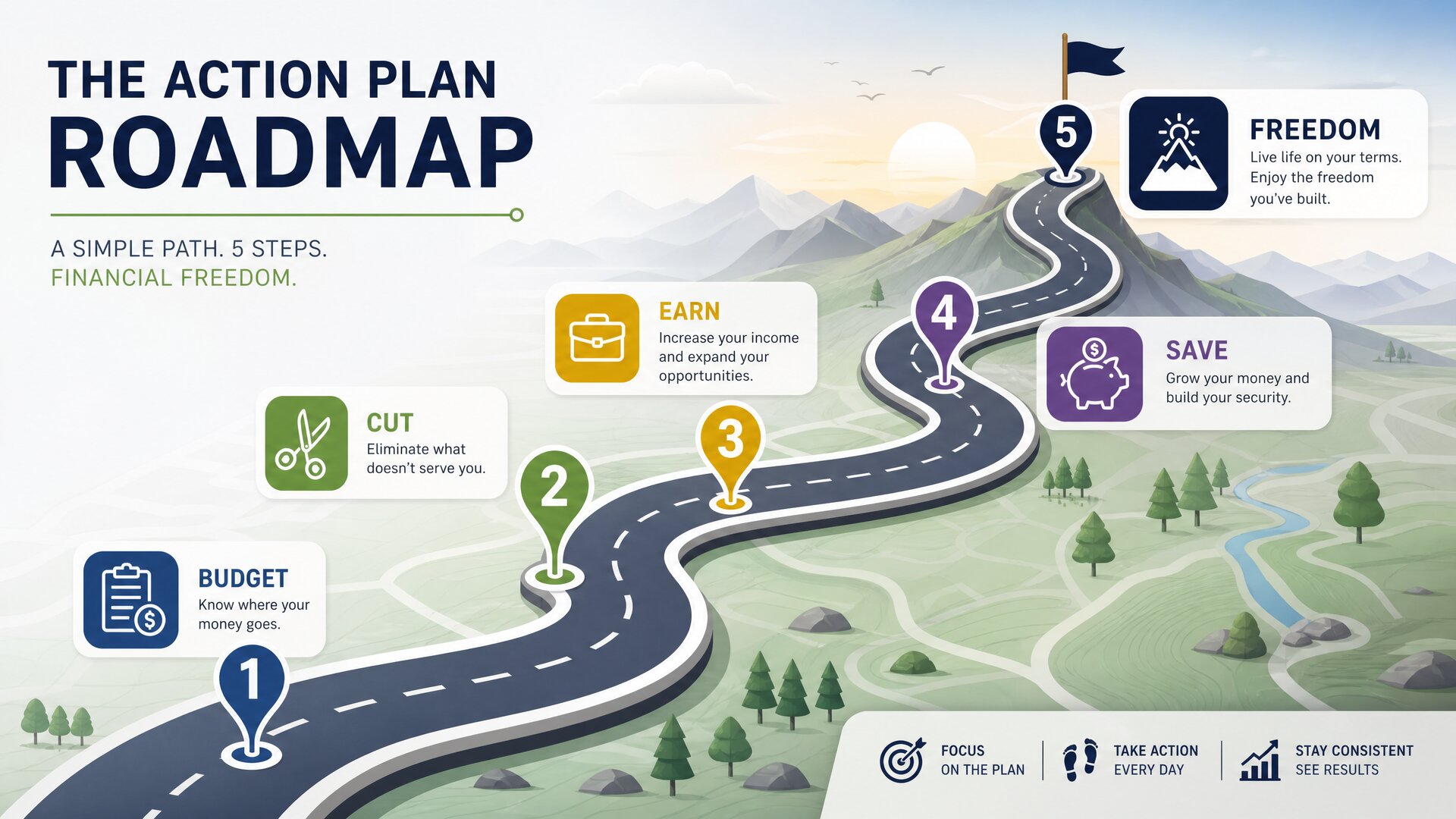
Staring at a $10,000 goal can cause paralysis. However, finding a way to generate or save an extra $27 to $55 a day feels entirely achievable. Once you have selected your target timeline, you must attack the goal using the following phases.
2. Phase 1: The Ruthless Expense Audit
To save money fast, your first step must be to plug the holes in your current financial ship. Most individuals suffer from “lifestyle creep,” where their expenses naturally rise to match their income. To save $10,000 quickly, you must force an artificial gap between what you earn and what you spend.
The Zero-Based Budgeting Technique
You cannot save aggressively if you do not know where your money is going. Implement a zero-based budget. This means every single dollar of your income is assigned a specific “job” before the month begins. Your income minus your expenses must equal exactly zero. If you earn $4,000 a month and your essential expenses are $2,500, you explicitly assign the remaining $1,500 directly to the “10k Savings Goal.”
The Subscription and Recurring Cost Purge
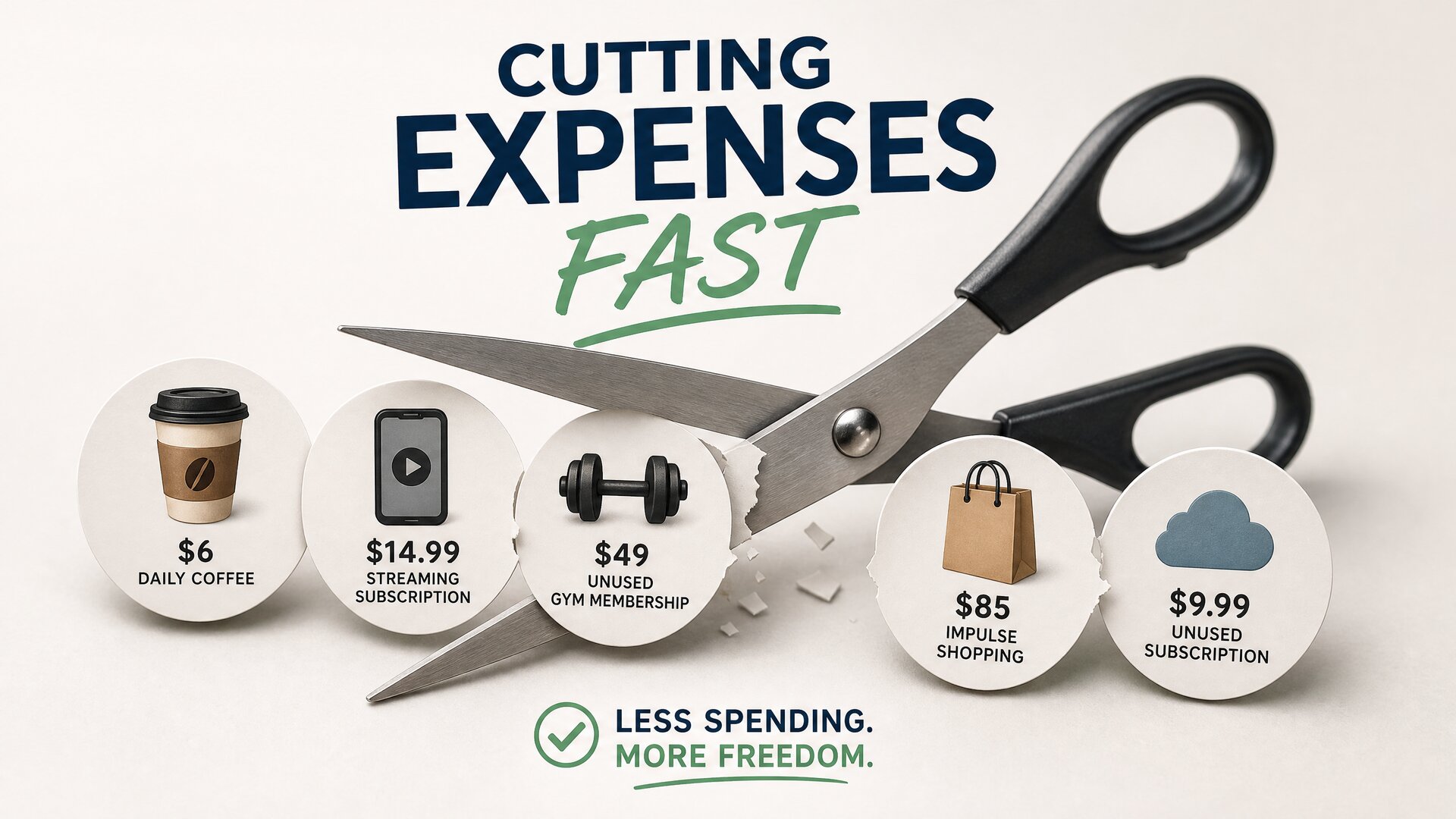
Consumers waste billions of dollars annually on forgotten subscriptions. Print out your last two months of credit card and bank statements. Highlight every recurring charge.
- Cancel the streaming services you rarely watch.
- Pause the gym membership you do not use daily (workout at home or run outside for this season).
- Call your car insurance provider and negotiate a lower rate or switch companies.
- Call your internet and cell phone providers to negotiate promotional rates or downgrade to a cheaper data tier.
- Action Result: A deep purge of recurring expenses can effortlessly free up $100 to $250 a month.
The Food Budget Squeeze
Food is the highly variable category where most people accidentally hemorrhage cash. To save $10,000 fast, your relationship with food must temporarily become entirely utilitarian.
- Ban Dining Out and Delivery: Restaurants and delivery apps (which add massive service fees and driver tips) are the enemies of fast wealth accumulation. For the duration of your savings challenge, commit to a zero-restaurant policy.
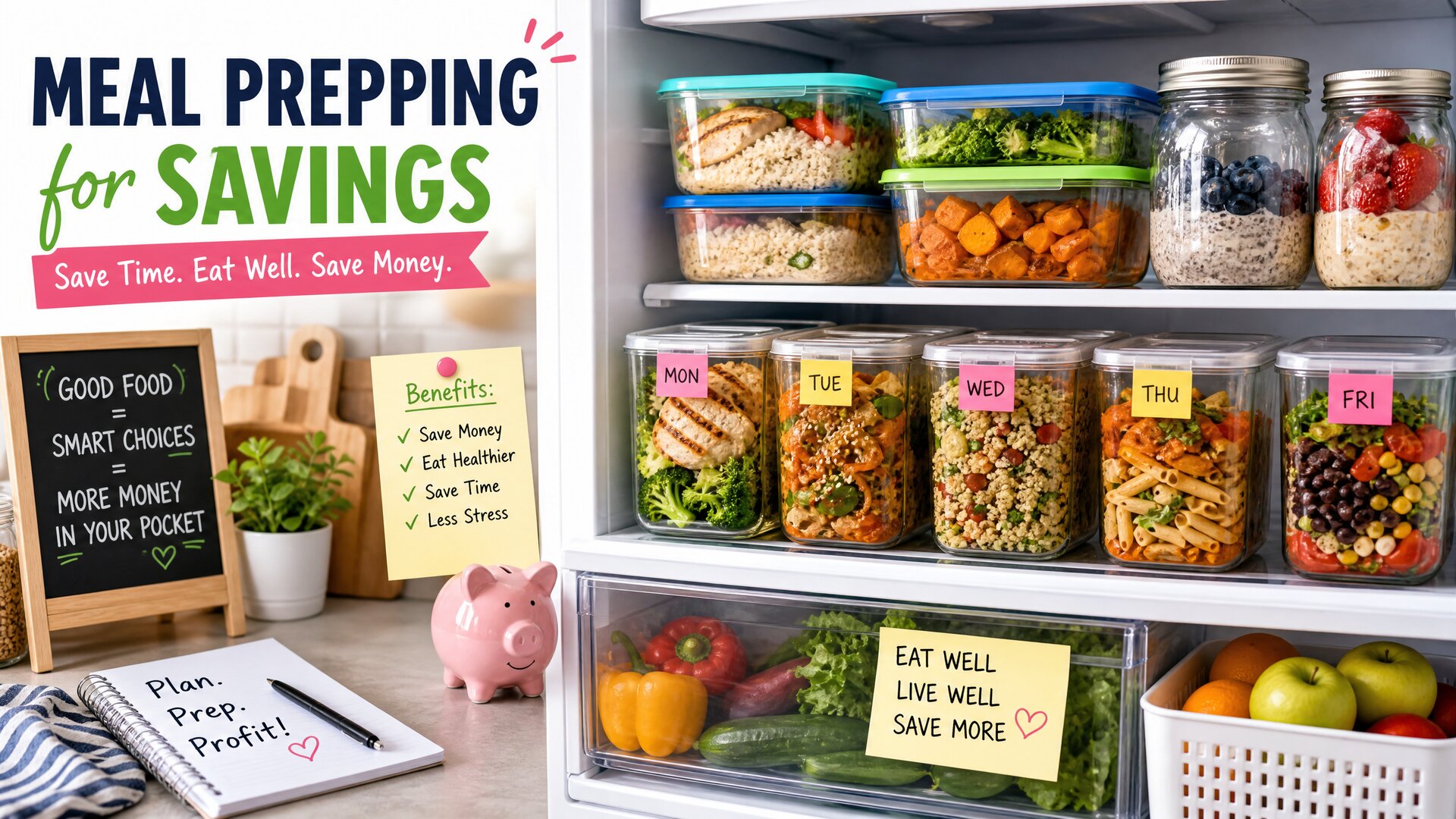
- Master Meal Prep: Buy groceries in bulk. Base your meals around inexpensive, high-nutrition staples like rice, beans, chicken thighs, eggs, and frozen vegetables. Cooking in large batches on Sundays prevents the weekday fatigue that leads to ordering takeout.
- The Generic Brand Switch: Stop paying a 30% premium for colorful packaging. Switch entirely to store-brand items for cleaning supplies, pantry staples, and paper products.
Housing and Transportation Hacks
If you are aiming for the 3-month or 6-month extreme savings plans, you may need to make structural lifestyle changes.
- House Hacking: If you have a spare bedroom, rent it out on a long-term basis or via short-term rental platforms. If your lease is ending, consider downsizing to a smaller apartment or taking on a roommate.
- Transportation Diet: If your household has two cars, but you can survive on one, sell the second car. Not only do you get a massive cash injection from the sale, but you also instantly eliminate the associated insurance, maintenance, and registration costs.
3. Phase 2: Income Acceleration (The Revenue Side)
There is a mathematical limit to how much money you can cut from your budget. You cannot cut your housing and food costs to zero. However, there is absolutely no limit to how much extra income you can generate. To reach $10,000 fast, cutting expenses is not enough; you must attack the revenue side of the equation.
The “Sell Everything” Weekend
Most households have thousands of dollars of dead equity sitting in closets, basements, and garages. Dedicate one entire weekend to liquidating physical clutter.
- High-Value Electronics: Old smartphones, tablets, gaming consoles, and smartwatches hold significant resale value.
- Designer Clothing and Shoes: Utilize platforms like Poshmark, Depop, or The RealReal to sell name-brand apparel you haven’t worn in a year.
- Furniture and Sporting Goods: Facebook Marketplace and Craigslist are excellent for offloading unused bicycles, golf clubs, and furniture.
- Action Result: A ruthless weekend of selling can easily generate a massive $1,000 to $3,000 initial cash injection to kickstart your goal.
The High-Yield Side Hustle
Do not just look for “extra work”; look for high-leverage work. Trading your time for a minimum-wage secondary job is exhausting. Instead, monetize a specific skill.
- Freelancing: If you have skills in graphic design, copywriting, video editing, or web development, platforms like Upwork and Fiverr connect you directly with global clients.
- Consulting or Tutoring: If you are an expert in a specific academic field, or if you know how to play a musical instrument, charge premium hourly rates for private tutoring.
- Service Arbitrage: Start a weekend cash business requiring low overhead. Power washing driveways, mobile car detailing, or professional pet sitting can easily generate $200 to $500 a weekend in pure profit.
Maximize Your Primary Career
Do not overlook the income potential of your current 9-to-5 job.
- Overtime: If you are an hourly employee, volunteer for every available overtime shift. Working “time-and-a-half” is the fastest way to artificially inflate your paycheck.
- The Raise Negotiation: If you have taken on new responsibilities and have quantifiable proof that you have made or saved the company money, schedule a meeting with your manager to negotiate a salary increase. Ensure that 100% of the net increase from that raise goes directly into your savings.

4. Phase 3: Banking Architecture and Automation
If you leave your extra savings in your primary checking account, you will inevitably spend it. The physical architecture of where you store this money is crucial for success.
The High-Yield Savings Account (HYSA)
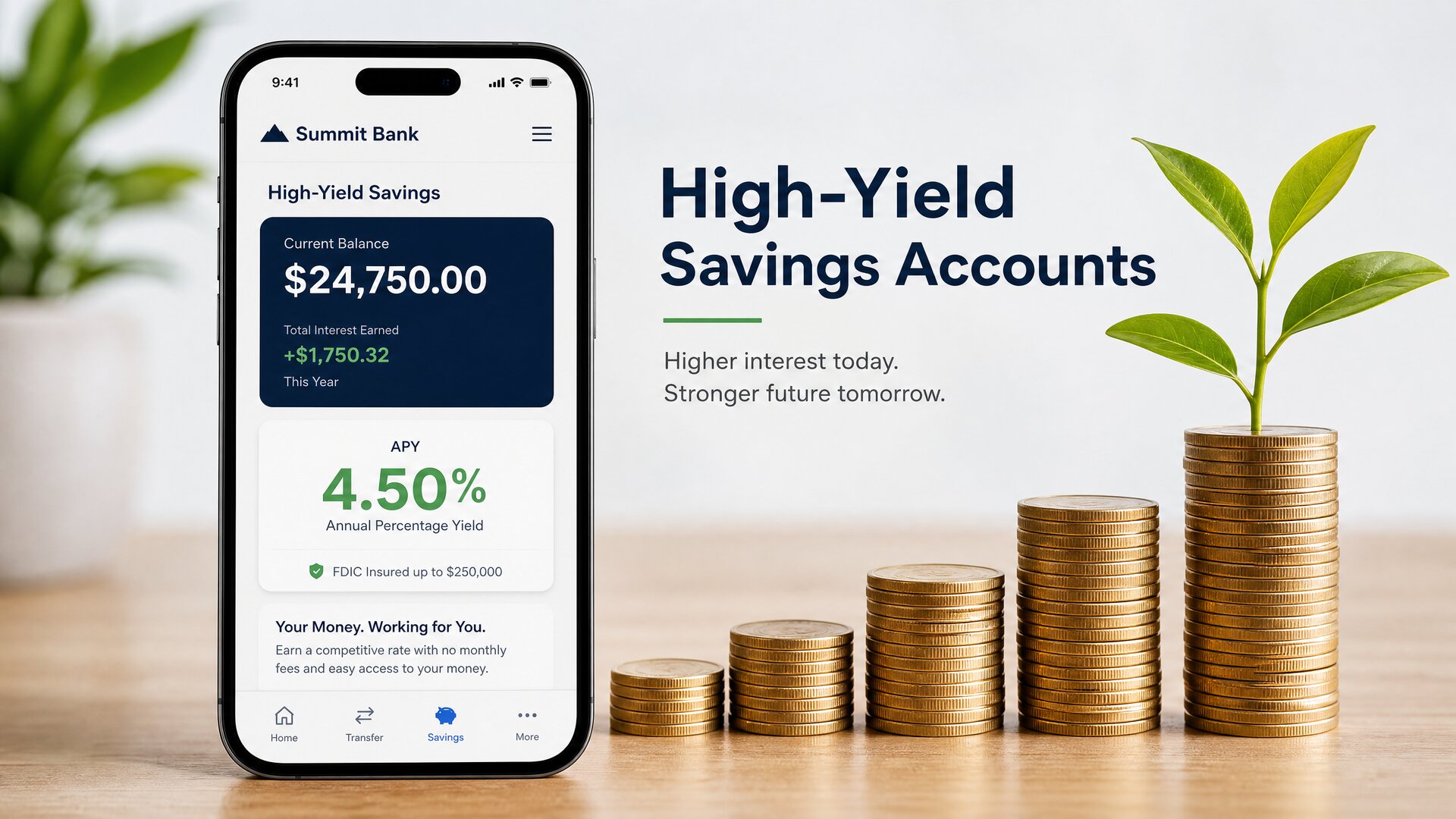
Do not use a traditional brick-and-mortar bank for your savings goal. Standard banks offer abysmal interest rates (often around 0.01% APY). You must open a High-Yield Savings Account (HYSA) with an online-only bank.
Online banks do not have the overhead costs of physical branches, allowing them to offer interest rates between 4.00% and 5.00% APY. If you park your growing $10,000 fund in an HYSA, the bank will literally pay you hundreds of dollars in free interest throughout the year, accelerating your timeline. Furthermore, placing the money in a completely separate institution creates a psychological barrier; it takes 24 to 48 hours to transfer the money back to your checking account, which prevents impulse spending.
The “Pay Yourself First” Automation
Willpower is a finite resource. If you wait until the end of the month to save “whatever is left over,” there will never be anything left over.
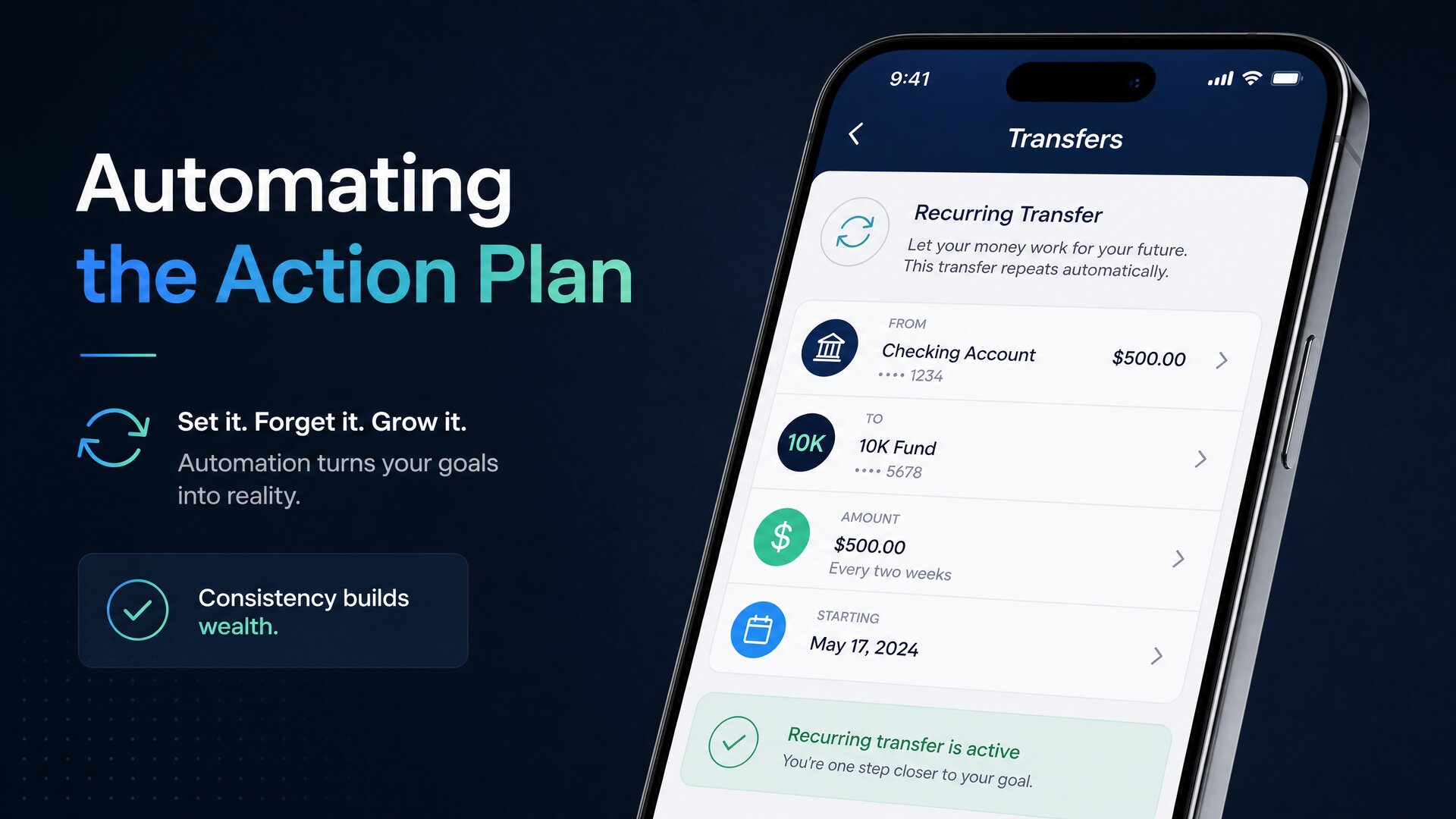
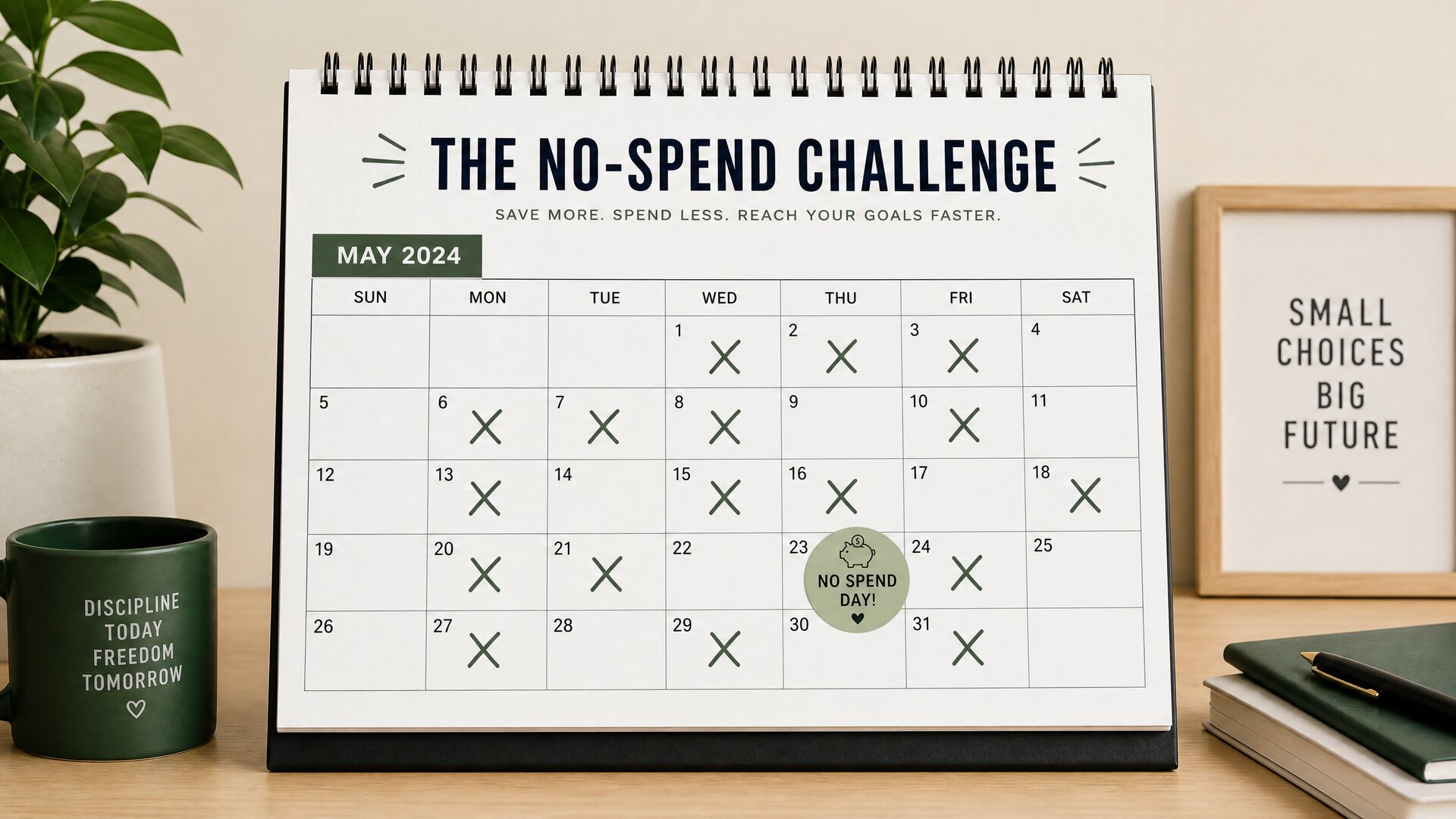
You must automate the process. Set up an automatic transfer with your bank so that the moment your paycheck hits your checking account, your target savings amount (e.g., $416 every two weeks) is instantly routed to your HYSA. Treat your $10,000 savings goal like a mandatory utility bill or a tax payment that you cannot evade.
The Windfall Rule
During your savings journey, you may encounter unexpected “windfalls” of cash. This includes annual tax refunds, corporate holiday bonuses, cash gifts for your birthday, or an unexpected inheritance. The standard consumer behavior is to treat a windfall as “free money” and spend it on a vacation or a luxury item. You must implement a strict rule: 100% of all windfalls are immediately transferred to the $10,000 savings goal. A $2,000 tax refund can shave months off your savings timeline in a single day.
5. Psychological Hacks to Sustain Momentum
Saving $10,000 is a marathon, not a sprint. Around month three, you will likely experience “frugality fatigue.” You will crave a nice dinner out, or you will want to buy a new gadget. Protecting your mindset is the final key to victory.
The Visual Tracker
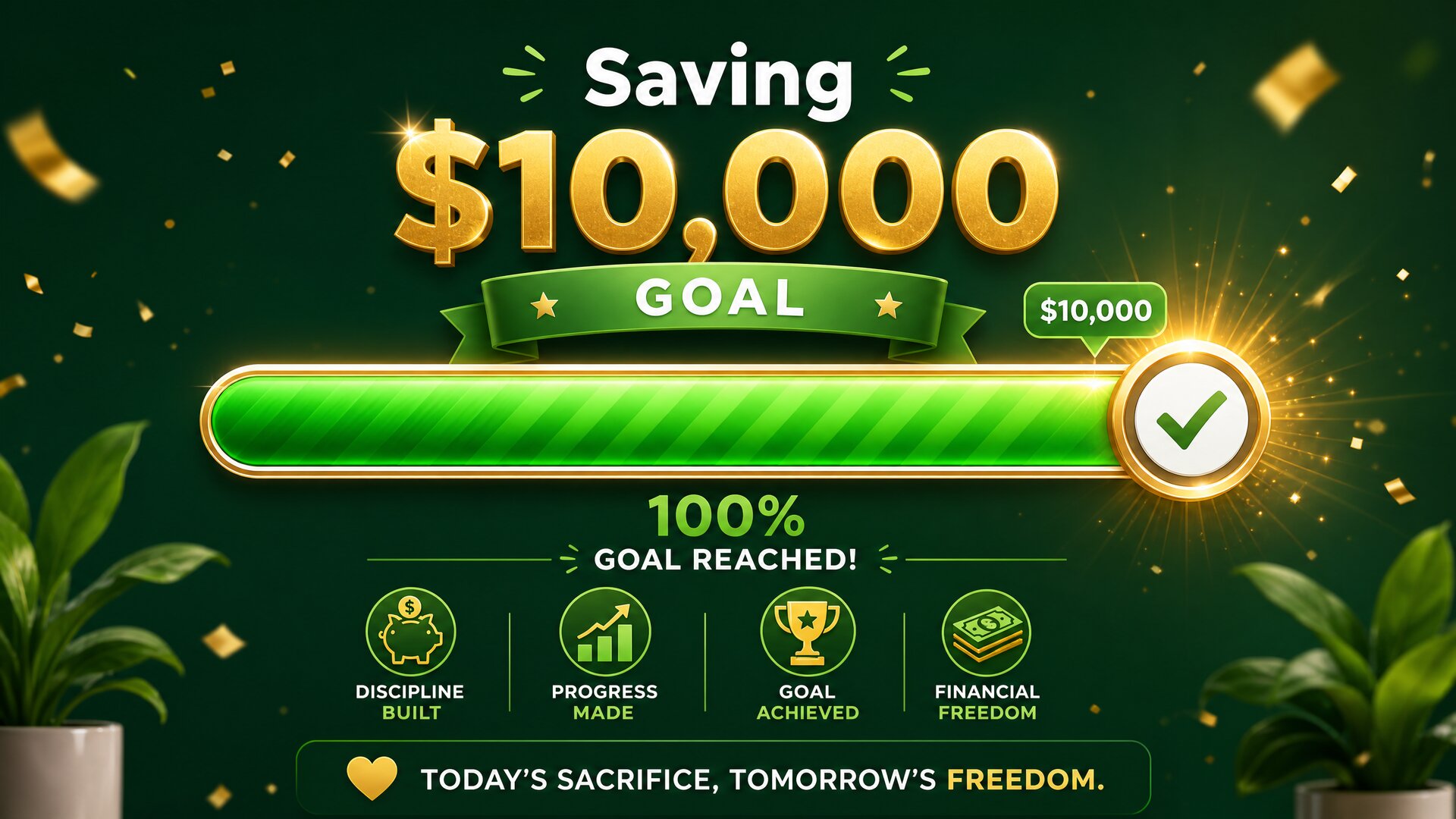
Humans are highly visual creatures. Create a physical progress tracker. Draw a thermometer on a large piece of poster board, segmented into $1,000 increments, and tape it to your refrigerator or your bathroom mirror. Every time you transfer money into your HYSA, use a red marker to fill in the thermometer. Seeing your physical progress every single morning provides a massive hit of dopamine and reinforces your commitment to the goal.

The 48-Hour Purchase Rule
Impulse buying is the destroyer of savings goals. To combat this, institute a mandatory 48-hour cooling-off period. If you see a non-essential item you want to buy (like a pair of shoes or a new video game), you are not allowed to purchase it immediately. You must write it down and wait exactly 48 hours. In 90% of cases, the emotional urge to buy will evaporate after two days, and you will choose to keep your money instead.
Calculate the “Time Cost” of Purchases
When you are tempted to spend money, do not look at the price tag; look at the hours of your life it represents. If you earn $25 an hour after taxes, a $150 pair of sneakers does not cost $150; it costs six hours of your labor. Ask yourself: “Is this item worth six hours of my life, and is it worth delaying my ultimate $10,000 goal?” Framing purchases as time rather than currency is a highly effective deterrent against frivolous spending.
6. The Savings Strategy Matrix: Choose Your Path
Use this comparative matrix to decide which approach matches your current income and lifestyle flexibility.
| Timeline Goal | Monthly Target | Daily Target | Expense Cutting Strategy | Income Strategy | Ideal Candidate |
|---|---|---|---|---|---|
| 12 Months (Steady) | $833 | $27 | Moderate (Cut subscriptions, limit dining out). | Minor (Sell household clutter, negotiate bills). | Comfortable earners looking to build a safety net without extreme lifestyle changes. |
| 6 Months (Aggressive) | $1,666 | $55 | Strict (Zero restaurants, generic groceries, pause gym). | Active (Take on a weekend side hustle or freelance clients). | Highly motivated individuals preparing for a major life event or debt payoff. |
| 3 Months (Extreme) | $3,333 | $111 | Ruthless (House hacking, sell a car, rice & beans diet). | Relentless (Max overtime, multiple high-yield side hustles). | High-income earners, or those willing to temporarily sacrifice all luxury for speed. |
7. Frequently Asked Questions (FAQ)
Should I pay off my credit card debt before saving this $10,000?
This is a critical sequence question. If you have high-interest credit card debt (often carrying 20% to 25% APR), it is mathematically wiser to pause the $10,000 goal temporarily. You should save a “Starter Emergency Fund” of $1,000 to $2,000 first, to ensure you do not use your credit cards for minor emergencies. Once that starter fund is built, redirect all your intense financial energy toward wiping out the high-interest debt entirely. Only after the bad debt is gone should you sprint toward the full $10,000 goal.
What if my primary income is just too low to save anything?
If you have audited your budget and your essential survival expenses (rent, basic food, utilities) consume 100% of your primary income, you cannot cut your way to $10,000. You have an income problem, not an expense problem. Your sole focus must be entirely on Phase 2: Income Acceleration. You must upskill, change companies, or work a second job until your baseline income exceeds your survival costs.
Can I invest the money in the stock market while I am saving it?
Absolutely not. If your goal is to save a liquid $10,000 for an emergency fund or a near-term purchase, putting it in the stock market is far too risky. The stock market is highly volatile over short periods. If you need that cash during an economic downturn, your $10,000 could easily drop to $7,000, forcing you to sell at a loss. Short-term cash (money needed within the next 3 to 5 years) must remain in a highly secure, FDIC-insured High-Yield Savings Account.
Does saving $10,000 really make a difference?
Yes, it is the most crucial financial tipping point. Financial experts often note that saving the first $10,000 is infinitely harder than saving the next $90,000. It proves to yourself that you possess the discipline, the strategic mindset, and the financial control necessary to build massive wealth. It shifts your mindset from “surviving” to “allocating.”

Author’s Note: The True Value of Financial Friction
Saving your first $10,000 fast is not supposed to be comfortable. It is an exercise in intentional financial friction. When you decline an invitation to an expensive dinner, when you spend your Saturday morning detailing cars for extra cash instead of sleeping in, and when you choose to cook a cheap meal at home after a long day of work, you are actively paying the price for future freedom.
Do not view this period of aggressive saving as deprivation. You are not depriving yourself; you are reallocating your resources. You are choosing to stop buying temporary, fleeting comforts in order to purchase permanent financial peace of mind.
The day you log into your bank account and see a five-figure balance sitting safely in your High-Yield Savings Account, the stress of the process will instantly vanish. You will stand a little taller, you will sleep significantly better, and you will navigate your career and personal life with the quiet, unshakeable confidence of someone who is no longer operating on the edge of a financial cliff. Set your timeline, audit your life, accelerate your income, and go claim your freedom.