Diamond Investment Guide Master the Art of Gemstone Wealth Preservation
In the realm of alternative financial assets, few commodities capture the human imagination quite like diamonds. For centuries, these crystalline structures of pure carbon have served as the ultimate symbol of enduring love, extreme prestige, and unyielding power. However, beyond their undeniable aesthetic beauty, diamonds possess unique economic characteristics that make them a fascinating, albeit complex, vehicle for preserving and transferring wealth across generations.
Unlike traditional financial instruments such as equities, bonds, or even digital assets, a diamond is a completely tangible, physical store of value. It does not rely on a corporate board’s decisions, it cannot be hacked, and it requires no internet connection to retain its worth. Perhaps most importantly, diamonds offer an unparalleled concentration of wealth. While a million dollars worth of physical gold bullion weighs over a dozen kilograms and requires specialized vault storage, a million dollars worth of investment-grade diamond can easily rest on the tip of your finger, offering a level of discreet portability unmatched by any other physical asset in the world.
Navigating the gemstone market, however, requires rigorous education. The diamond trade is notoriously opaque, filled with retail markups, subjective grading, and technological disruptions. This comprehensive Diamond Investment Guide will equip you with the advanced knowledge required to treat these precious stones not merely as luxury accessories, but as calculated, strategic components of a diversified financial portfolio.
1. The Core Fundamentals: Why Diamonds Function as an Asset Class
To approach diamonds as a serious investor, you must first strip away the romanticized marketing created by the jewelry industry. In the financial sector, a diamond is evaluated based on absolute rarity, market liquidity, and historical price resilience.
The Power of Asymmetric Wealth Concentration
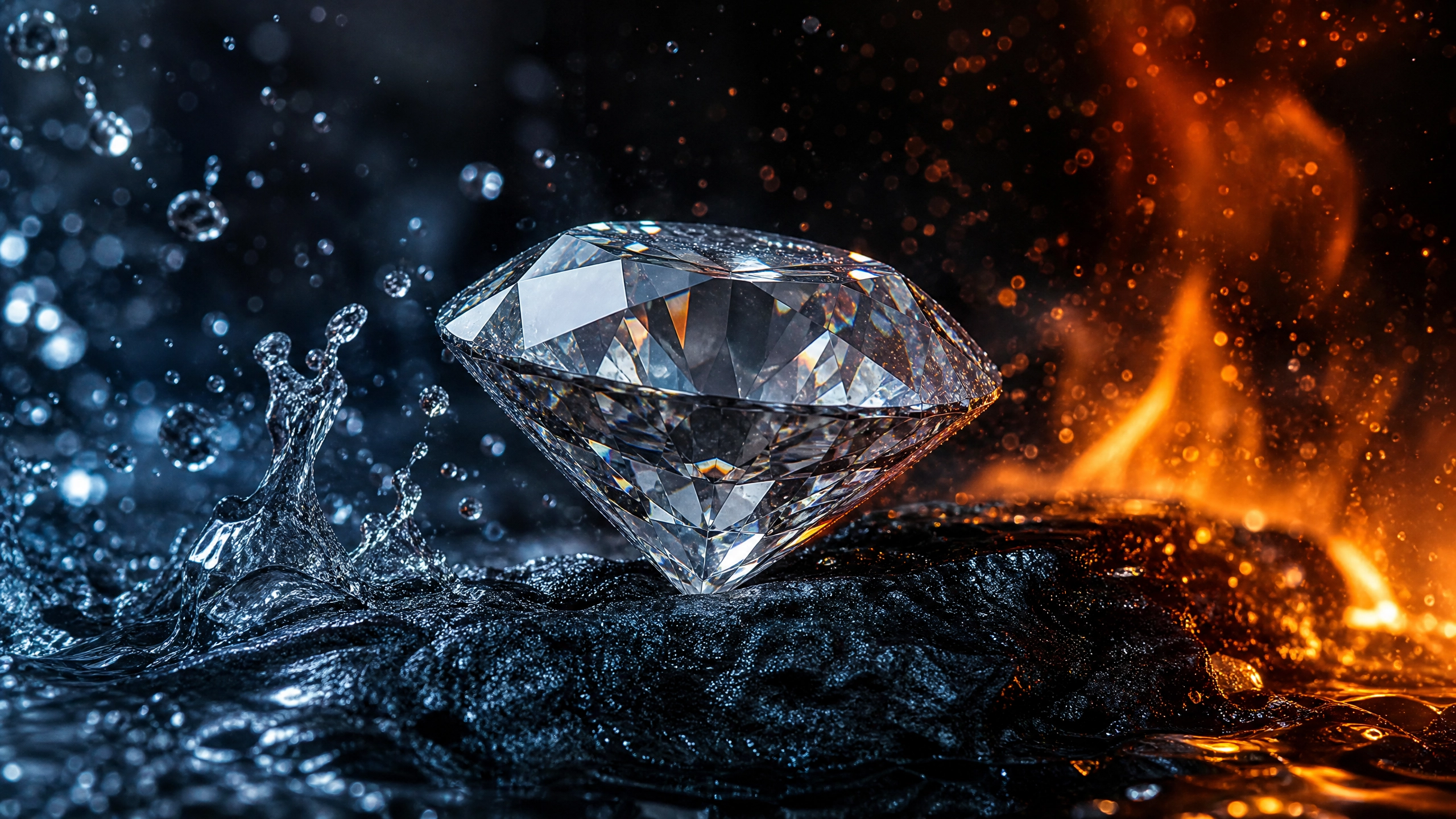
The primary financial utility of a diamond lies in its hyper-concentrated value. In times of geopolitical instability, hyperinflation, or currency collapse, the ability to transport significant wealth across international borders without raising alarms is a highly coveted asset feature. Diamonds are virtually indestructible; they can survive fires, crushing pressures, and centuries of neglect without losing their chemical integrity or financial worth.
Inflation Hedging and Zero Counterparty Risk
Like precious metals, natural diamonds have an intrinsic value derived from the immense cost of mining, cutting, and distributing them. As the cost of labor, fuel, and heavy machinery increases globally, the foundational baseline price of natural diamonds naturally rises, providing a built-in hedge against fiat currency inflation. Furthermore, a physical diamond held in your possession carries zero counterparty risk. Its value is not dependent on a bank remaining solvent or a government honoring a bond yield.
2. Decoding the Four Cs from an Investor’s Perspective
If you walk into a standard retail jewelry store, the salesperson will explain the “Four Cs” (Carat, Color, Clarity, Cut) to help you find a pretty ring. As an investor, you must view the Four Cs through an entirely different lens: absolute statistical rarity. Retail buyers compromise on these metrics to fit a budget; investors demand perfection to ensure long-term value retention.
Carat: The Exponential Value Curve
Carat refers to the physical weight of the stone (1 Carat = 0.2 grams). In the investment world, diamond pricing does not scale linearly; it scales exponentially.
A 2.00-carat diamond is not simply twice the price of a 1.00-carat diamond of the exact same quality. Because large, flawless rough stones are exponentially rarer in nature, the 2.00-carat stone might be three or four times the price.
Investor Maxim: When allocating capital, it is generally better to purchase one exceptional, highly graded 3.00-carat diamond than to buy three individual 1.00-carat diamonds. The larger stone possesses superior inherent rarity and will attract higher premiums at future auctions.
Clarity: The Demand for Absolute Purity
Clarity measures the presence of internal flaws (inclusions) and external blemishes. For a stone to be considered true investment grade, it must sit at the absolute pinnacle of the clarity scale.
-
FL (Flawless): No internal or external flaws visible under 10x magnification. Extremely rare and commands the highest investment premium.
-
IF (Internally Flawless): No internal flaws, minor surface blemishes. Highly coveted.
-
VVS1 / VVS2 (Very, Very Slightly Included): Minute inclusions difficult for even a skilled grader to see. The absolute minimum baseline for serious white diamond investment.
-
Lower grades (VS, SI, I) are retail grades, meant for commercial jewelry, and do not possess the rarity required for high-yield investment.
Color (White Diamonds): The Absence of Hue
For traditional white diamonds, value is derived from the complete absence of color. The scale ranges from D (completely colorless) to Z (light yellow/brown).
For wealth preservation, investors should restrict themselves exclusively to the “Colorless” tier (D, E, and F). A “D-Color, Flawless” diamond is the gold standard of the white diamond market, representing absolute chemical purity (often categorized as a Type IIa diamond, completely devoid of nitrogen impurities).
Cut: The Engine of Brilliance
While nature determines the carat, color, and clarity, the Cut is determined entirely by human geometry. A diamond is essentially a prism; if it is cut too deep or too shallow, light escapes through the bottom or sides, resulting in a dull appearance.
Only diamonds graded as “Excellent” or “Ideal” in cut, symmetry, and polish should be considered. An exceptionally clear stone is rendered financially handicapped if the cut does not maximize its optical light return.
Investor vs. Retail Grading Comparison
| Metric | Retail Buyer Compromise | Institutional Investor Standard |
|---|---|---|
| Color | G, H, I (Near Colorless) | D, E, F (Strictly Colorless) |
| Clarity | VS1, VS2, SI1 (Eye-clean) | FL, IF, VVS1 (Microscopically pure) |
| Cut | Very Good | Excellent / Ideal only |
| Fluorescence | Faint or Medium Blue | Strictly “None” (Zero fluorescence) |

3. The True Wealth Builders: Fancy Color Diamonds
While D-Flawless white diamonds are excellent vehicles for wealth preservation, they are relatively stable in price. If your goal is aggressive capital appreciation, the institutional money is overwhelmingly focused on Fancy Color Diamonds.
For every 10,000 colorless diamonds mined, only one natural fancy color diamond is discovered. This extreme geological anomaly creates a supply shortage so severe that prices operate entirely independently of the standard white diamond market.
The Phenomenon of Pink Diamonds and the Argyle Closure
Pink diamonds represent one of the most successful alternative asset classes of the last two decades. Their color is not caused by chemical impurities, but by a miraculous distortion in the crystal lattice structure caused by intense subterranean pressure millions of years ago.
The investment thesis for pink diamonds solidified dramatically in November 2020, when the Argyle Diamond Mine in Western Australia permanently closed its operations. This single mine was responsible for producing over 90% of the world’s high-quality pink and red diamonds. With the primary global supply permanently severed, existing natural pink diamonds transitioned into hyper-rare legacy assets, causing their auction valuations to skyrocket.

Blue, Green, and Red Diamonds
-
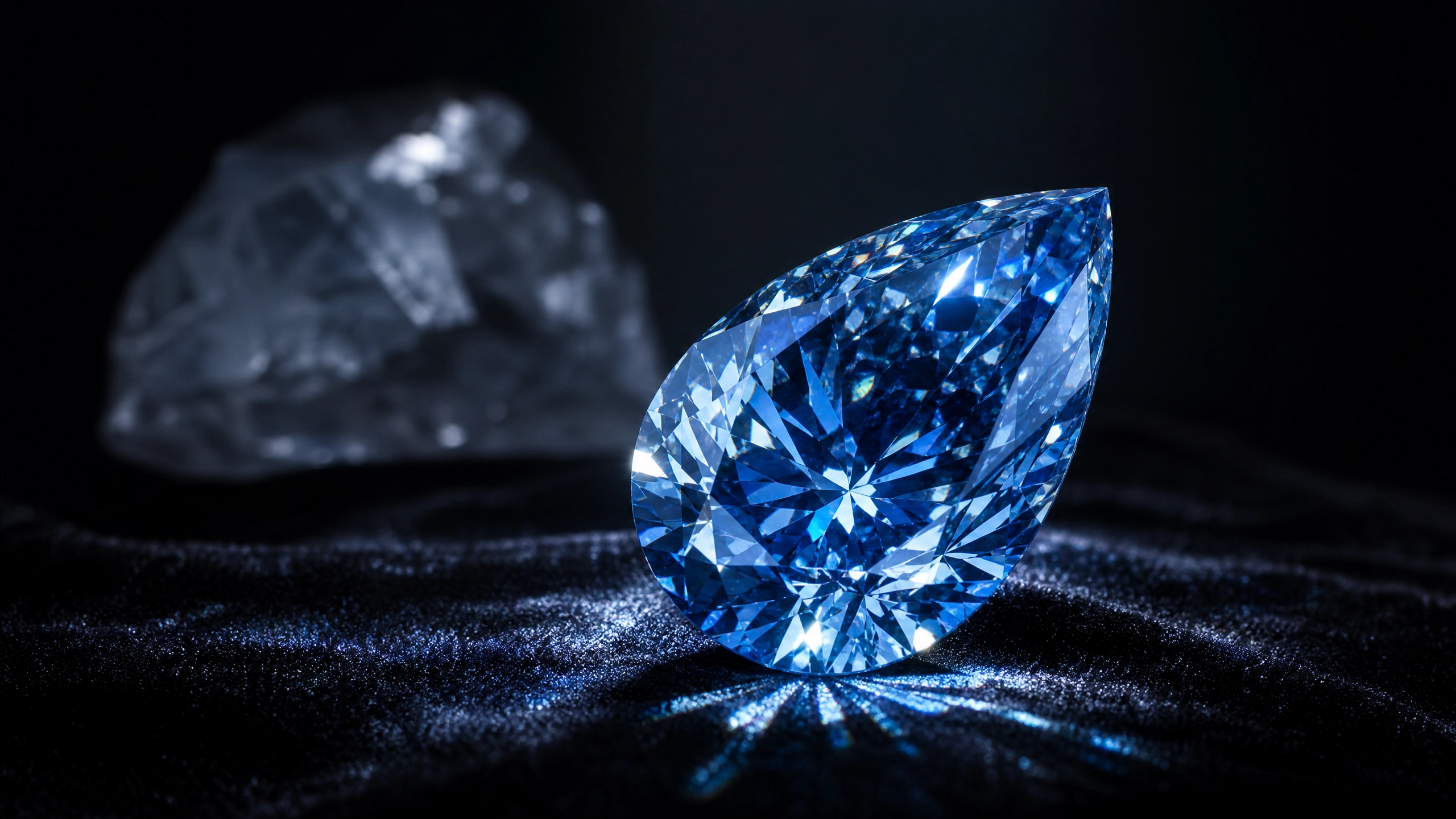
Blue Diamonds: Colored by the presence of boron during formation. Blue diamonds are incredibly scarce and heavily targeted by ultra-high-net-worth collectors in Asia and the Middle East.
-
Green Diamonds: Colored by natural exposure to atomic radiation over millions of years. Because the green color is often restricted to the surface “skin” of the rough stone, cutting a vibrant green diamond is a masterclass in risk management, making finished stones exceptionally rare.
-
Red Diamonds: The absolute apex of the gemological world. True red diamonds are so rare that only a handful are known to exist globally, mostly weighing under one carat. When they appear at auction, they shatter price-per-carat records, often exceeding several million dollars per carat.
Color Diamond Rarity Hierarchy
| Color Category | Geological Cause | Market Scarcity | Investment Potential |
|---|---|---|---|
| Yellow (Canary) | Nitrogen molecules | Rare | Moderate Growth |
| Pink | Crystal lattice distortion | Extremely Rare | High Growth |
| Blue | Boron molecules | Exceptionally Rare | Very High Growth |
| Red | Extreme lattice distortion | Mythical Rarity | Exponential / Record-setting |
4. Navigating Market Threats: The Lab-Grown Diamond Factor
No investment guide is complete without addressing macroeconomic threats, and the natural diamond market is currently facing a massive technological disruption: Lab-Grown Diamonds (LGDs).
Using Chemical Vapor Deposition (CVD) or High Pressure High Temperature (HPHT) methods, scientists can now grow genuine diamonds in a laboratory in a matter of weeks. These stones are chemically, physically, and optically identical to mined diamonds.
The Divergence of Two Markets
Initially, LGDs caused panic among investors. However, over the past few years, a clear market divergence has occurred. Because laboratory production can be infinitely scaled, the price of lab-grown diamonds has plummeted by over 80% as factories in India and China flood the market with supply.
This has completely destroyed the retail value of commercial-grade mined diamonds (the lower quality SI and I clarity stones), as consumers opt for larger, cheaper lab-grown alternatives for engagement rings.
However, this technological shift has actually strengthened the investment thesis for top-tier natural diamonds. Just as a high-quality poster print of the Mona Lisa does not decrease the value of the original painting in the Louvre, infinitely reproducible lab-grown stones emphasize the miraculous, finite rarity of a D-Flawless or Fancy Pink natural diamond forged over billions of years. As an investor, you must aggressively avoid commercial-grade stones and focus solely on the absolute top 1% of natural production, which remains immune to lab-grown price depreciation.
5. The Critical Importance of Gemological Certification
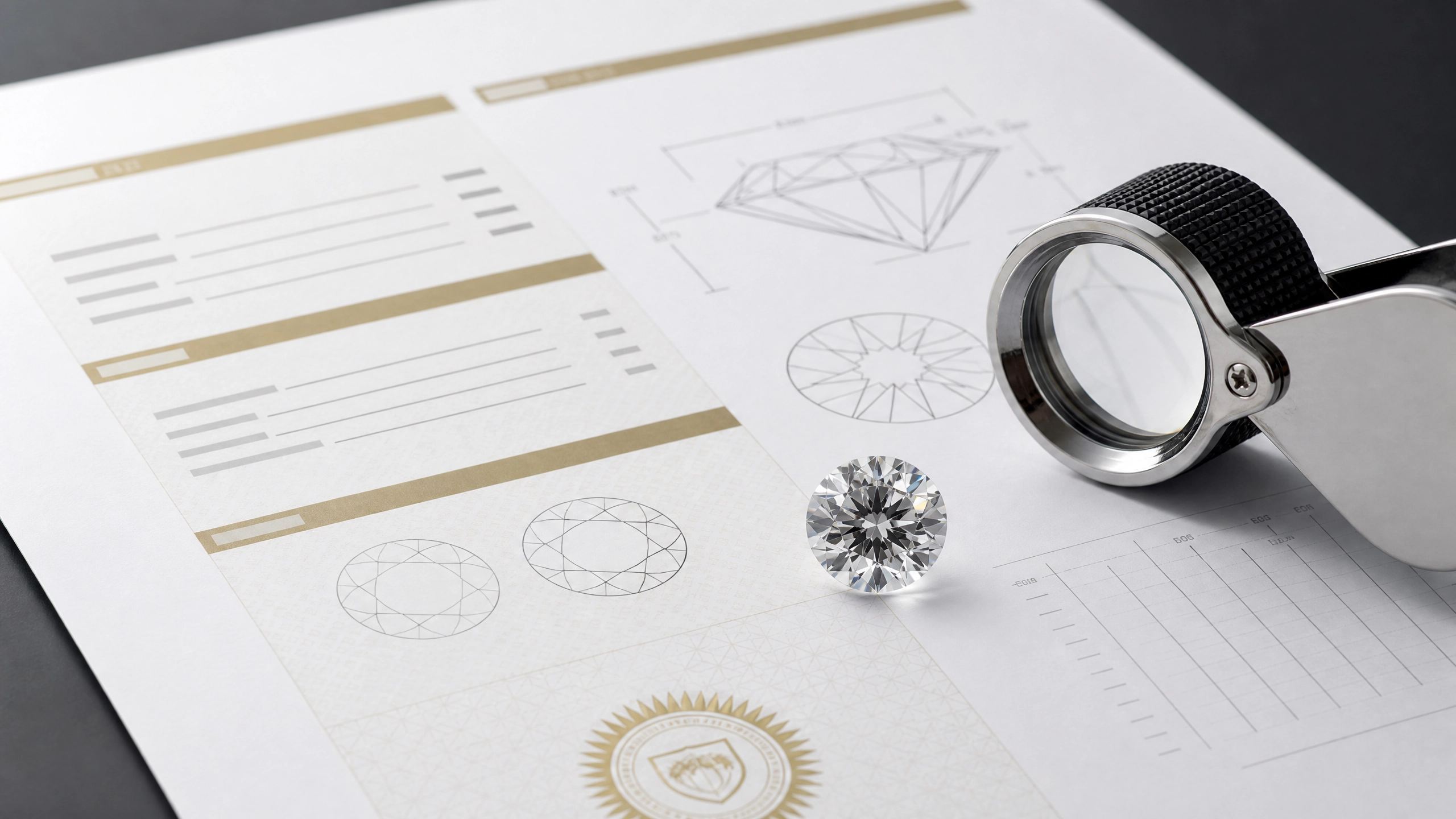
In the diamond trade, buying an uncertified stone is the financial equivalent of buying a house without a title deed. The entire valuation of your asset depends entirely on independent, internationally recognized verification.
The Supremacy of the GIA
The Gemological Institute of America (GIA) is the absolute global authority on diamond grading. They invented the Four Cs grading system, and their laboratories are considered the most rigorous, unbiased, and technologically advanced in the world.
If you are buying an investment diamond, it must be accompanied by a recent GIA grading report. For colored diamonds, the GIA report will verify the origin of the color (proving it is natural and not artificially treated or irradiated in a lab).
Never accept “in-house” appraisals from a jeweler, and be highly skeptical of secondary grading labs which are notorious for inflating grades (e.g., grading an H-color stone as an F-color) to justify higher prices. In the high-end auction world (Sotheby’s, Christie’s), a GIA certificate is a non-negotiable prerequisite for entry.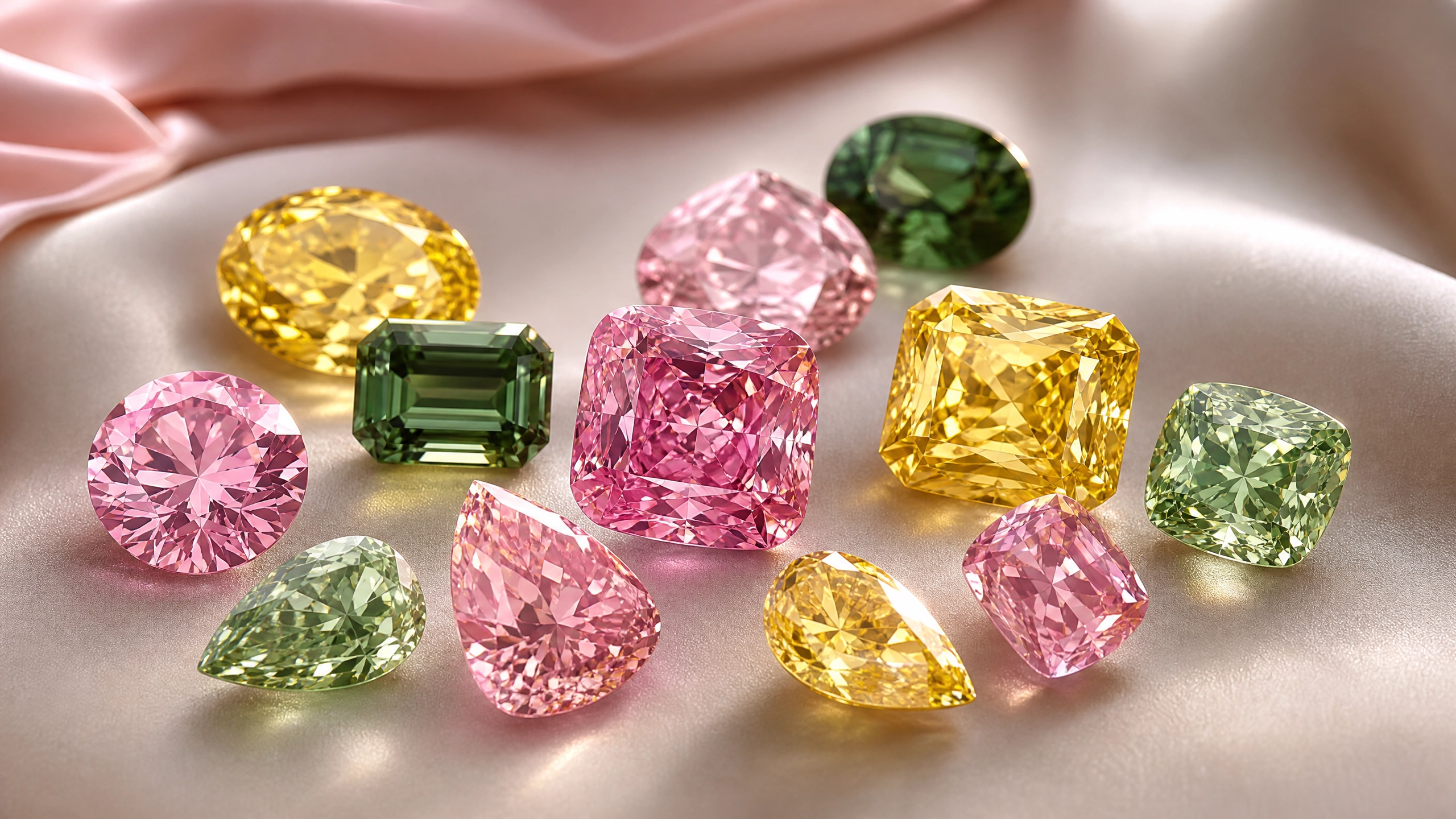
6. Liquidity and Transaction Mechanics: How to Buy and Sell
The most significant drawback of investing in diamonds is illiquidity. Unlike clicking a button on a brokerage app to sell 100 shares of Apple stock, selling a physical diamond takes time, negotiation, and market access.
How to Acquire Investment Diamonds
Never buy an investment diamond from a standard retail storefront on a high street. Retail jewelers carry massive overhead costs (rent, staff, marketing, inventory insurance) and typically mark up their diamonds by 100% to 300%. If you buy at retail, your investment will be underwater the moment you walk out the door, and it may take decades just to break even.
Serious investors acquire stones through:
-
Wholesale Diamond Bourses: Utilizing a connected diamond broker who can access international wholesale networks (like RapNet) to buy stones close to the actual manufacturing cost.
-
High-End Auction Houses: Participating in specialized jewelry auctions to acquire stones with established provenance.
-
Specialized Asset Managers: Firms dedicated entirely to sourcing, securing, and eventually liquidating investment-grade colored stones for HNWI clients.
The Liquidation Strategy
When the time comes to realize your gains and liquidate the asset, patience is mandatory. You cannot sell a multi-million dollar blue diamond overnight without taking a massive discount.
The primary exit strategy involves consigning the stone to a major auction house during their bi-annual magnificent jewels sales in Geneva, Hong Kong, or New York. The auction house will market the stone to a global network of billionaires and collectors, ensuring maximum price discovery. Alternatively, specialized brokers can arrange private treaty sales between collectors, bypassing public auction fees but requiring deep industry connections.
7. Structuring Your Gemstone Portfolio
Capital allocation within the gemstone sector should be approached with the same strategic diversification as a traditional stock portfolio. Because diamonds produce no yield (they do not pay dividends or generate rental income), they should generally represent no more than 5% to 10% of your total net worth, acting purely as an alternative wealth preservation tool.
A well-structured diamond portfolio might include:
-
Anchor Assets (60%): D-Color, Flawless or VVS1 white diamonds weighing between 3.00 and 5.00 carats. These offer the highest liquidity in the high-end market and serve as the stable foundation of the collection.
-
Growth Assets (30%): Natural Fancy Pink and Fancy Yellow diamonds of high clarity. These stones capture the aggressive upside of diminishing global supply.
-
Speculative Alpha (10%): Unique, highly unusual pieces, such as stones with historical royal provenance, antique cuts (like Old Mine or European cuts), or exceptionally rare blue/green diamonds.
8. Conclusion: A Multi-Generational Horizon
Investing in diamonds is not a strategy for the impatient day trader. It is a long-term, multi-generational wealth strategy designed for capital preservation and defense against macroeconomic turbulence.
The allure of the diamond market lies in its perfect intersection of science, economics, and art. When you secure a D-Flawless diamond or a vibrant Argyle Pink in your vault, you are not merely holding a financial derivative; you are holding a finite piece of the Earth’s geological history.
By strictly adhering to GIA certification, avoiding the inflated retail market, focusing intensely on the rarest categories of cut and color, and understanding the slow-moving nature of gemstone liquidity, investors can successfully navigate this glittering market. In an era where digital wealth can vanish in a server crash or a hyperinflationary spiral, the absolute, indestructible tangibility of a world-class diamond remains one of the most compelling safe havens in the modern financial ecosystem.