Why Rolex Holds Value The Anatomy of Horological Wealth Preservation
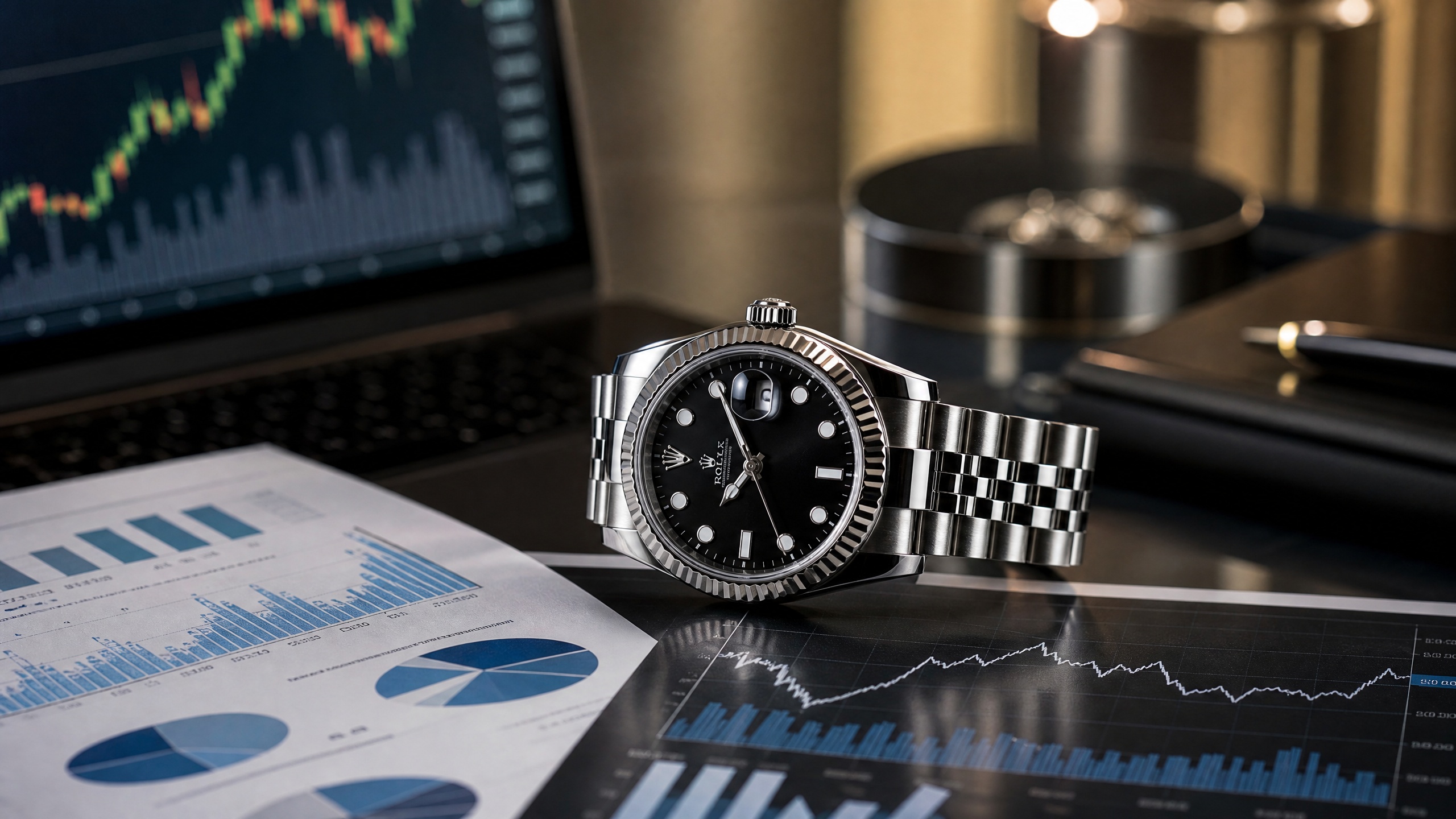
For generations, the acquisition of a luxury timepiece has been celebrated as a major milestone—a symbol of personal success, graduation, or professional advancement. Yet, in the modern economic landscape, a fascinating shift has occurred. A high-end mechanical watch is no longer viewed merely as an extravagant accessory or a sentimental heirloom; it is increasingly recognized as a resilient alternative financial asset.
Among the elite circle of Swiss watchmakers, one name consistently dominates both consumer desire and investment portfolios: Rolex. While many luxury goods experience immediate depreciation the moment they leave the retail boutique, certain timepieces from this Geneva-based manufacturer do the exact opposite. They appreciate in value, frequently trading on the secondary market for double or triple their original retail price.
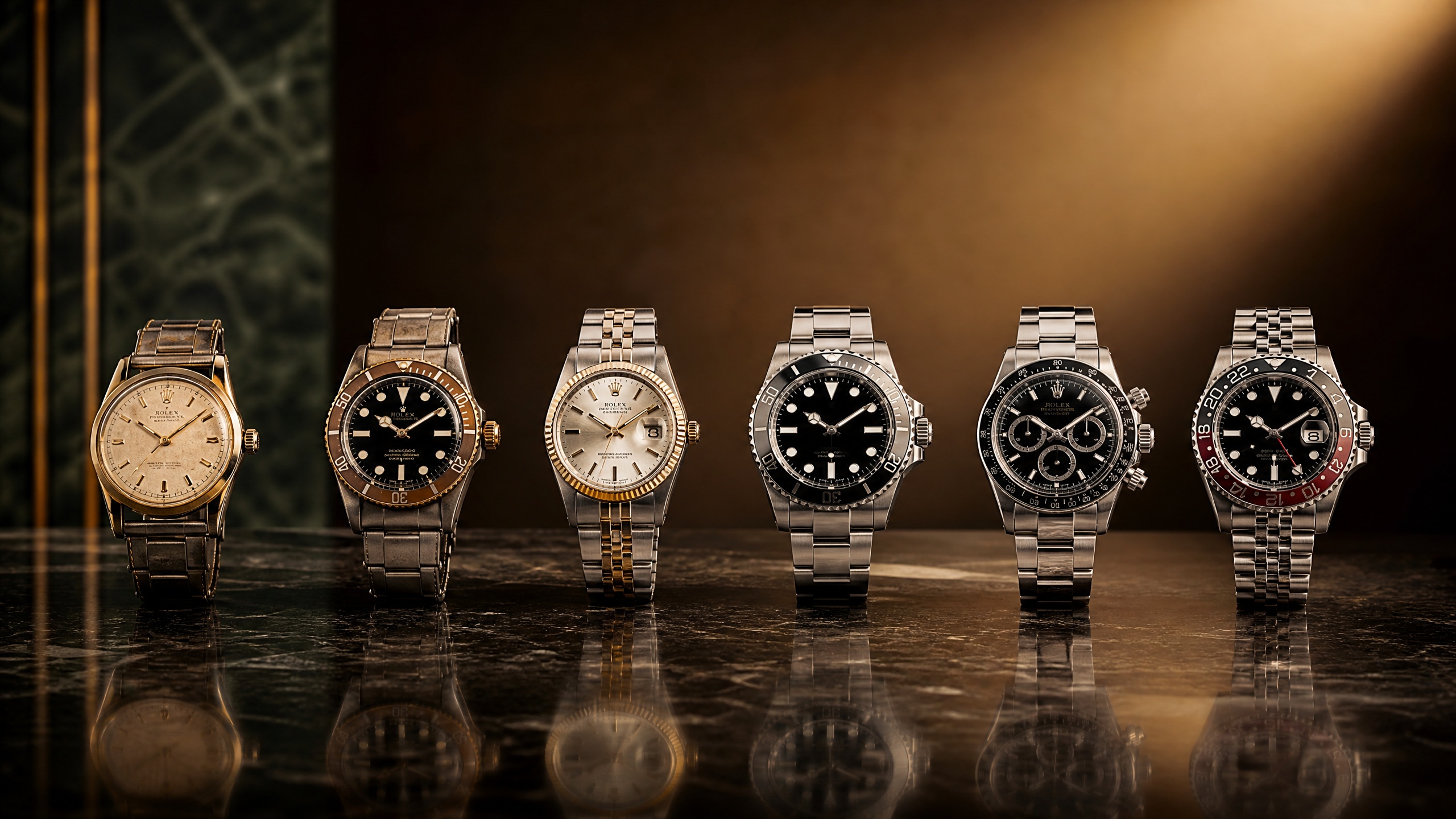
To understand why this phenomenon occurs, we must look beyond the gleaming 18-karat gold and the status symbol on the wrist. The enduring value of these watches is the result of a meticulously engineered ecosystem built on relentless quality control, deliberate scarcity, historical marketing genius, and an uncompromising dedication to design continuity. This comprehensive analysis breaks down the multi-faceted reasons why these timepieces don’t just hold their value, but actively build wealth over time.
1. The Foundation of Excellence: Metallurgy and Manufacturing Insularity
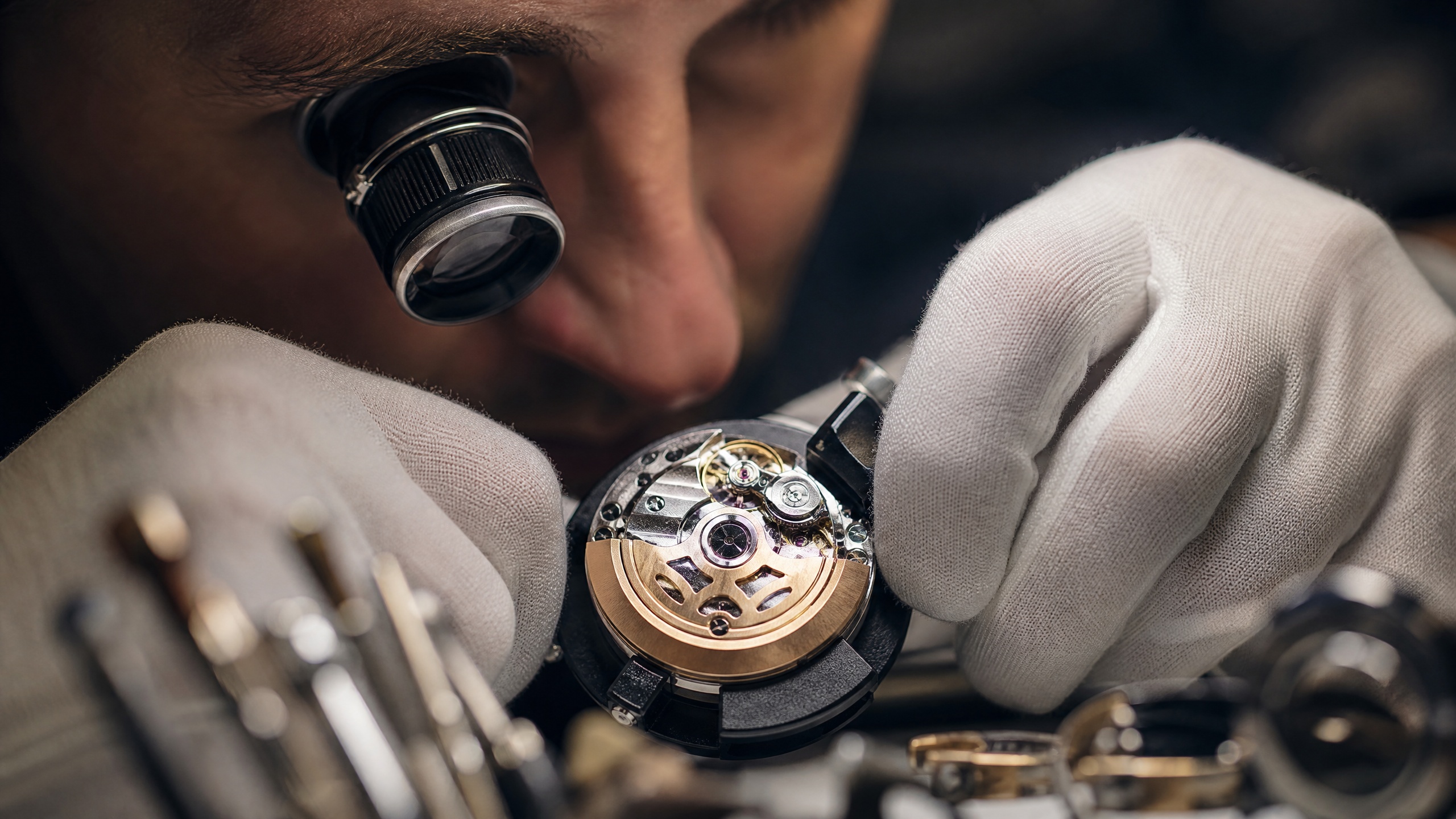
To comprehend the financial resilience of the brand, one must understand how these watches are physically constructed. The company does not operate like a traditional manufacturer; it functions more like an industrial fortress, controlling every single vertical stage of production.
The Monopoly on 904L Stainless Steel (Oystersteel)
In 1985, the brand became the first watchmaking house to transition its entire steel production line from 316L stainless steel—the industry standard used by virtually every other luxury brand—to 904L stainless steel, which they internally brand as Oystersteel.
The structural differences between these two metals are profound:
-
Corrosion Resistance: 904L steel contains higher levels of chromium, molybdenum, nickel, and copper. This specific chemical composition makes it highly resistant to acids and chloride-induced pitting, a critical feature for diving instruments exposed to harsh marine environments.
-
The Exceptional Polish: 904L steel is incredibly hard. Because of this hardness, it is notoriously difficult to machine and shape, requiring the development of custom, multi-million dollar milling machinery. However, when polished, it emits a distinct, exceptionally bright luster that is instantly recognizable from across a room.
This unique aesthetic and structural longevity means an older watch can be restored to its original factory finish without losing its structural integrity, preserving its underlying capital value.
Proprietary Foundries and Precious Metals
The insularity of production extends directly to their precious metals. The company operates its own central, private foundry. Instead of buying pre-fabricated gold bars from external suppliers, they smelt their own 18-karat yellow, white, and Everose gold (their proprietary, fade-resistant rose gold formula mixed with platinum).
By controlling the chemical casting process internally, they ensure that their gold never loses its hue, never tarnishes, and maintains absolute molecular consistency. When an investor purchases a gold model, they are buying a proprietary metallurgical blend that cannot be replicated anywhere else in the world.
2. The Power of Evolutionary Design Continuity
In the fashion and luxury sectors, obsolescence is often a feature by design. Luxury houses routinely cycle through creative directors, completely altering their aesthetic collections every few seasons to force consumers to buy new products to stay relevant. The Geneva crown rejects this philosophy entirely.
Restrained Innovation vs. Revolution
The core catalog—consisting of legendary models like the Submariner, Datejust, Daytona, and GMT-Master—has remained fundamentally unchanged for over half a century. A Submariner manufactured in 1965 shares the exact same visual DNA, structural silhouette, and functional purpose as a Submariner manufactured in 2026.
[1953: Ref. 6204] ---> [1988: Ref. 16610] ---> [2020: Ref. 126610LN]
   (Original DNA)          (Sapphire/904L)         (Cerachrom/Caliber 3235)
The brand prioritizes micro-evolution over revolution. When an upgrade is introduced, it is typically invisible to the untrained eye: a slightly adjusted lug width, an upgraded hairspring in the movement, or a transition from an aluminum bezel insert to a scratch-resistant Cerachrom ceramic bezel.
The Financial Impact of Design Stability
This evolutionary strategy has two major financial benefits for investors:
-
Elimination of Aesthetic Obsolescence: A twenty-year-old watch never looks outdated or irrelevant. It simply looks like a classic iteration of a design that is still actively sold today.
-
The Vintage Premium: Because the modern models look so similar to the historical versions, it draws immense consumer attention to the vintage market. Collectors look at a modern GMT-Master II and are inspired to hunt down the vintage “Pepsi” or “Root Beer” models from the 1970s, driving up the value of older pieces and stabilizing the entire brand ecosystem.
3. The Economics of Artificial Scarcity and Global Demand
The primary driver of asset pricing in any market is the relationship between supply and demand. In the horological world, this balance is managed with masterclass precision.
The Truth About Production Volumes
There is a common misconception that these watches hold their value because they are handmade in tiny quantities by a few watchmakers in a cabin. This is a myth. The company is a massive industrial powerhouse, estimated to produce between 1,000,000 and 1,200,000 watches annually.
Every single watch is chronometer-certified by the Contrôle Officiel Suisse des Chronomètres (COSC) and undergoes a second round of stringent internal testing to earn the “Superlative Chronometer” designation, guaranteeing an accuracy of $-2/+2$ seconds per day.
The Luxury Waitlist Phenomenon
If the company produces a million watches a year, why are the display cases at authorized dealers worldwide completely empty? The answer lies in the explosion of global demand, which vastly outstrips even this massive production output.
The global wealth expansion has created millions of new affluent consumers who all desire the same handful of iconic stainless steel sports watches. Because the brand refuses to sacrifice its stringent quality control protocols to ramp up production overnight, a permanent supply deficit exists.
| Model Reference | Retail Price (Approximate) | Secondary Market Value (Average) | Market Premium % |
| Cosmograph Daytona (Steel/Ceramic) | $15,100 | $28,000 – $32,000 | 85% – 110% |
| GMT-Master II “Pepsi” (Oystersteel) | $10,900 | $19,000 – $22,000 | 74% – 101% |
| Submariner Date “Starbucks” (Green) | $10,800 | $15,500 – $17,000 | 43% – 57% |
| Oyster Perpetual 41 (Tiffany Blue) | $6,400 | $12,000 – $14,500 | 87% – 126% |
This massive disparity between retail pricing and market valuation creates an immediate equity buffer for anyone lucky enough to purchase a watch at retail price.
4. Exceptional Liquidity: The Cash Equivalent of the Watch World
An asset is only valuable if you can easily convert it back into currency when needed. Many luxury assets, such as high-end contemporary art, bespoke fashion pieces, or niche supercars, suffer from poor liquidity. Finding a qualified buyer can take months or even years, and transaction costs at traditional auction houses can eat up over 20% of the asset’s total value.
A Universal Global Currency
The watch with the crown logo behaves entirely differently. It is widely considered the closest thing to a universal international currency in the luxury world. Whether you walk into a gray-market dealer in Tokyo, an auction house in New York, a vintage boutique in London, or a high-end pawn broker in Dubai, a Submariner or Daytona can be authenticated and converted into cash within thirty minutes.
The global pricing data for these timepieces is incredibly transparent. Websites like Chrono24, WatchCharts, and various dealer networks track daily transaction metrics, historical pricing charts, and regional variances. This deep price transparency reduces transaction friction, mitigates risk for buyers, and allows investors to track the net worth of their watch collection with the same precision they use for an equity portfolio.
5. Masterclass Marketing and Cultural Provenance
The value of a luxury asset is heavily tied to collective human psychology. Something is valuable because society collectively agrees it carries prestige. The brand has spent over a century cultivating this exact psychological positioning.
The Strategy of Firsts
The founder, Hans Wilsdorf, was a visionary businessman who understood that marketing must be backed by real-world performance. He did not build the brand’s reputation on ivory-tower elitism; he built it on rugged utility and historical milestones.
-
1926 (The Oyster Case): To prove the validity of the world’s first waterproof wristwatch case, Wilsdorf equipped a young British swimmer named Mercedes Gleitze with a Rolex Oyster as she swam across the English Channel. After more than ten hours in frigid saltwater, the watch emerged completely dry and kept perfect time.
-
1953 (Mount Everest): When Sir Edmund Hillary and Tenzing Norgay became the first humans to stand on the summit of Mount Everest, an early iteration of the Oyster Perpetual (which later evolved into the Explorer) accompanied them to the peak of the world.
-
1960 (The Mariana Trench): The brand attached an experimental watch, the Deep Sea Special, to the exterior of the bathyscaphe Trieste as it dove 10,916 meters down into the deepest abyss on Earth, surviving crushing pressures that would instantly destroy a submarine.
[1926: English Channel] ---> [1953: Mount Everest] ---> [1960: Mariana Trench]
   (Waterproof Proof)           (Altitude Proof)            (Pressure Proof)
By linking the product directly to human triumph and extreme exploration, the brand transformed its watches from simple timekeepers into reliable instruments of destiny. When someone buys a watch today, they are buying a micro-share of that historic legacy.
6. The Corporate Safeguard: The Hans Wilsdorf Foundation
The ultimate structural shield protecting the long-term value of these watches is the unique corporate architecture of the company itself. The company is not a publicly traded entity listed on a stock exchange. It does not answer to activist shareholders, it is immune to hostile corporate takeovers, and it is not forced to report quarterly earnings to satisfy Wall Street analysts.
Long-Term Vision Over Short-Term Profit
The manufacturer is owned entirely by the Hans Wilsdorf Foundation, a private charitable trust established by the founder in 1944. The foundation’s charter dictates that a significant portion of the company’s massive profits must be redirected into philanthropy, environmental conservation, and the watchmaking arts, while the remaining capital is retained to safeguard the future of the enterprise.
Because the brand does not face public pressure to continuously boost short-term profits, it never has to engage in brand-diluting strategies:
-
They never run massive discount sales campaigns to clear aging factory inventory.
-
They never aggressively overproduce watches during economic booms, which would flood the market and crash secondary values.
-
They can afford to spend years researching a single mechanical components, prioritizing multi-decade structural stability over rapid market expansion.
This corporate freedom ensures that every decision made by the Geneva leadership is calculated to preserve the prestige, scarcity, and monetary value of the brand for the next fifty years, protecting current collectors from unexpected market devaluations.
7. Investor Blueprint: Navigating the Market Safely
For individuals looking to allocate capital into luxury timepieces, a disciplined approach is mandatory. The watch market can be lucrative, but it is filled with nuances that differentiate a successful investment from an expensive mistake.
The Golden Rule: Box and Papers (The Full Set)
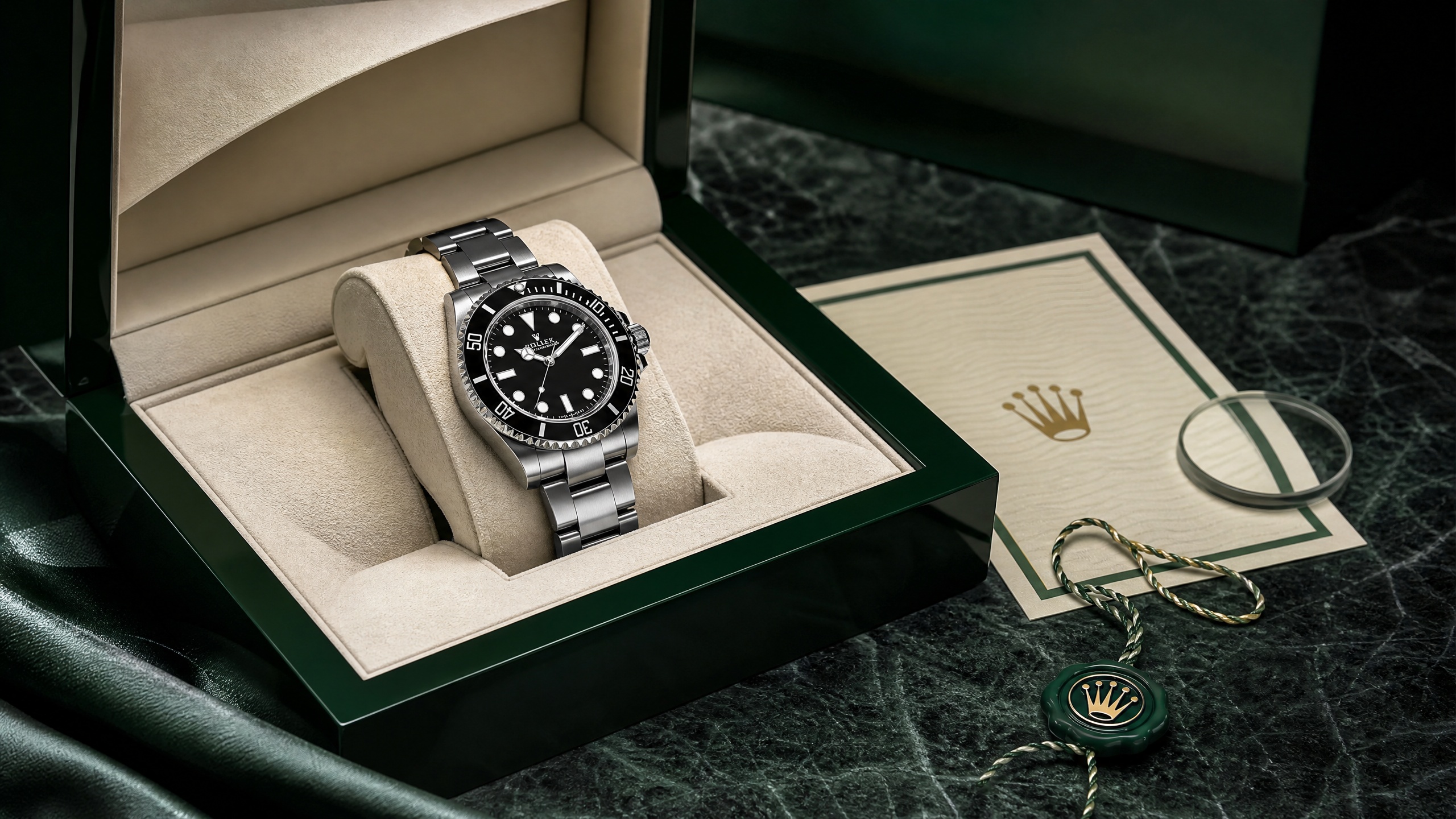
In the secondary luxury market, documentation is everything. A watch that is missing its original green box, serialized warranty card, instructional manual, and hangtags is structurally incomplete.
While the watch itself remains a beautiful mechanical object, the absence of a “full set” can slash its market value by 15% to 30%. The warranty card acts as the immutable birth certificate of the timepiece, detailing the exact country of origin, the authorized dealer who sold it, and the date of purchase. For modern references, this document is a vital defense against sophisticated counterfeits.
Understanding the Risk of Condition and Polishing
In traditional investing, cleaning or refining an asset typically increases its appeal. In the vintage and luxury watch world, the exact opposite is true.
Purist collectors covet original factory geometry. Every time a mechanical watch is polished using a high-speed buffing wheel, microscopic layers of metal are stripped away from the case edges and the lugs. Over-polishing rounds off the sharp, crisp factory bevels and diminishes the original brushed texture of the steel.
Investor Maxim: A watch in unpolished, honest condition with minor daily scratches and surface scuffs is consistently more valuable than a heavily polished watch that looks superficially shiny but has lost its original structural silhouette.
Identifying the Best Models for Long-Term Value Preservation
To maximize the probability of value preservation, focus your asset allocation on three core categories within the brand’s catalog:
-
Stainless Steel Professional Models: The “Holy Trinity” of stability consists of the steel Cosmograph Daytona, the GMT-Master II, and the Submariner Date. These sports watches possess the deepest buyer networks and the most resilient pricing structures.
-
Historical Vintage References: Pieces from the 1960s through the late 1980s that feature acrylic crystals and tritium dials (which age into a beautiful, creamy patina over time) represent historical artifacts with a fixed, unrepeatable supply.
-
Limited Production or Discontinued Dials: Pay close attention to unique dial colors or anniversary editions. When the manufacturer unexpectedly discontinues a specific dial color—such as the vibrant Stella-inspired lacquer dials—the existing examples in circulation instantly experience a permanent valuation spike.
8. The Modern Horological Outlook
As we look at the trajectory of global wealth distribution, alternative assets will continue to play a pivotal role in portfolio diversification. Traditional currencies face persistent inflationary headwinds, while global digital connectivity makes tracking alternative assets more efficient than ever before.
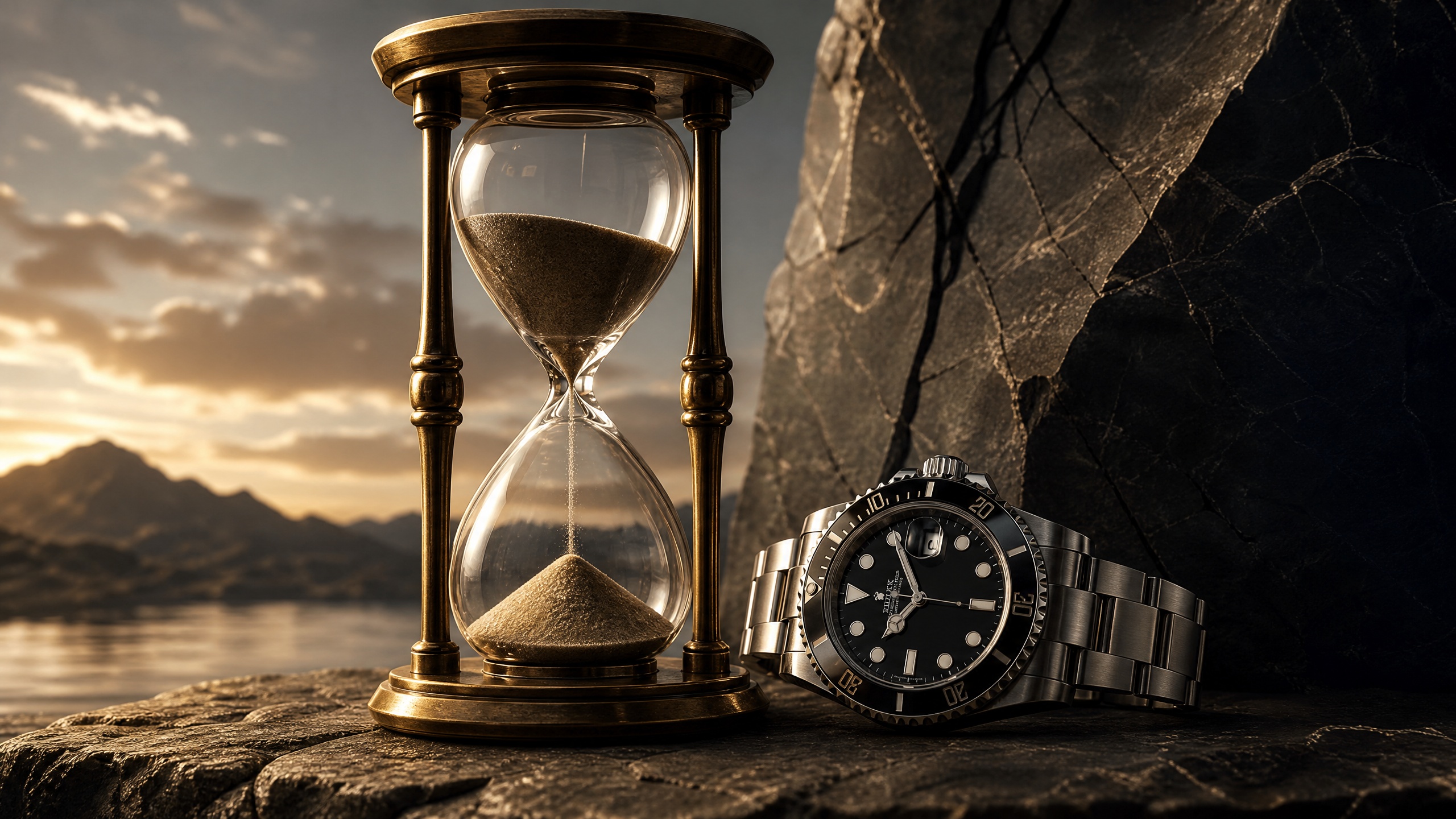
The watch with the golden crown remains a triumph of industrial art. It is a miniature mechanical engine requiring no batteries, no software updates, and no internet connection to operate. It is powered solely by the kinetic movement of your wrist, designed to tick continuously for centuries.
By combining cutting-edge material science, deliberate macroeconomic supply constraints, a private corporate structure designed for longevity, and an iconic heritage that has captured the collective human imagination, the brand has achieved something truly extraordinary. They have transformed a functional instrument for telling time into one of the most reliable, secure, and prestigious tangible stores of wealth on the planet. For the collector who invests with patience, discipline, and a deep appreciation for Swiss craftsmanship, the crown doesn’t just represent luxury—it represents an enduring financial fortress.