Credit Utilization Explained: The Secret Mathematics of Your Credit Score
If you have ever been diligently paying your credit card bills on time every single month, only to log into your banking app and see your credit score mysteriously drop by 20 points, you have likely fallen victim to the most misunderstood metric in the financial world. You are not alone. Millions of consumers experience this exact frustration. They feel as though the credit scoring algorithm is a rigged game, punishing them for reasons they cannot comprehend.
However, the credit scoring system is not a mystery; it is a rigid mathematical formula. While most people understand that paying bills on time is important, they remain completely unaware of the silent, secondary metric that acts as the heavy anchor on their financial progress: The Credit Utilization Ratio.
Understanding and manipulating your credit utilization is the closest thing a consumer has to a “cheat code” in the personal finance ecosystem. Unlike payment history, which takes years of patient consistency to build, your credit utilization can be optimized in a matter of weeks, resulting in massive, rapid surges in your FICO score.
This comprehensive guide will demystify exactly what credit utilization is, how the credit bureaus calculate it, the dangerous myths surrounding the “30% rule,” the advanced strategies used by financial optimizers to manipulate the algorithm, and the exact steps you must take to unlock exceptional tier (800+) credit scores.

1. What Exactly is Credit Utilization? (The Core Concept)
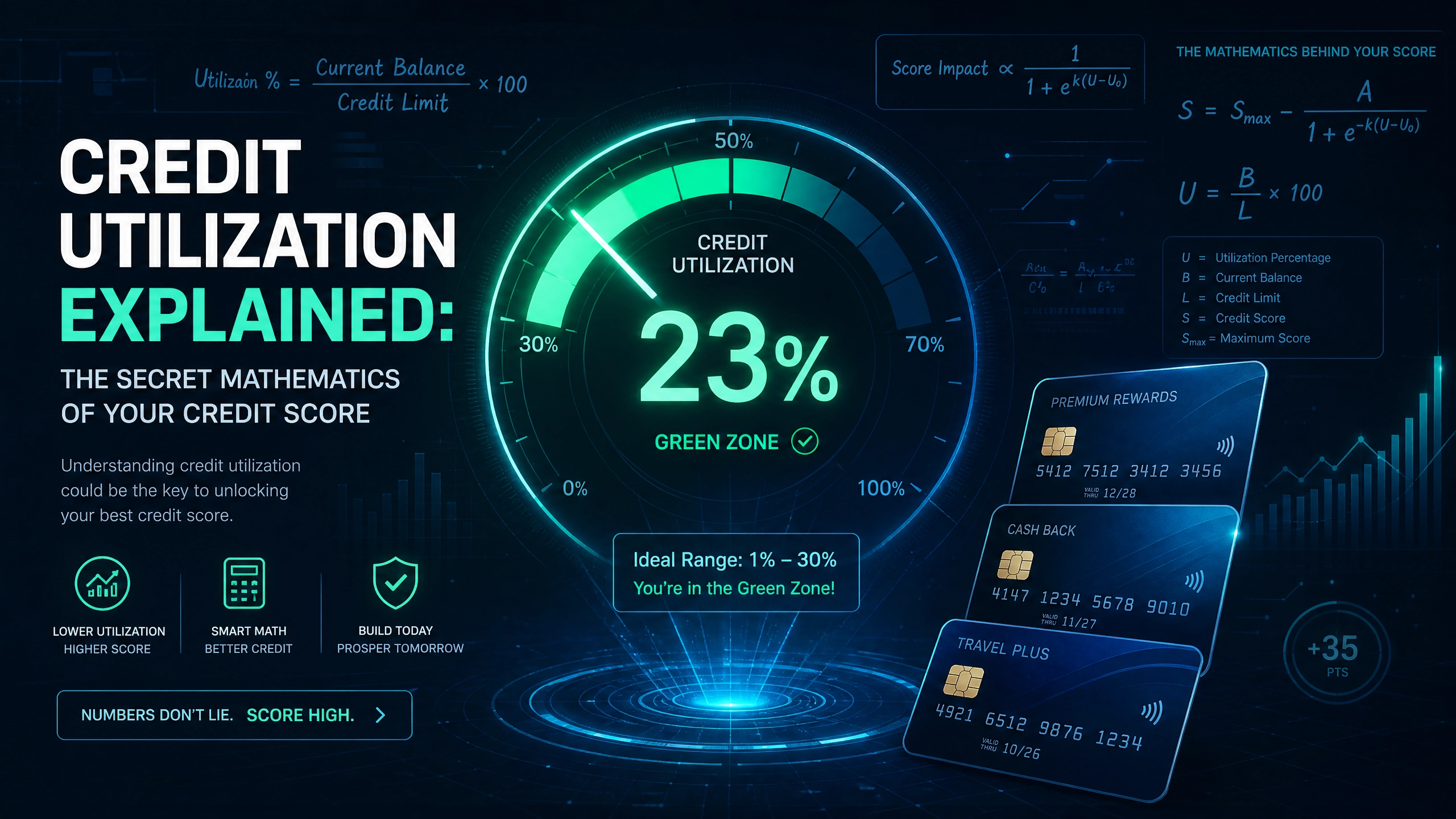
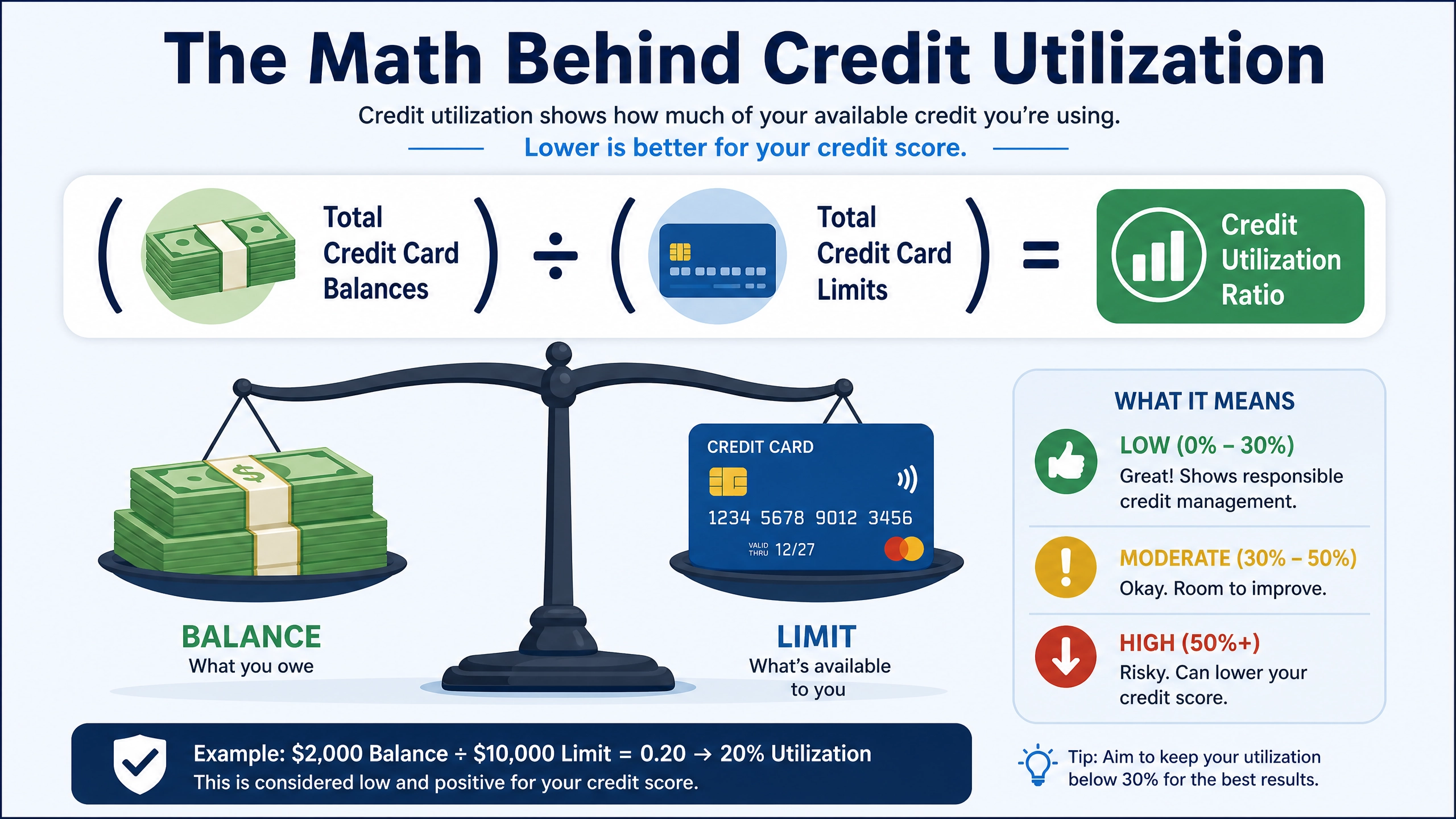
At its most fundamental level, your Credit Utilization Ratio (often referred to as your debt-to-limit ratio) is a simple mathematical equation. It measures the amount of revolving credit you are currently using compared to the total amount of revolving credit that banks have made available to you.
Revolving Credit vs. Installment Credit
To understand utilization, you must distinguish between the two types of debt.
- Installment Credit: These are loans with a fixed balance and a fixed monthly payment, such as a 30-year mortgage, a 5-year auto loan, or student loans. Installment loans are generally excluded from the primary credit utilization calculation.
- Revolving Credit: This refers to credit cards and personal lines of credit. The balance fluctuates (revolves) based on how much you spend and how much you pay back each month. Your credit utilization ratio is calculated exclusively using your revolving credit.
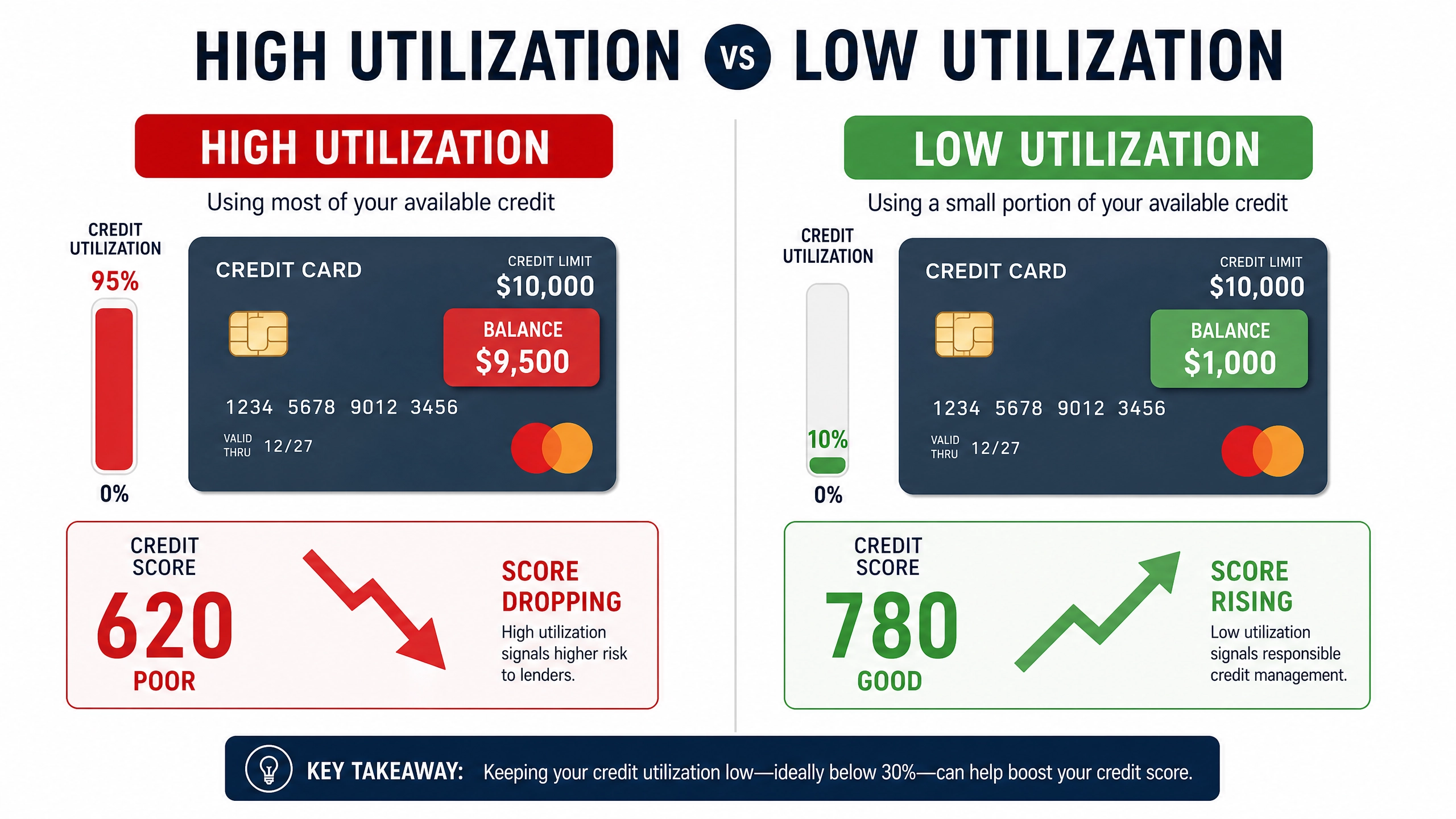
In the eyes of a lender, your utilization ratio is a direct reflection of your financial stress levels. If a bank gives you a $10,000 credit limit, and you consistently carry a $9,500 balance, the algorithm assumes you are desperate for cash and living beyond your means, making you a high-risk borrower. If you have that same $10,000 limit but only use $500 of it, you demonstrate profound financial restraint.
2. The 30% Weight: Why Lenders Care So Much
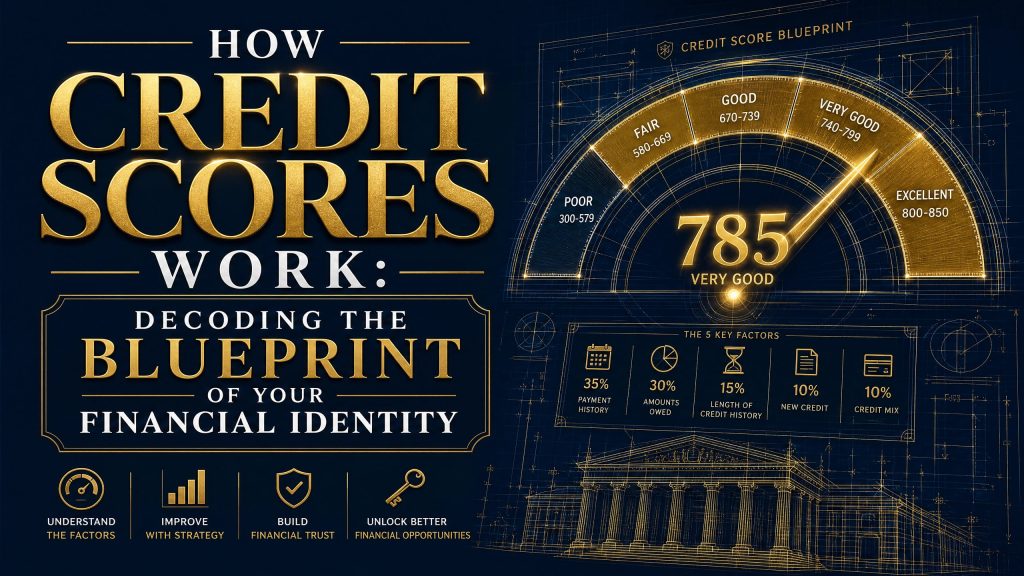
The most dominant scoring model in the United States is the FICO score, used by 90% of top lenders. The FICO algorithm is divided into five weighted categories.
While Payment History is the largest factor (accounting for 35% of your score), “Amounts Owed” (which is overwhelmingly dictated by your Credit Utilization Ratio) accounts for a massive 30% of your total credit score.
This means that nearly one-third of your entire financial reputation is based on a single snapshot of your credit card balances. You can have a flawless 10-year history of never missing a single payment, but if your credit cards are maxed out, your score will plummet into the “Fair” or “Poor” categories. The algorithm views maxed-out revolving debt as an immediate precursor to a default or bankruptcy.
3. The Mathematics: Overall vs. Per-Card Utilization
One of the most dangerous traps consumers fall into is assuming that the credit bureaus only look at the total, overarching picture. The reality is that the algorithm calculates your utilization in two distinct ways, and a failure in either category will penalize your score.
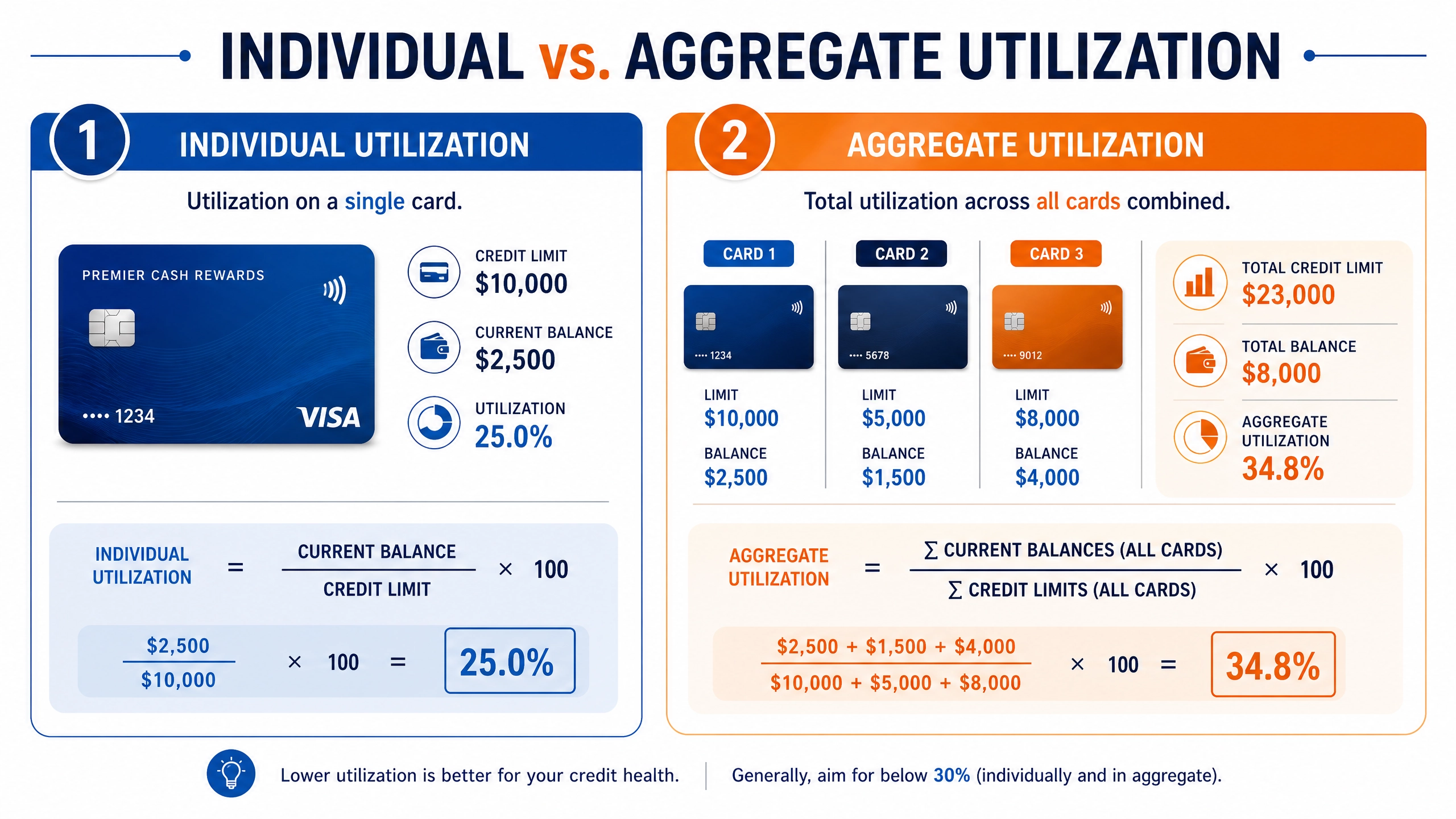
1. Overall (Aggregate) Utilization
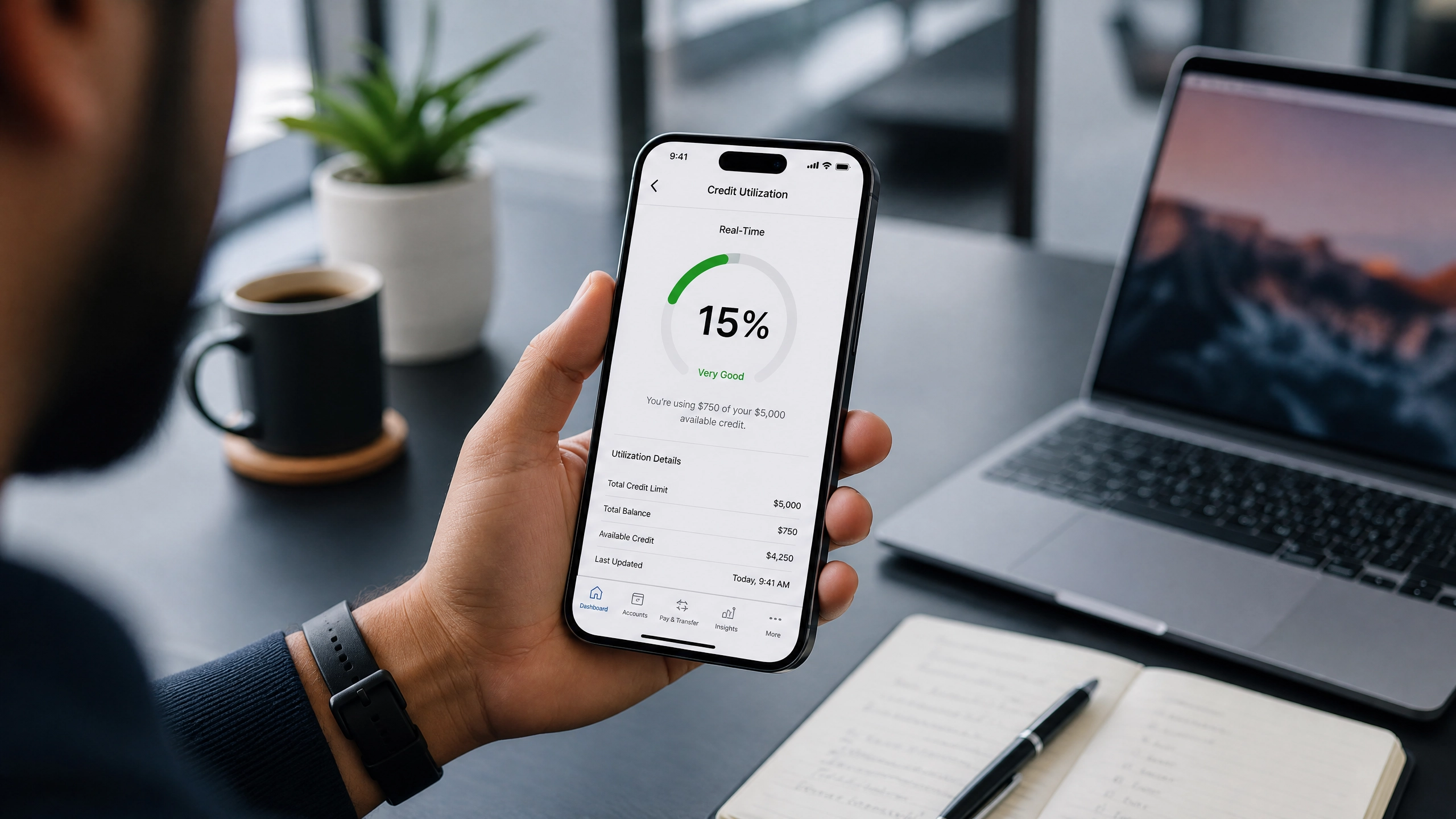
This is the total of all your credit card balances combined, divided by the total of all your credit limits combined.
- Example: You have three credit cards.
- Card A: $2,000 balance / $5,000 limit
- Card B: $1,000 balance / $10,000 limit
- Card C: $0 balance / $5,000 limit
- Total: $3,000 in balances / $20,000 in total limits.
- Overall Utilization = 15%. (This is an excellent aggregate number).
2. Per-Card (Individual) Utilization
The algorithm also scans every single card independently. You can have a fantastic overall ratio, but if just one individual card is maxed out, your score will drop significantly.
- Example: You have two credit cards.
- Card A: $4,900 balance / $5,000 limit (98% Utilization)
- Card B: $0 balance / $15,000 limit (0% Utilization)
- Overall Utilization: 24.5% (Looks great on paper).
- The Problem: Because Card A is at 98% per-card utilization, the FICO algorithm detects high risk on that specific account and will penalize your score heavily, completely ignoring the fact that you have $15,000 in unused credit on Card B.
4. Debunking the Myth: The 30% Rule vs. The 10% Reality
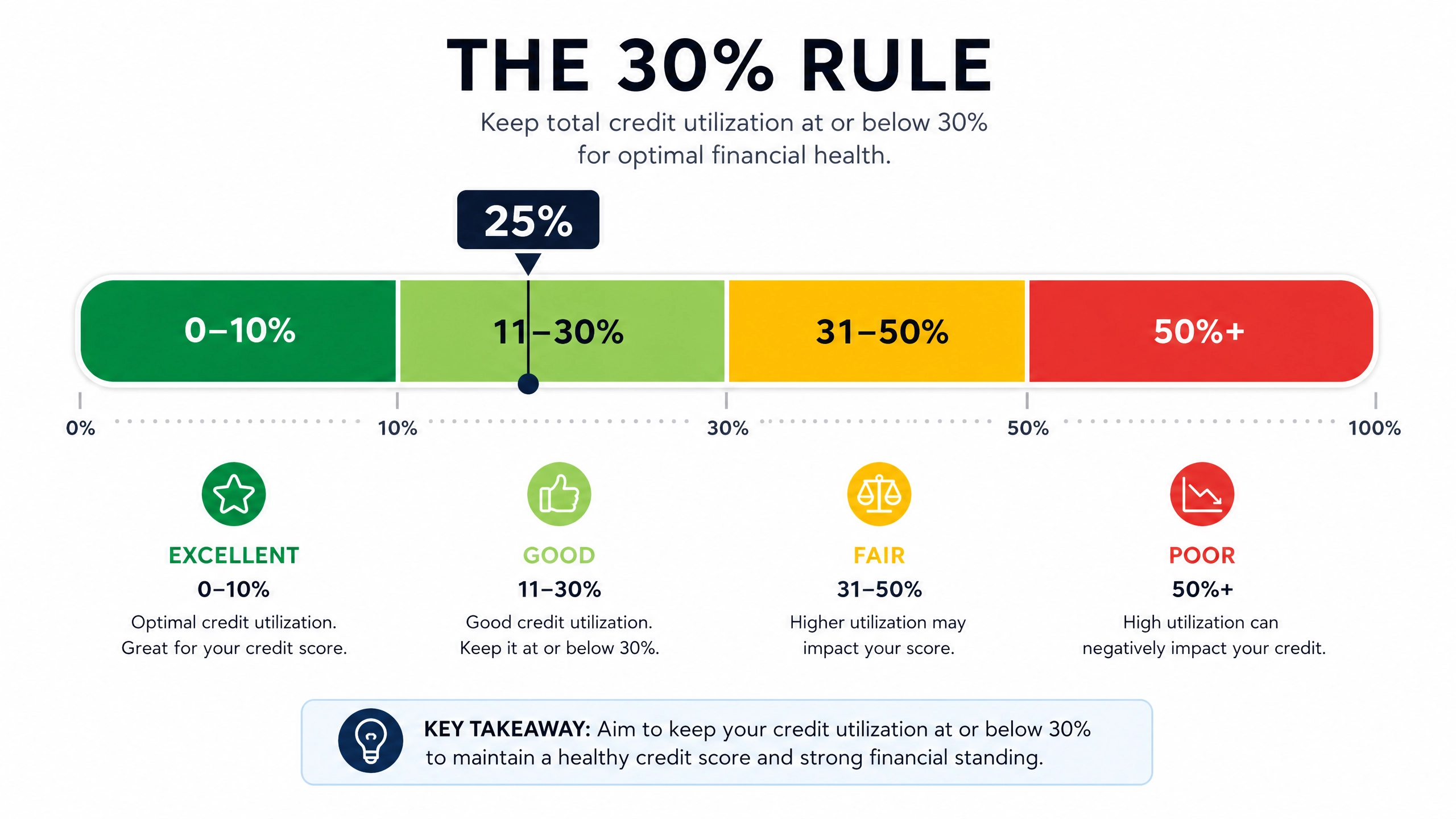
If you read basic personal finance blogs, you will repeatedly encounter the same piece of advice: “Keep your credit utilization below 30%.”
This is arguably the most widespread piece of mediocre financial advice on the internet. While keeping your utilization below 30% will prevent your score from crashing into the 500s, it will absolutely not help you achieve an elite 750+ credit score. The 30% rule is a ceiling, not a target.
The True Sweet Spot (1% to 9%)
Statistical data from FICO reveals that consumers who achieve the highest possible credit scores (those in the 800-850 range) maintain an average credit utilization ratio of just 7%.
If you want to manipulate the algorithm for maximum point gains, you must treat 10% as your absolute maximum threshold. If you have a $1,000 credit limit, your statement balance should never exceed $100.
Why Not 0%?
Logically, you might assume that if 10% is good, 0% must be perfect. Interestingly, the algorithm penalizes you slightly for having a 0% utilization ratio across all your cards. If every card reports a $0 balance, the algorithm assumes you are not using credit at all, and therefore, it cannot accurately judge your current debt-management skills. For absolute maximum score optimization, you want at least one card to report a microscopic balance (e.g., $10 or $20), proving that you are actively using the system but maintaining extreme discipline.
5. The Advanced Strategy: AZEO (All Zero Except One)
For individuals preparing to apply for a major mortgage or a highly competitive auto loan, squeezing every single point out of the credit algorithm is critical. Financial optimizers use a specific, aggressive strategy known as AZEO (All Zero Except One).
Here is how the AZEO method works:
- Pay off the complete balance on every single credit card you own before the statement closing date, bringing their reported balances to exactly $0.
- Select one single credit card (preferably a major bank card, not a retail store card).
- Leave a microscopic balance on this one card (e.g., $10 to $20) when the statement closes.
- Pay off that remaining small balance immediately after the statement generates, before the due date, so you pay zero interest.
By executing AZEO, your per-card utilization is 0% on almost everything, and your overall utilization is effectively 1%. This signals absolute financial mastery to the FICO algorithm, triggering an immediate, maximal score spike.
6. The Timing Trap: Statement Date vs. Due Date
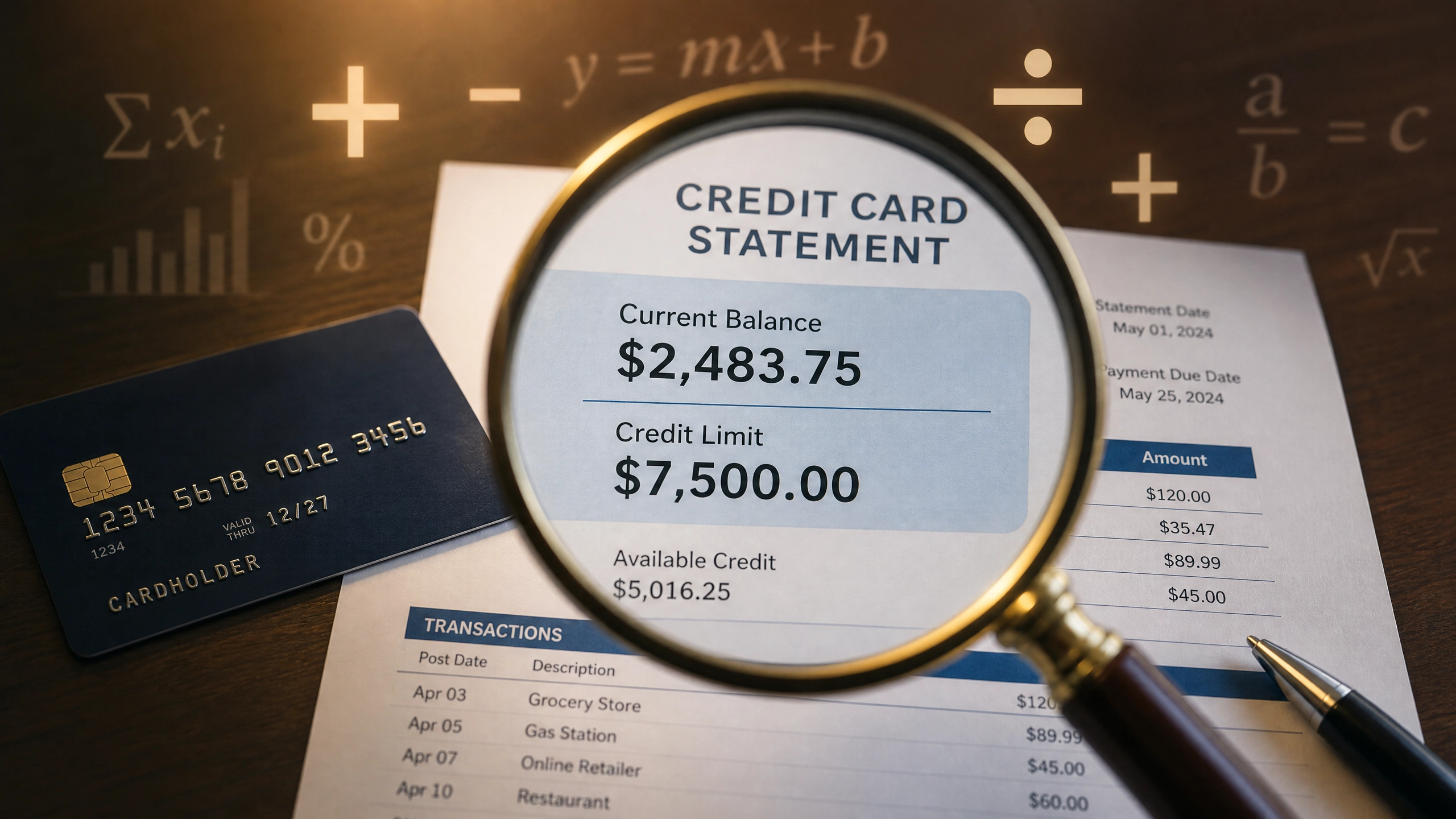
Understanding when your bank reports your balance to the credit bureaus is the most critical operational secret to managing utilization. This is where 90% of consumers make their fatal error.
There are two distinct dates in your credit card billing cycle:
- The Due Date: This is the day you must pay your bill to avoid late fees and interest charges.
- The Statement Closing Date: This is the last day of your billing cycle. Whatever your balance is on this exact day is the number the bank prints on your statement.
The Crucial Secret: Banks do not report your balance to the credit bureaus on your Due Date. They report your balance on your Statement Closing Date.
The “Responsible Spender” Penalty
Imagine you have a card with a $2,000 limit. Over the month, you spend $1,800 on groceries, gas, and bills. On the 25th of the month (your Statement Closing Date), the bank records your balance as $1,800. They immediately send that data to Experian, Equifax, and TransUnion. Your credit utilization is reported as a massive 90%. Your credit score plummets.
Five days later, on your Due Date, you responsibly pay off the entire $1,800 balance from your checking account. You pay zero interest and feel great. However, the damage is already done. The bureaus only see the snapshot from the 25th. You were financially responsible, but mechanically ignorant of the algorithm.
The Solution: Pay Before the Close
To defeat this system, you must pay your credit card balance down to below 10% three to four days before your Statement Closing Date. By doing this, when the bank takes its snapshot, it sees a microscopic balance, reports a 1% utilization to the bureaus, and your score skyrockets.
7. Strategic Tactics to Instantly Lower Your Utilization
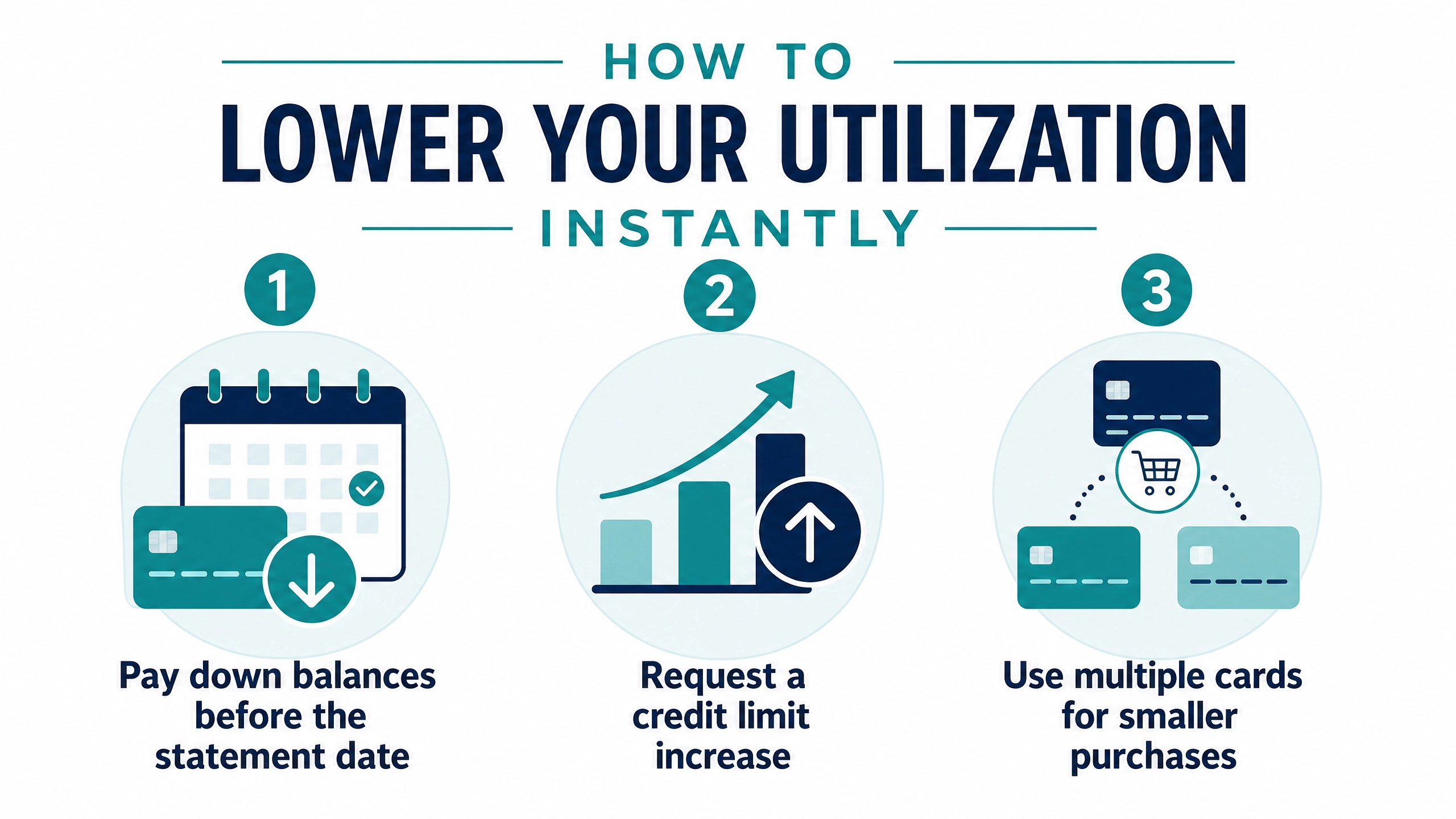
If you are currently suffering from high utilization and need to increase your score quickly, you have three primary tactical options.
Tactic 1: The Multi-Payment Method
Do not wait for the end of the month to pay your credit card. If you use your credit card like a debit card for daily expenses, log into your banking app every Friday and pay off the balance in full. By making four payments a month, you ensure that your balance never has the opportunity to inflate, guaranteeing that whenever the Statement Closing Date randomly occurs, your balance will be near zero.
Tactic 2: Request a Credit Limit Increase (CLI)
Credit utilization is a fraction: (Debt / Limit). You can lower the ratio by paying down the debt, but you can also lower it by artificially increasing the limit. Call your credit card issuer (or use their mobile app) and request a Credit Limit Increase. If you have been a good customer, they may raise your limit from $5,000 to $10,000. Instantly, the $2,500 debt you carry goes from a 50% utilization ratio down to a 25% utilization ratio. Your score will jump within 30 days without you paying off a single penny of debt. (Note: Ensure the bank uses a “Soft Pull” rather than a “Hard Pull” on your credit report to approve the increase).
Tactic 3: Open a New Credit Card
If you cannot get a limit increase on your current cards, opening a new credit card will add a massive chunk of available credit to your overall aggregate limit. While the new application will cause a temporary 2-to-5 point drop due to the hard inquiry, the massive decrease in your overall credit utilization ratio will far outweigh the initial drop, pushing your score higher within a month or two.
8. Comparative Matrix: Credit Utilization vs. Debt-to-Income (DTI)
A frequent point of confusion for consumers is conflating Credit Utilization with the Debt-to-Income (DTI) ratio. While both involve debt, they are entirely different metrics used for entirely different purposes.
| Feature | Credit Utilization Ratio | Debt-to-Income Ratio (DTI) |
|---|---|---|
| What it Measures | How much revolving credit you use vs. your total credit limits. | How much debt you pay monthly vs. your gross monthly income. |
| Formula | (Total Credit Card Balances ÷ Total Credit Card Limits) | (Total Monthly Debt Payments ÷ Gross Monthly Income) |
| Impacts Credit Score? | Yes (Huge impact, 30% of FICO score). | No. (Income is not listed on a credit report). |
| Who Cares About It? | Credit Scoring Algorithms (FICO, VantageScore). | Mortgage Lenders, Auto Loan Underwriters. |
| Ideal Target | Below 10%. | Below 36% (for mortgage approval). |
| Includes Mortgages/Auto? | No. Focuses strictly on revolving credit cards. | Yes. Includes all monthly debt obligations. |
9. Does Credit Utilization Have a Memory?
This is perhaps the most reassuring fact about the entire credit scoring system: Under the traditional FICO scoring models, your credit utilization has absolutely zero memory.
If you experienced a financial hardship last year, maxed out all your credit cards, and suffered a credit score drop from 750 to 580, that damage is not permanent. The FICO algorithm only cares about the most recently reported data from your banks.
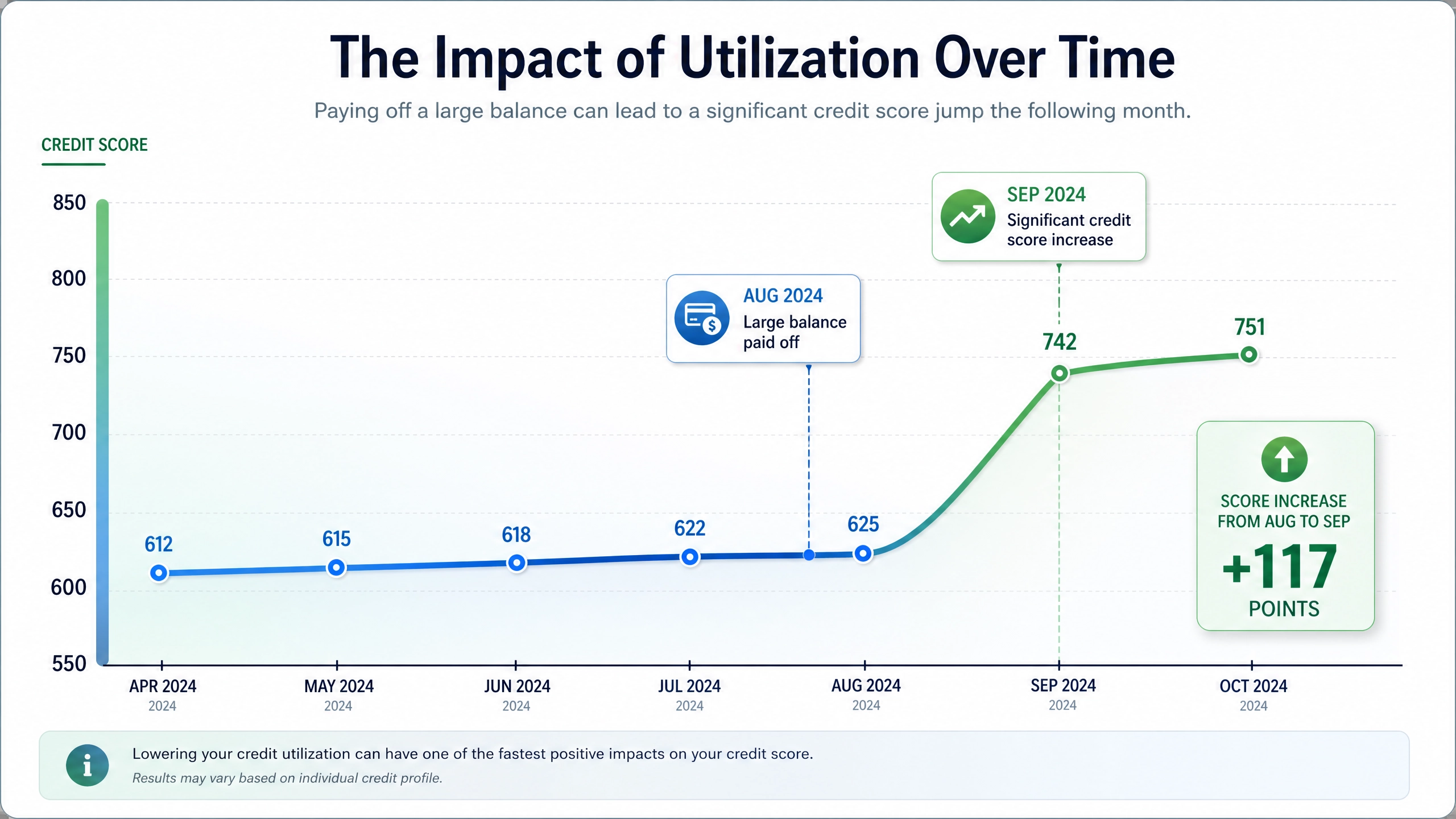
If you receive a large corporate bonus today and pay off all those maxed-out credit cards entirely, bringing your utilization down to 1%, your score will instantly bounce back up to the 700s the moment the banks report the new balances. You are not punished for past high utilization once the debt is paid off. It is a highly fluid, month-to-month metric.
(A brief caveat for the future: Newer, alternative scoring models like VantageScore 4.0 and FICO 10T are beginning to look at “trended data,” meaning they observe whether you are paying down debt over time or increasing it. However, the vast majority of lenders still use standard FICO models where utilization memory does not exist).
10. Frequently Asked Questions (FAQ)
Will closing a credit card improve my utilization ratio?
Absolutely not; in fact, it will do the exact opposite. Closing a credit card wipes out the available credit limit associated with that card. If your total aggregate credit limit drops, any balances you carry on other cards will suddenly represent a much higher percentage of your new, smaller overall limit. Unless a card has a massive annual fee you can no longer afford, you should keep it open with a zero balance to anchor your utilization ratio.
I pay my card in full every month, why is my utilization high?
This occurs because you are paying your bill on the Due Date, which is after the Statement Closing Date. By the time you pay the bill, the bank has already reported your high spending balance to the credit bureaus. You must shift your payment schedule to pay the card off a few days before the statement generates.
Does going over my credit limit hurt my score more?
Yes. Exceeding your credit limit pushes your per-card utilization over 100%. This is viewed by the algorithm as a catastrophic indicator of extreme financial distress. Not only will the bank charge you severe over-limit fees, but the credit bureaus will penalize your score brutally. You must never allow a balance to exceed the limit.
Do business credit cards affect my personal utilization?
In most cases, no. Top-tier business credit cards (like those from Chase, American Express, or Citi) do not report your monthly balances to your personal credit profile, provided you are paying them on time. This makes business credit cards an incredible tool for hiding high utilization if you need to float expenses for a few months.
Author’s Note: Mastering the Financial Game
The credit scoring system is not an emotional entity; it does not care about your intentions, your character, or your personal struggles. It is a cold, calculating, and highly predictable mathematical machine.
For many, this sounds dystopian, but it should actually be incredibly empowering. Because the system is built on rigid mathematical rules, it means it can be legally and strategically manipulated to serve your goals.
Mastering your credit utilization requires a fundamental shift in how you interact with the banking system. It requires moving from a reactive mindset (waiting for a bill in the mail and paying it on the due date) to a proactive, surgical approach. By identifying your statement closing dates, artificially inflating your credit limits, and keeping your reported balances microscopically low, you seize total control of your financial reputation.
A 750+ credit score is not a status reserved for the wealthy; it is a status reserved for the educated. Implement these utilization strategies today, treat your credit cards as strategic tools rather than extensions of your income, and watch as the gates to premium financial products, low-interest mortgages, and ultimate financial freedom swing wide open.