Umbrella insurance explained simply: it is an extra layer of personal liability protection for covered claims that can exceed ordinary auto, homeowners, or renters limits. One serious accident may create a liability claim far larger than many households expect. A multi-vehicle collision, a severe injury at your home, or a lawsuit involving alleged libel may generate legal-defense costs and damages that exceed the protection supplied by a primary policy. Personal umbrella insurance is designed for that gap.
An umbrella policy adds an extra layer of personal liability protection above qualifying underlying policies. It is not a replacement for auto or home insurance, and it does not protect every loss. Its purpose is to help protect income and assets when a covered liability claim becomes unusually expensive.
This guide explains how personal umbrella insurance works in the United States, what it may cover, common exclusions, how much coverage to consider, and which questions to ask before buying. Policy language and state law vary, so always compare the actual contract and obtain advice from a licensed insurance professional in your state.

What Is Personal Umbrella Insurance?
Personal umbrella insurance is a form of excess liability coverage. It usually begins paying after the liability limit on an eligible underlying policy has been exhausted. Those underlying policies commonly include auto, homeowners, renters, and sometimes watercraft insurance.
For example, assume a covered auto accident results in $700,000 of bodily-injury liability and defense costs. If the applicable auto liability limit is $300,000, a qualifying $1 million umbrella policy may respond to the remaining covered amount after the auto policy reaches its limit, subject to all terms, exclusions, and limits.
The National Association of Insurance Commissioners explains that an umbrella policy may help pay liability and legal-defense costs beyond the amount a primary policy will pay. It may also cover certain personal-liability risks that are not included in an underlying policy. However, the exact scope differs between insurers.
Umbrella Insurance vs. Excess Liability Insurance
The terms umbrella and excess liability are sometimes used interchangeably, but policies are not necessarily identical. A pure excess policy generally increases the limit of an underlying policy while following much of that policy’s wording. An umbrella policy may provide broader protection for some risks, although it can also include its own exclusions and conditions.
Do not rely on the product name. Ask the insurer whether the policy simply increases existing limits or provides any additional coverage. The declarations page, definitions, insuring agreement, exclusions, and endorsements determine what is actually protected.
How an Umbrella Policy Works
Umbrella coverage is usually coordinated with your primary liability policies. The umbrella insurer may require you to maintain specified minimum limits on auto, homeowners, renters, or watercraft insurance. These are known as underlying-limit requirements.
If you lower an underlying limit below the required amount, allow a policy to lapse, or fail to insure a required exposure, the umbrella policy may not automatically fill the entire gap. You could be responsible for the amount that should have been covered by the underlying insurance.

A Simplified Claim Example
| Claim component | Illustrative amount |
|---|---|
| Covered liability and defense costs | $850,000 |
| Underlying auto liability limit | $300,000 |
| Remaining covered amount | $550,000 |
| Umbrella limit | $1,000,000 |
In this simplified illustration, the auto policy could pay up to its applicable $300,000 limit and the umbrella could respond to the remaining $550,000. Real claims are more complicated. Defense costs may be inside or outside a limit, multiple injured parties may compete for available coverage, and exclusions can change the result.
What Is a Self-Insured Retention?
When an umbrella policy covers a claim that is not covered by an underlying policy, the policyholder may have to pay a self-insured retention before the umbrella responds. A self-insured retention works somewhat like a deductible but applies under defined circumstances. Its amount and operation should be stated in the policy.
Ask whether the umbrella has a self-insured retention, which claims trigger it, and whether defense expenses count toward it.
What Personal Umbrella Insurance May Cover
Coverage varies, but a personal umbrella policy may help with covered claims involving:
- Bodily injury for which you are legally responsible
- Property damage caused to another person
- Liability arising from certain auto, home, rental-property, or watercraft incidents
- Legal-defense expenses associated with a covered liability claim
- Certain personal-injury allegations, potentially including libel, slander, or invasion of privacy
- Liability involving qualifying household members listed or defined as insureds
- Some incidents occurring outside the United States, depending on policy territory provisions

The word may matters. One insurer may include a risk that another excludes. Some policies restrict rental properties, certain vehicles, young drivers, watercraft, pets, or activities that increase liability exposure. Always disclose every relevant exposure when requesting a quote.
Legal-Defense Costs
Defense costs can become significant even when a lawsuit is ultimately dismissed or settled for less than the amount demanded. An umbrella may provide or reimburse a defense for a covered claim according to its terms. Confirm whether defense costs reduce the available liability limit or are paid in addition to it.
Also check who selects the attorney, whether the insurer controls settlement decisions, and what cooperation the policy requires from you.
What Umbrella Insurance Usually Does Not Cover
An umbrella policy is broad liability protection, not unlimited protection. Common exclusions or limitations may involve:
- Damage to your own home, vehicle, or personal property
- Your own bodily injuries
- Intentional, dishonest, criminal, or malicious conduct
- Business or professional activities
- Liability assumed under certain contracts
- Workers’ compensation obligations
- Communicable-disease or pollution-related claims
- Certain watercraft, aircraft, recreational vehicles, or high-risk activities
- Claims connected to undisclosed properties, vehicles, drivers, or household members
- Punitive damages where coverage is excluded or prohibited by law

The NAIC specifically notes that umbrella insurance does not pay for damage to your own home or vehicle. That type of loss belongs under property, collision, comprehensive, or another applicable first-party coverage. Review our Homeowners Insurance Guide for a broader explanation of home-policy protections and exclusions.
Business Activities Require Separate Attention
A personal umbrella is not a substitute for commercial general liability, professional liability, cyber liability, or business auto insurance. A home-based business, rental activity, paid board position, side business, or business use of a vehicle can create an exclusion or coverage gap.
Tell the insurer about every business activity, even when the income is modest. If you own a company, ask whether a commercial umbrella or another business policy is appropriate.
Who Should Consider Umbrella Insurance?
Umbrella insurance is often associated with wealthy households, but net worth is only one factor. Liability risk also depends on activities, property, vehicles, household members, future earnings, and the likelihood that a serious claim could exceed primary limits.
You may have a stronger reason to investigate umbrella coverage if you:
- Own a home, rental property, vacation home, or vacant land
- Have savings, investments, or substantial future income to protect
- Employ household workers
- Have a swimming pool, trampoline, play structure, or other attractive nuisance
- Own multiple vehicles, a boat, recreational vehicle, or other potentially hazardous equipment
- Have a young or inexperienced driver in the household
- Frequently host guests or large gatherings
- Volunteer, coach, serve on a nonprofit board, or participate in activities that may create liability
- Travel regularly and want to evaluate policy territory
- Maintain a visible public or online presence that may create personal-injury exposure

Renters should not assume they have nothing to protect. A renter can still cause an auto accident, injure another person, or face a lawsuit. Renters insurance can provide underlying personal liability, and an umbrella may add another layer. See our Renters Insurance Guide for the basics.
How Much Umbrella Coverage Do You Need?
There is no universal formula. Personal umbrella policies are commonly offered in million-dollar increments, but availability varies. A useful assessment should consider both the assets that could be exposed and the size of a plausible severe liability claim.
Step 1: Estimate Exposed Assets
Create a private balance sheet that includes home equity, bank accounts, taxable investments, valuable non-retirement property, business interests, and other assets. Ask a qualified attorney which assets may be protected from creditors under your state’s law. Do not assume every retirement account, home, or jointly owned asset receives the same protection in every jurisdiction.
Step 2: Consider Future Income
A liability judgment may affect more than current savings. State law can permit some forms of wage garnishment or other collection remedies. People with high or rising future income may choose limits greater than their present net worth.
Step 3: Evaluate Household Risks
Review the number of drivers, driving history, properties, pets, pools, boats, rentals, household employees, volunteer roles, travel, and public activities. A household with several exposures may reasonably evaluate more protection than a household with fewer risks, even if both have similar assets.
Step 4: Stress-Test the Limit
Consider a severe but plausible event rather than an average claim. A crash involving multiple injured people can exhaust per-person and per-accident auto limits. A serious fall at a property can involve medical costs, lost income, long-term care, and legal fees.

A licensed agent can quote several limits so you can compare incremental cost. Ask what changes when moving from $1 million to $2 million or more, and whether the insurer requires higher underlying limits.
How Much Does Umbrella Insurance Cost?
Premiums vary by insurer, state, coverage limit, household, and risk profile. Avoid treating a national average as a personalized quote. Important pricing factors may include:
- Selected umbrella limit
- Number and age of drivers
- Driving and claims history
- Number of homes, rental properties, vehicles, and watercraft
- Pets, pools, trampolines, and other exposures
- Underlying liability limits
- Location and applicable state rules
- Whether primary policies are bundled with the umbrella insurer
Increasing underlying auto or home liability limits may raise the combined cost. Compare the complete insurance program, not only the umbrella premium. A low umbrella quote can be misleading if it requires expensive changes to primary coverage or excludes an important exposure.
How to Compare Umbrella Insurance Policies
Collect declarations pages for every auto, home, renters, rental-property, and watercraft policy before requesting quotes. Provide the same information to each insurer so comparisons are meaningful.
Ask each insurer the following questions:
- Which underlying policies and minimum limits are required?
- Which household members qualify as insureds?
- Are all properties, vehicles, rentals, and watercraft eligible?
- Are libel, slander, privacy, and other personal-injury claims included?
- How are legal-defense costs handled?
- Does the policy include a self-insured retention?
- Which business, volunteer, online, pet, and recreational activities are excluded?
- What is the geographic territory?
- Must all underlying policies be issued by the same company?
- How are claims reported and coordinated between insurers?

Read the specimen policy when available. Marketing summaries are useful introductions, but they are not the contract. If two quotes have similar prices, differences in definitions, exclusions, defense treatment, and covered exposures may be more important than a small premium difference.
Common Umbrella Insurance Mistakes
Failing to List Every Exposure
An unlisted rental property, newly licensed driver, boat, or recreational vehicle can complicate a claim. Notify both the primary and umbrella insurers when your household changes.
Reducing Underlying Limits
Do not reduce auto or home liability limits without checking umbrella requirements. The umbrella may expect you to absorb the resulting gap.
Assuming Personal Coverage Protects a Business
Personal policies commonly restrict business-related liability. Coordinate personal and commercial insurance rather than assuming one umbrella covers everything.
Shopping Only by Price
A cheap policy that excludes your most important risk provides poor value. Compare contracts and insurer eligibility requirements.
Ignoring Policy Renewals
Review the umbrella at least annually and after major purchases, property changes, new drivers, business activity, marriage, divorce, inheritance, or significant asset growth. The NAIC recommends reviewing insurance choices as circumstances change.

How to Reduce Liability Risk
Insurance transfers some financial risk, but prevention remains important. Practical steps may include:
- Maintain vehicles, stairs, railings, walkways, pools, fences, and lighting
- Follow safe-driving practices and review household drivers
- Secure pets and disclose breeds or histories when required
- Use written leases and appropriate landlord coverage for rentals
- Apply reasonable privacy and posting standards online
- Document maintenance, warnings, repairs, and safety improvements
- Separate personal and business activities
- Report incidents promptly without making unsupported admissions
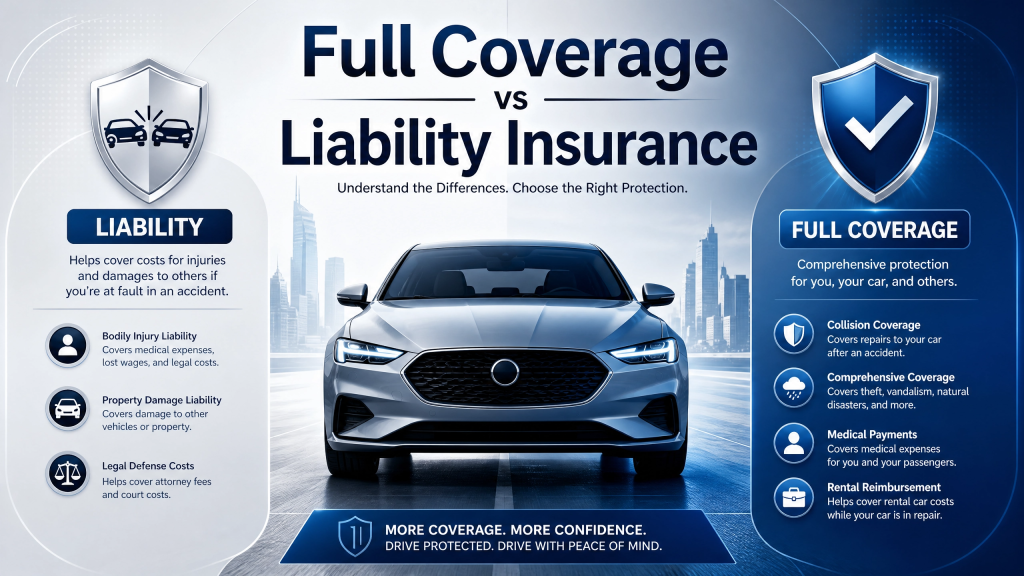
For auto-liability fundamentals, read Full Coverage vs. Liability Insurance. Umbrella coverage depends on strong underlying protection, so primary limits should be reviewed first.
Umbrella Insurance at a Glance
| Question | General answer |
|---|---|
| Does it replace auto or home insurance? | No. It generally sits above qualifying underlying liability coverage. |
| Does it cover your own damaged property? | Generally no. It is primarily third-party liability protection. |
| Can it help with legal-defense costs? | Potentially, for covered claims and according to policy terms. |
| Does it cover business activity? | Personal policies commonly exclude or limit business risks. |
| Is $1 million always enough? | No universal amount fits every household. |
| Are all umbrella policies identical? | No. Definitions, exclusions, limits, and eligibility rules differ. |

Frequently Asked Questions
Do renters need umbrella insurance?
Some renters may benefit from additional liability protection, particularly when they have substantial savings, income, drivers, pets, or other exposures. A qualifying renters policy may serve as underlying coverage.
Does umbrella insurance cover car accidents?
It may cover eligible liability above an underlying auto policy’s applicable limit. It generally does not pay to repair your own vehicle. Review driver, vehicle, territory, and underlying-limit requirements.
Will an umbrella policy cover a rental property?
Some policies can include eligible rental properties, but limits and conditions vary. The property and landlord policy should be disclosed and scheduled when required.
Can an umbrella policy protect against a lawsuit?
It may fund defense and covered damages for an eligible liability claim. It does not cover every lawsuit, intentional act, contract dispute, or business matter.
Can you buy umbrella insurance from a different company?
Possibly. Some insurers require the underlying auto or home policy to be with them, while others allow separate carriers that meet eligibility and limit requirements.
When should coverage be reviewed?
Review it annually and whenever drivers, vehicles, properties, businesses, assets, household members, or recreational activities change.

Final Thoughts
Personal umbrella insurance can provide a valuable second layer of liability protection when a covered claim exceeds the limits of auto, homeowners, renters, or another qualifying policy. It may also broaden protection for certain personal-liability risks, but the contract—not the product name—controls the outcome.
Begin by reviewing underlying limits, household exposures, assets, future income, and state-specific protections. Compare several policies, disclose every relevant risk, and ask detailed questions about defense costs, insured persons, exclusions, self-insured retentions, and required underlying insurance.
The goal is not to buy the largest limit without analysis. It is to build a coordinated insurance program in which the primary and umbrella policies work together without preventable gaps.
Sources and Further Reading
- National Association of Insurance Commissioners — What’s an Umbrella Policy?
- NAIC — Homeowners Insurance Topics
- NAIC — Understanding Your Homeowners or Renters Policy
- California Department of Insurance — Lines of Insurance
- Insurance Information Institute — Homeowners Liability and Umbrella Coverage
This article is for general educational and informational purposes only. It does not constitute insurance, financial, or legal advice. Coverage, exclusions, limits, pricing, and legal protections vary by policy, insurer, state, and individual circumstances. Consult a licensed insurance professional and, when appropriate, a qualified attorney or financial professional.