Actual cash value vs replacement cost is one of the most important distinctions in property insurance. Two policies can cover the same fire, theft, storm, or water loss yet produce very different claim payments because one subtracts depreciation while the other aims to fund a comparable new replacement. The difference can affect homeowners insurance, renters insurance, condominium coverage, roofs, business property, and scheduled valuables.
The National Association of Insurance Commissioners explains that actual cash value generally reflects replacement cost minus depreciation, while replacement cost coverage pays to repair or replace damaged property with materials or items of like kind and quality without the same depreciation deduction. Those definitions are a useful starting point, but the contract, endorsements, exclusions, deductibles, limits, local law, and facts of the loss ultimately control.

Why the Valuation Method Matters
Insurance is designed to respond to a covered loss, not automatically replace every item with the newest or most expensive version. A policy defines what property is insured, which causes of loss are covered, how value is measured, and the maximum amount the insurer will pay. The valuation clause can create a large gap between the amount required to buy a replacement today and the amount initially offered under an actual cash value settlement.
Imagine a television that cost $1,500 several years ago. A similar new model might cost $1,200 today. If the damaged television has lost much of its useful value through age and use, an ACV settlement may be substantially below $1,200. A replacement cost policy may reimburse the comparable new cost, subject to the deductible, policy limit, documentation, and any requirement that the replacement actually be purchased.
What Is Actual Cash Value?
Actual cash value, often shortened to ACV, is commonly described as the cost to repair or replace property minus depreciation. Depreciation can reflect age, condition, wear, obsolescence, and expected useful life. The precise calculation is not universal. Policies, insurers, state rules, appraisal evidence, and the type of property can influence how value is determined.
ACV coverage often costs less because the insurer is not promising the full price of a new equivalent after every covered loss. The trade-off is greater out-of-pocket exposure. A household with many older furnishings, electronics, appliances, or building components may discover that several separate depreciation deductions create a significant total shortfall.

What Is Replacement Cost Coverage?
Replacement cost value, or RCV, generally uses the cost of repairing or replacing damaged property with materials or property of comparable kind and quality without subtracting depreciation. It does not necessarily pay for an upgrade. Replacing a standard appliance with a premium model, changing ordinary materials to luxury finishes, or redesigning a home can leave the policyholder responsible for the additional cost.
Replacement coverage still has boundaries. The loss must be covered, the claimed property must be documented, and payments remain subject to limits, deductibles, exclusions, sublimits, and settlement conditions. Some policies place a time limit on completing repairs or purchasing replacements. Others require notice if reconstruction will be delayed. Read the contract before assuming the full replacement amount will arrive immediately.
Why Replacement Claims May Be Paid in Stages
Many replacement cost claims begin with an ACV payment. After the insured repairs or replaces the property and submits acceptable invoices or receipts, the insurer may release recoverable depreciation up to the amount actually spent and the applicable policy limit. This process can create a cash-flow problem because the policyholder may need to fund part of the replacement before receiving the second payment.
Not every depreciation amount is recoverable. A policy may settle certain property only at ACV, exclude cosmetic damage, impose a roof schedule, or limit categories such as jewelry, collectibles, cash, electronics used for business, or watercraft. Ask the adjuster for a written explanation showing replacement cost, depreciation, deductible, limits, and the amount that may become payable after work is completed.

Dwelling Coverage and Personal Property Can Be Valued Differently
A homeowners policy can insure the dwelling on a replacement cost basis while settling personal property at ACV unless replacement coverage for belongings is included. A condominium owner may insure improvements inside the unit while the association policy covers other building components. Renters usually focus on belongings, additional living expenses, and liability rather than the building itself.
Do not assume that one phrase on a declarations page applies to every category. Review the dwelling, other structures, personal property, loss-of-use, scheduled property, and endorsement sections separately. ChirBlog’s homeowners insurance guide and renters insurance overview provide useful context for how these coverages interact.

Roof Coverage Deserves Special Attention
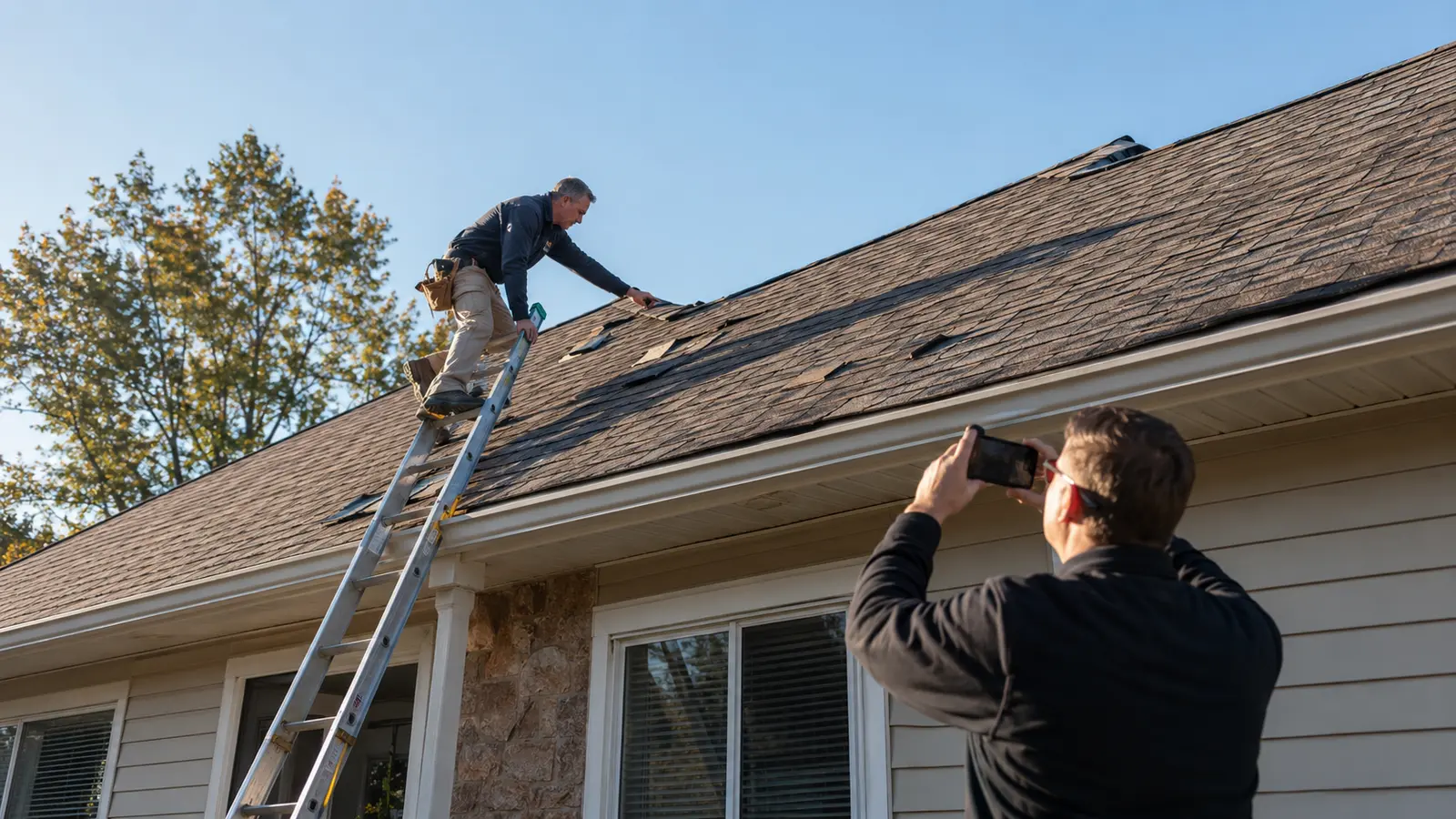
Roofs can receive different treatment because age, material, installation, prior damage, maintenance, and weather exposure materially affect expected life. An insurer may offer replacement cost on a newer roof but apply ACV, a payment schedule, or a special endorsement after a stated age. Wind and hail deductibles may also be a percentage of the dwelling limit rather than a flat dollar amount.
Before a storm, ask whether the roof is covered at replacement cost, ACV, or a scheduled percentage; whether cosmetic damage is excluded; how matching issues are handled; and which deductible applies. Keep installation invoices, warranties, inspection reports, maintenance records, and dated photographs. Replacing a roof without first following the policy’s claim procedures can complicate an otherwise valid claim.
A Simple Depreciation Example
Suppose a covered appliance costs $2,000 to replace with a comparable model. Assume, only for illustration, that the insurer applies $800 of depreciation and the claim has a $500 deductible. The simplified outcomes could look like this:
| Step | Actual Cash Value Example | Replacement Cost Example |
|---|---|---|
| Comparable replacement price | $2,000 | $2,000 |
| Depreciation | −$800 | Initially withheld in some claims |
| Deductible | −$500 | −$500 |
| Initial simplified payment | $700 | $700 |
| Possible later payment | None | Up to $800 after qualifying replacement |
| Possible total | $700 | Up to $1,500 |
This is not a universal formula. Deductibles may apply once to the entire occurrence rather than separately to each item. Taxes, labor, code upgrades, limits, repair feasibility, coinsurance, and actual expenditure can change the result. The useful lesson is that depreciation and payment timing should be understood before a loss.
Limits, Deductibles, and Sublimits Still Apply
Replacement cost coverage cannot overcome an inadequate limit. If rebuilding costs have risen above the dwelling limit, the policyholder may face a gap unless extended or guaranteed replacement provisions apply. Those features have their own conditions and percentage caps. Renovations, additions, high-end finishes, labor shortages, and local construction costs can make an old limit inaccurate.
Special sublimits are another source of surprise. Theft coverage for jewelry, watches, firearms, silverware, business property, or collectibles may be far lower than the overall personal-property limit. Valuable items may require scheduling, appraisals, photographs, and separate endorsements. A deductible is then subtracted according to the contract, and percentage deductibles can be much larger than their label initially suggests.

Build a Home Inventory Before You Need It
A detailed inventory supports both coverage planning and claim documentation. Walk through every room and record furniture, electronics, appliances, tools, clothing, sports equipment, and valuable collections. Photograph wide room views and important individual items. Save receipts, serial numbers, model information, appraisals, and warranty records when available.
Store a copy away from the insured property using a secure account or encrypted backup. Update it after major purchases and renovations. The inventory does not guarantee coverage, but it can reduce forgotten items, support ownership and condition, and help estimate whether the personal-property limit is realistic.

Endorsements That Can Change the Result
Insurance endorsements modify the base contract. Common examples include personal-property replacement cost, extended replacement cost for the dwelling, inflation guard, ordinance or law coverage, equipment breakdown, water backup, scheduled valuables, and special roof settlement terms. Names vary, and similar-sounding endorsements may not provide identical protection.
Ordinance or law coverage can be particularly important after an older building is damaged. Current codes may require electrical, plumbing, structural, energy, or demolition work beyond simply replacing what existed. Standard dwelling replacement language may not cover every added code cost. Ask what percentage or dollar limit applies and whether demolition of undamaged portions is included.

What to Do After a Covered Loss
- Protect people first and contact emergency services when necessary.
- Take reasonable steps to prevent additional damage without discarding evidence.
- Photograph and video the scene before moving or repairing items when safe.
- Report the claim promptly and ask about required forms and deadlines.
- Create a damaged-property list with age, condition, model, and estimated replacement price.
- Keep emergency lodging, mitigation, repair, and replacement receipts.
- Request a written estimate showing depreciation and each coverage adjustment.
- Ask which depreciation is recoverable and the deadline for claiming it.
- Do not sign broad repair, assignment, or settlement documents you do not understand.
- Use qualified insurance, legal, construction, appraisal, or public-adjusting help where permitted and appropriate.

How to Choose Between ACV and Replacement Cost
Compare more than the premium. Estimate how much it would cost to replace the home and belongings today, then consider how much depreciation and temporary cash-flow pressure the household could absorb. People with a strong emergency reserve may deliberately accept more risk, while those who could not fund a large shortfall may place greater value on replacement coverage.
Obtain quotes using the same limits, deductibles, causes of loss, and endorsements so that the valuation method is the main variable. Ask for specimen policy language and written answers to roof, belongings, payment timing, code-upgrade, and sublimit questions. Revisit the decision annually and after renovation, relocation, or a major purchase.

Common Mistakes to Avoid
- Assuming replacement cost means unlimited payment.
- Looking only at the declarations page and ignoring endorsements.
- Confusing market value, tax assessment, mortgage balance, and rebuilding cost.
- Failing to ask how an older roof will be settled.
- Expecting the full replacement payment before completing repairs.
- Ignoring special limits for valuables and business property.
- Choosing a deductible that would be difficult to pay after a disaster.
- Letting limits remain unchanged after construction costs or possessions increase.
- Discarding damaged property before the insurer can document it.
- Relying on verbal promises that are not reflected in the contract.
Frequently Asked Questions
Is replacement cost always better?
It generally provides broader valuation protection, but it may cost more and still has limits and conditions. The right choice depends on the policy, property, available savings, and tolerance for out-of-pocket risk.
Does ACV mean the same as resale value?
Not necessarily. ACV is defined and calculated under the policy and applicable law. It is often described as replacement cost minus depreciation, but other evidence or valuation approaches may matter.
Can an insurer depreciate labor?
The answer can depend on policy language and state law. Ask for the calculation in writing and obtain qualified local advice if the issue materially affects the claim.
Why did I receive only part of the replacement cost?
Some policies first pay ACV and release recoverable depreciation after qualifying repair or replacement documentation is submitted. Limits, deductibles, actual spending, and deadlines can affect the second payment.
How often should coverage be reviewed?
Review it at least annually and after renovations, major purchases, changes in local construction costs, or changes in occupancy and use.
Sources and Further Reading
- NAIC: Actual Cash Value and Replacement Cost Coverage
- NAIC: Roof Replacement Cost and Actual Cash Value
- NAIC: A Consumer’s Guide to Home Insurance
- NAIC: Renters Insurance Consumer Guidance
This article provides general educational information and is not individualized insurance, legal, construction, appraisal, or financial advice. Policy language, state law, claim facts, premiums, and settlement practices vary. Review the complete contract and consult licensed professionals for advice about a specific policy or claim.